Address
304 North Cardinal St.
Dorchester Center, MA 02124
Work Hours
Monday to Friday: 7AM - 7PM
Weekend: 10AM - 5PM

Address
304 North Cardinal St.
Dorchester Center, MA 02124
Work Hours
Monday to Friday: 7AM - 7PM
Weekend: 10AM - 5PM


Fragrance oil customs clearance depends on correct product classification, commercial documents, transport information and destination-specific requirements. There is no single universal HS code or document set for every fragrance shipment, so importers should confirm the formula, intended use and local rules with a licensed customs broker before dispatch.
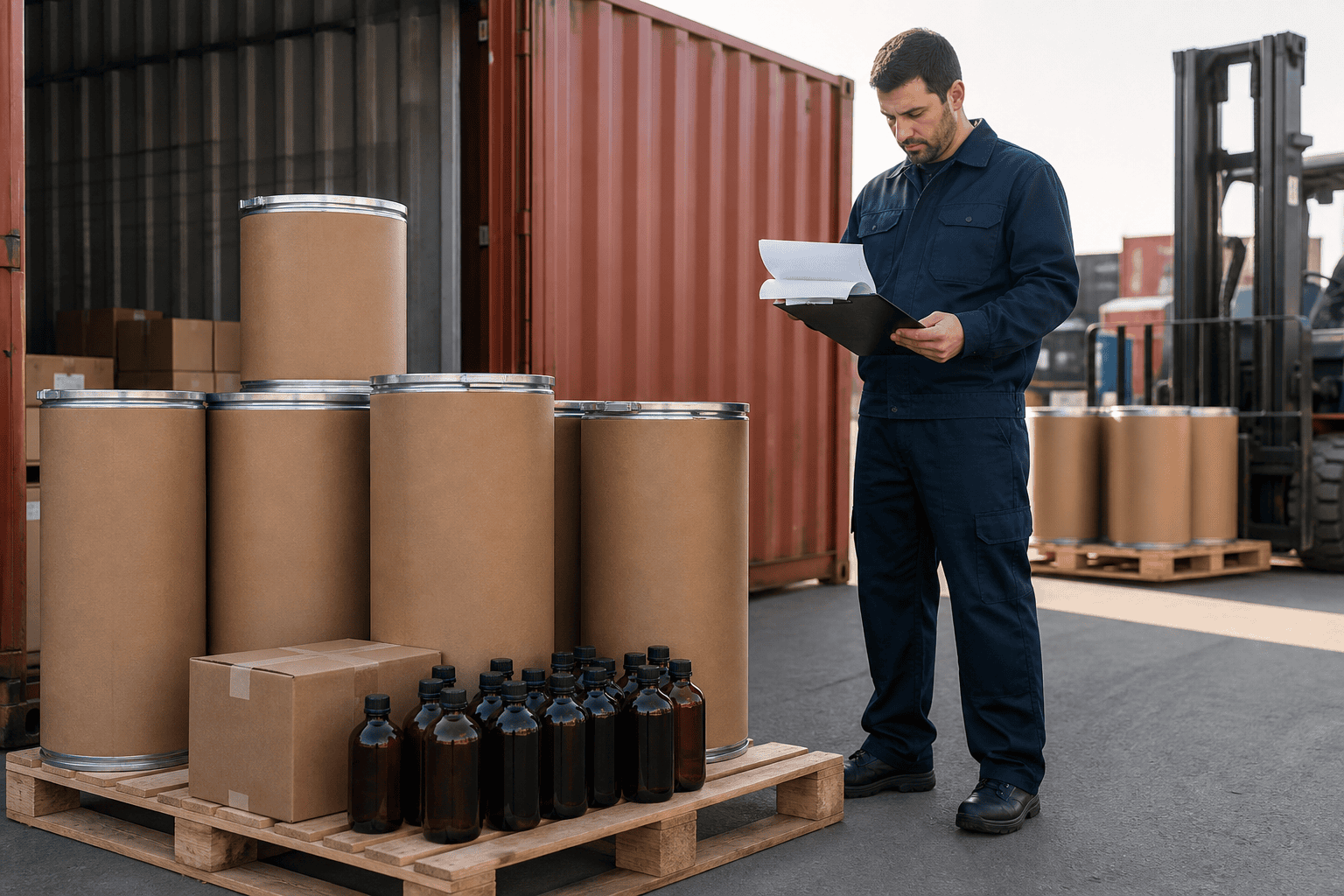
Customs authorities use the declared product identity, value, origin and tariff classification to assess admissibility, duty and taxes. Carriers may separately require safety and transport information. A document mismatch can trigger questions, storage charges, inspection or delay even when the product itself is acceptable.
| Document | Purpose | Consistency check |
|---|---|---|
| Commercial invoice | Seller, buyer, value, currency, origin and product description | Match order, payment and declaration |
| Packing list | Packages, net/gross weight and dimensions | Match physical shipment |
| Transport document | Air waybill, bill of lading or courier record | Match consignee and package count |
| SDS | Hazard and handling information | Current formula and language |
| Origin/supporting certificates | Preference or destination requirements | Confirm before production |

A Certificate of Analysis may support batch identification and quality review, but it does not replace the commercial invoice or SDS. Read our guide to fragrance supplier documents for the different roles of IFRA, SDS, COA and allergen information.
Do not copy a tariff code from an unrelated shipment. Classification may depend on composition, presentation and intended use, and national tariff schedules can differ in detail. Give the broker a precise, non-marketing description and supporting technical information. In the EU, the Access2Markets portal can help buyers research tariffs, origin rules and import procedures; the broker should confirm the final declaration.

Customs classification and dangerous-goods transport classification are separate decisions. Some fragrance oils may be regulated for transport depending on their physical properties and composition. Use the current SDS and confirm requirements with the carrier or dangerous-goods specialist. Packaging should be compatible, sealed, traceable and suitable for the selected transport mode.
SHEAIN can prepare commercial and technical documents within the agreed supply scope and coordinate batch references before shipment. The importer and broker remain responsible for destination classification, permits, duties and customs declarations. Discuss requirements early through our wholesale service or contact our team.
There is no safe universal answer. Classification depends on the product and national tariff schedule; ask the broker to confirm it.
Requirements vary, but customs, carriers or brokers commonly request it to understand composition and transport hazards.
No. A COA reports batch quality results; an SDS communicates hazard and handling information.
The contract should identify the responsible party. That party must be capable of meeting local registration, recordkeeping and payment obligations.
Review destination requirements before the purchase order and send draft shipping documents to the broker before pickup.