

Matching detergent and fabric softener scents means evaluating the pair through the laundry process, not simply selecting two similar-smelling bottles. The fragrances may overlap pleasantly, mask one another or create an unintended dry-fabric character. Begin with the final scent you want on fabric, then compare each product separately and together under controlled conditions. This is a fragrance-development question, not an instruction to mix the products directly.
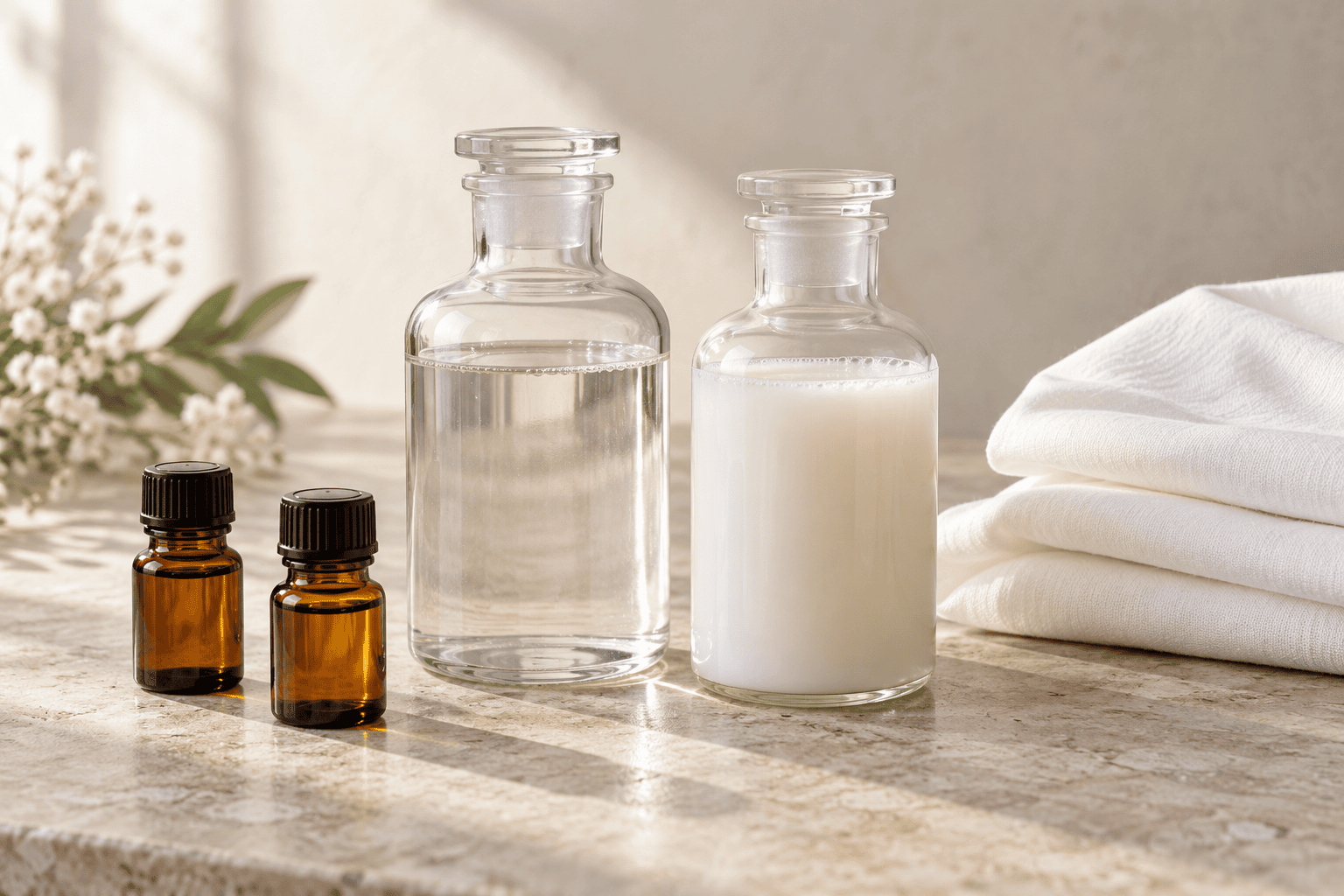
Define the final fabric scent before matching the bottles
Decide which product should establish the recognizable signature and which should support it, or whether both should contribute to a coordinated family. Write down the desired dry-fabric character, acceptable intensity and unwanted effects. Givaudan discusses fragrance performance at different laundry-use moments, showing why bottle impact is only one part of the experience. That background does not predict how your particular detergent and softener pair will behave; the actual formulas and use procedure need to be evaluated. Givaudan: fragrance performance across the product-use journey
Separate scent coordination from formulation compatibility
Detergent and fabric softener are different formulations and should be used in their intended stages according to the product and appliance instructions. Do not mix their concentrates, combine them in one storage container or infer chemical compatibility from a pleasant odor. For development, work with technically suitable fragrance concentrates in each base and have the responsible team assess each finished formulation. A shared fragrance family does not automatically justify identical fragrance loading, documents or performance criteria across both products.
Build controls that reveal each product’s contribution
A useful paired study can include unfragranced detergent with unfragranced softener, fragranced detergent with unfragranced softener, unfragranced detergent with fragranced softener, and the fragranced pair. Where such matched bases are not available, document the limitation rather than pretending a commercial comparison isolates fragrance alone. Keep fabric, product dose, wash program, water conditions and drying procedure consistent. This structure helps identify whether the combined impression is genuinely different from either contribution, without assuming in advance which product will dominate.

Record harmony and intensity as different outcomes
A louder combined scent is not necessarily a better match. Ask whether the resulting profile has a coherent identity, whether one product masks the other and whether an unwanted sweet, sharp or heavy impression appears. Record intensity separately from liking and recognizability. Assess the agreed wet and dry stages rather than only the fragrance concentrates. If the samples are not prepared under comparable conditions, repeat the test before interpreting a difference as a scent-clash problem.
Revise one part of the pair at a time
When the combination misses the brief, decide which contribution should change first. You might soften a very sweet supporting accord, reduce an overly sharp opening or preserve a shared floral character with different application-specific bases. Avoid changing both scents and both loadings simultaneously unless the experiment is designed to separate those effects. The framework below is a proposed development aid, not a standardized laundry test or a report of measured results. Confirm any successful revision in the complete paired-use process.
| Trial | Purpose | Interpretation limit |
|---|---|---|
| Both unfragranced | Establish base and fabric odor | Requires comparable base formulations |
| Detergent fragrance only | Observe detergent contribution | Does not predict the paired result |
| Softener fragrance only | Observe softener contribution | Keep the full process consistent |
| Both fragranced | Evaluate the intended combination | Score harmony separately from intensity |
Approve the coordinated system with clear boundaries
Keep the accepted detergent and softener fragrance versions, their individual technical documents and the paired-test conditions together in the project record. Review each formulation change for its effect on the combined experience. When approaching SHEAIN, provide both product bases, the intended use sequence and the target fabric scent. The request is for fragrance concentrate development or sampling, not finished laundry products. Availability, compatibility and performance must be confirmed for the specific pair before commercial claims or supply commitments are made.
Frequently Asked Questions
Should both products use the same fragrance oil?
Not necessarily. Related scent directions may require different application-specific compositions. Confirm each base’s suitability and then evaluate the pair.
Can I mix detergent and softener together to smell the result?
That is not a valid substitute for the intended laundry process and may create incompatibility. Use each product as directed and assess treated fabric under controlled conditions.
What if the softener hides the detergent scent?
First verify the observation with matched controls. Then decide whether that dominance conflicts with the brief and request a targeted revision rather than automatically increasing both fragrance levels.
Related Guides and Application Support
- Fragrance Oil for Liquid Laundry Detergent: Stability and Wash Tests
- Fragrance Oil for Fabric Softener: Dosage and Scent Retention After Drying
Contact SHEAIN with your end-use application, target market and scent brief to discuss fragrance oil concentrate samples.


