

Fragrance oil for hair masks should be selected in the actual rich treatment base, not borrowed automatically from a shampoo or lightweight conditioner. The unfragranced cream, its physical structure and the manufacturing process can all affect the result you assess. Begin by separating a scent-selection question from a formulation-compatibility question. A pleasant jar odor is useful, but it does not prove the fragranced mask is ready for production.
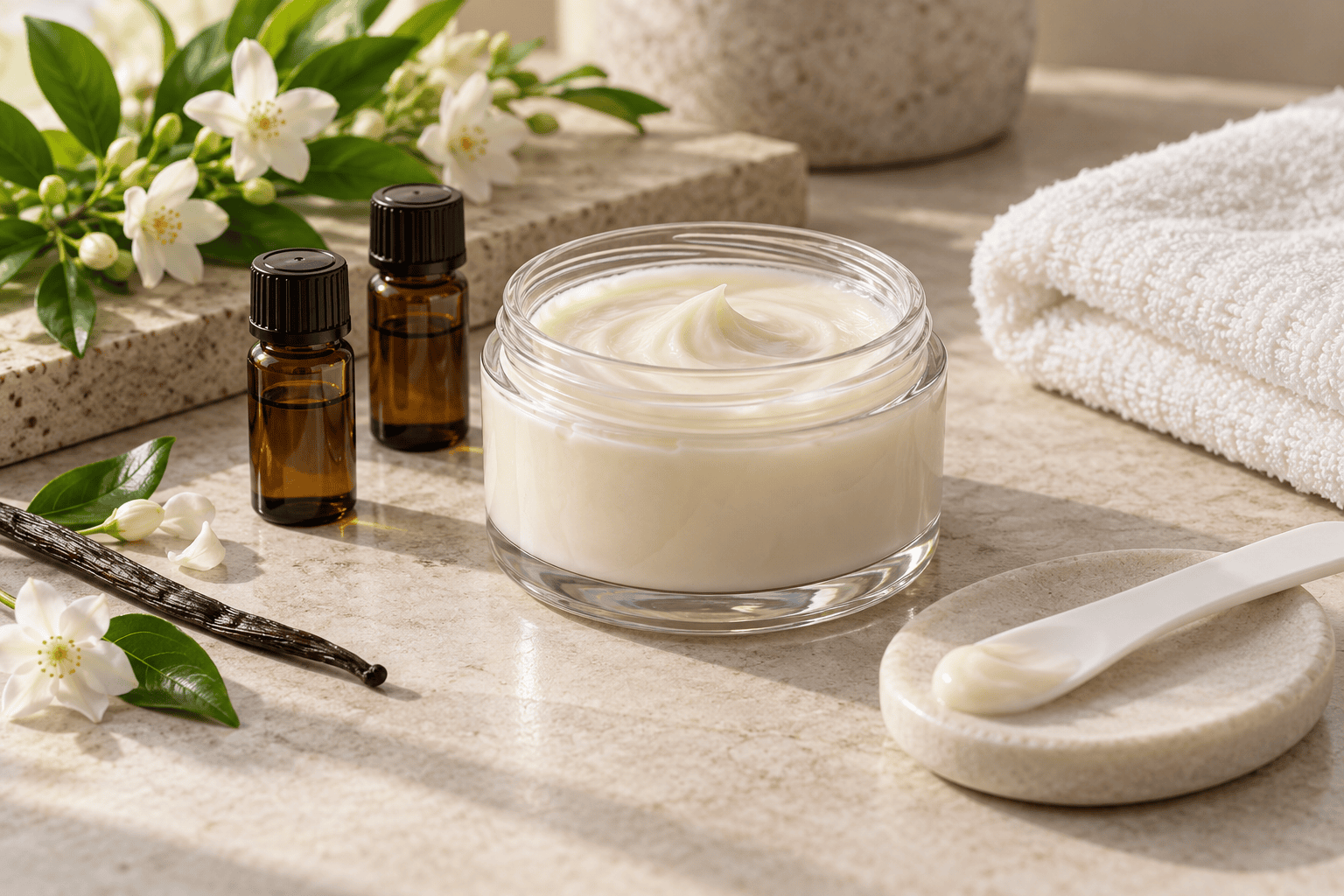
Describe the mask base before asking for a fragrance
Share the type of treatment, rinse-off or leave-on use, important base characteristics and relevant formulation constraints with the supplier. A rich cream may contain different combinations of conditioning agents, fatty materials, polymers and other ingredients; the product name does not identify them. Provide the responsible formulator’s information rather than guessing from texture. Include the actual unfragranced base when practical. This gives the sample discussion a realistic starting point and avoids treating every product called a hair mask as the same application.
Evaluate the base odor as a separate reference
Assess the unfragranced base under the same conditions as the fragranced candidates. Record any waxy, fatty or other background associations the team perceives without assuming that one ingredient is responsible. Ask whether the fragrance complements that background or merely overwhelms it in the jar. If a candidate requires excessive intensity to hide an unacceptable base odor, the formulator should investigate the base as well. A stronger fragrance is not a substitute for resolving quality, stability or raw-material concerns in the underlying product.
Control incorporation instead of changing several variables
Have the formulator define the sample process, including the stage of fragrance addition, temperature, mixing and conditioning interval. Use the same process for comparable candidates and record deviations. This guide does not provide a universal addition temperature or percentage because those depend on the formulation and concentrate. If one trial is mixed differently, do not attribute its different odor or texture solely to fragrance identity. Keep small controlled trials traceable so a successful sample can be repeated by the development team before production qualification.
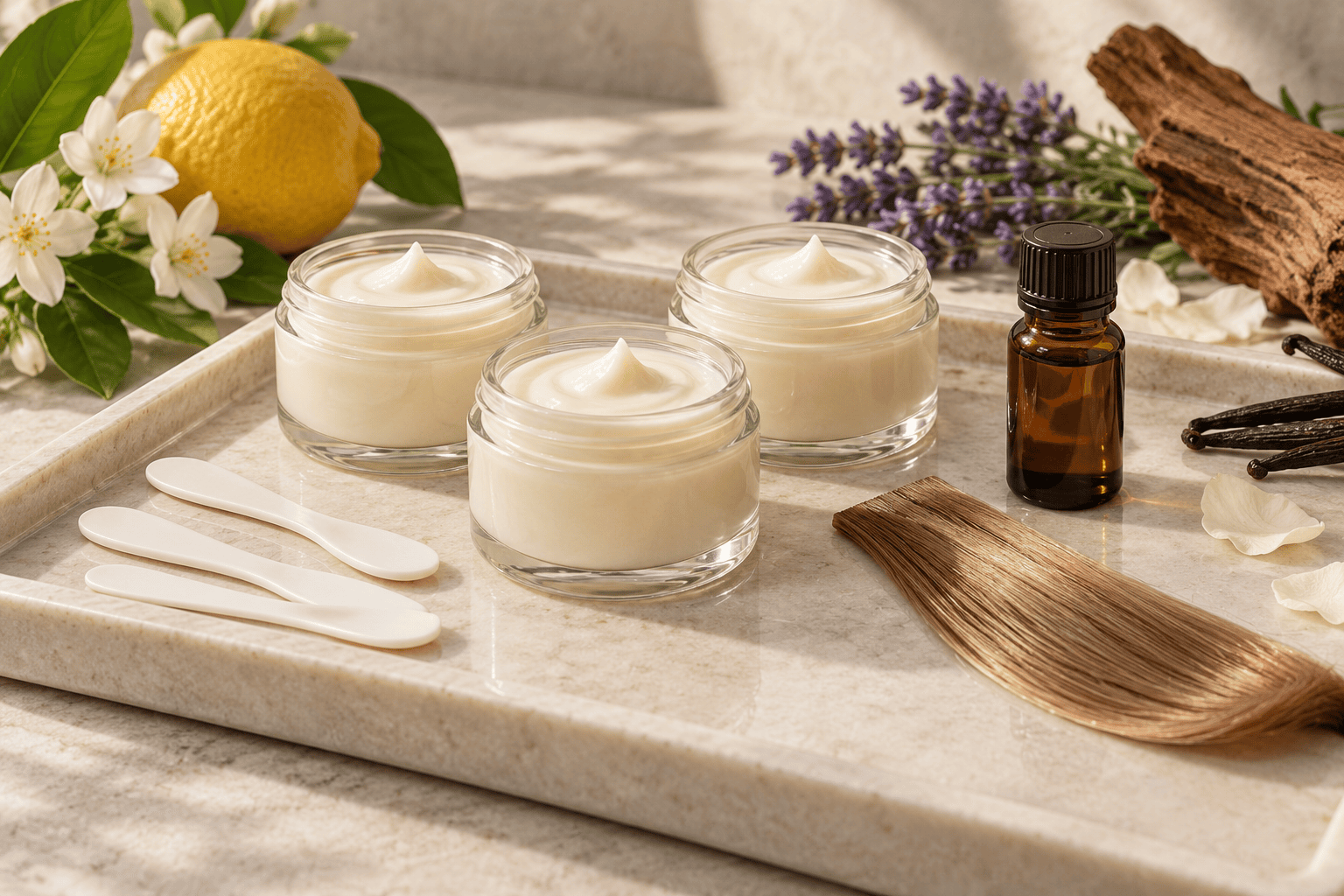
Inspect physical structure alongside scent expression
Record appearance, uniformity, separation, texture and the relevant viscosity or consistency measurements using the team’s established methods. A mask that still smells pleasant may have changed physically. Conversely, a stable-looking cream may express the fragrance poorly. Treat these as separate acceptance questions and include the appropriate unfragranced and approved-reference controls. Check the actual packaging in the stability program. Do not describe a concentrate as universally compatible with rich hair masks on the basis of one sample jar or one base composition.
Focus sensory evaluation on the mask’s own use experience
Assess whether the fragrance fits opening, distributing and rinsing the treatment under an approved product-evaluation procedure. For human-use testing, the responsible team must first establish suitability; do not apply concentrated oil directly to hair or skin. This guide focuses on the rich base and treatment experience, not the separate wet-hair, dry-hair and next-day comparison used for conditioner retention. Record whether the base feels too heavily scented or whether the fragrance identity becomes unclear during the intended application stage.
| Area | Question | Evidence to retain |
|---|---|---|
| Base odor | What is present without fragrance? | Unfragranced control observations |
| Incorporation | Was the trial process controlled? | Addition and mixing record |
| Physical structure | Did the cream remain acceptable? | Relevant stability and texture checks |
| Treatment experience | Does the scent fit actual use? | Approved application evaluation record |
Approve a defined concentrate-and-base combination
Choose the sample that meets both the sensory brief and the physical requirements, then record its code, revision, loading, base version and preparation method. Confirm the documents needed for the end use and destination market. SHEAIN supplies fragrance concentrates for application development; this is not a claim that it manufactures the finished hair mask. If the base or fragrance changes, decide with the responsible team which qualification work must be repeated. Keep the accepted reference and records accessible to purchasing and production.
Frequently Asked Questions
Can I use my shampoo fragrance in a hair mask?
It may be a candidate, but it needs separate evaluation in the mask’s base and intended use. Approval in shampoo does not transfer automatically.
Should I add more fragrance if the cream masks the scent?
Not as an automatic fix. Review the odor balance and formulation with the technical team before changing loading, and reassess suitability.
Does a stable jar prove the fragrance is suitable?
No. Stability, sensory fit, packaging compatibility and the required safety review are separate parts of approval.
Related Guides and Application Support
- Fragrance Oil Stability Testing: How to Check Compatibility Before Mass Production
- What Documents Should a Fragrance Oil Supplier Provide? IFRA, SDS, COA and Allergen Declarations Explained
Contact SHEAIN with your end-use application, target market and scent brief to discuss fragrance oil concentrate samples.


