
Choosing a fragrance oil manufacturer is a strategic decision, not simply a price comparison. The supplier you select can influence product stability, regulatory readiness, customer experience, launch speed, and your ability to scale. A fragrance that smells attractive on a blotter may behave very differently in a candle, detergent, diffuser, shampoo, or body wash. For that reason, B2B buyers need to evaluate both creative fragrance capability and technical manufacturing performance.

This guide explains ten practical questions brands, distributors, and product manufacturers should ask before approving a fragrance partner.
1. Are You Working With a Manufacturer or a Trading Company?
Both business models can serve a purpose, but buyers should understand who is responsible for formulation, testing, production, and quality control. A direct manufacturer normally has greater control over formula revisions, batch consistency, technical troubleshooting, and production schedules.
Ask whether the supplier operates its own R&D laboratory and production facility, and whether its perfumers and application technicians are employed in-house. Factory information, testing capabilities, production records, and a clear quality-management process are stronger indicators than a large catalog alone.
2. Does the Manufacturer Understand Your Product Application?
Fragrance oil is not universally interchangeable between applications. Candle fragrance must tolerate heat and deliver acceptable cold and hot throw. Laundry fragrance must remain stable around surfactants, enzymes, water, alkalinity, and the wash cycle. Shampoo and body-wash fragrance must be compatible with the cleansing base and appropriate for skin-contact use.
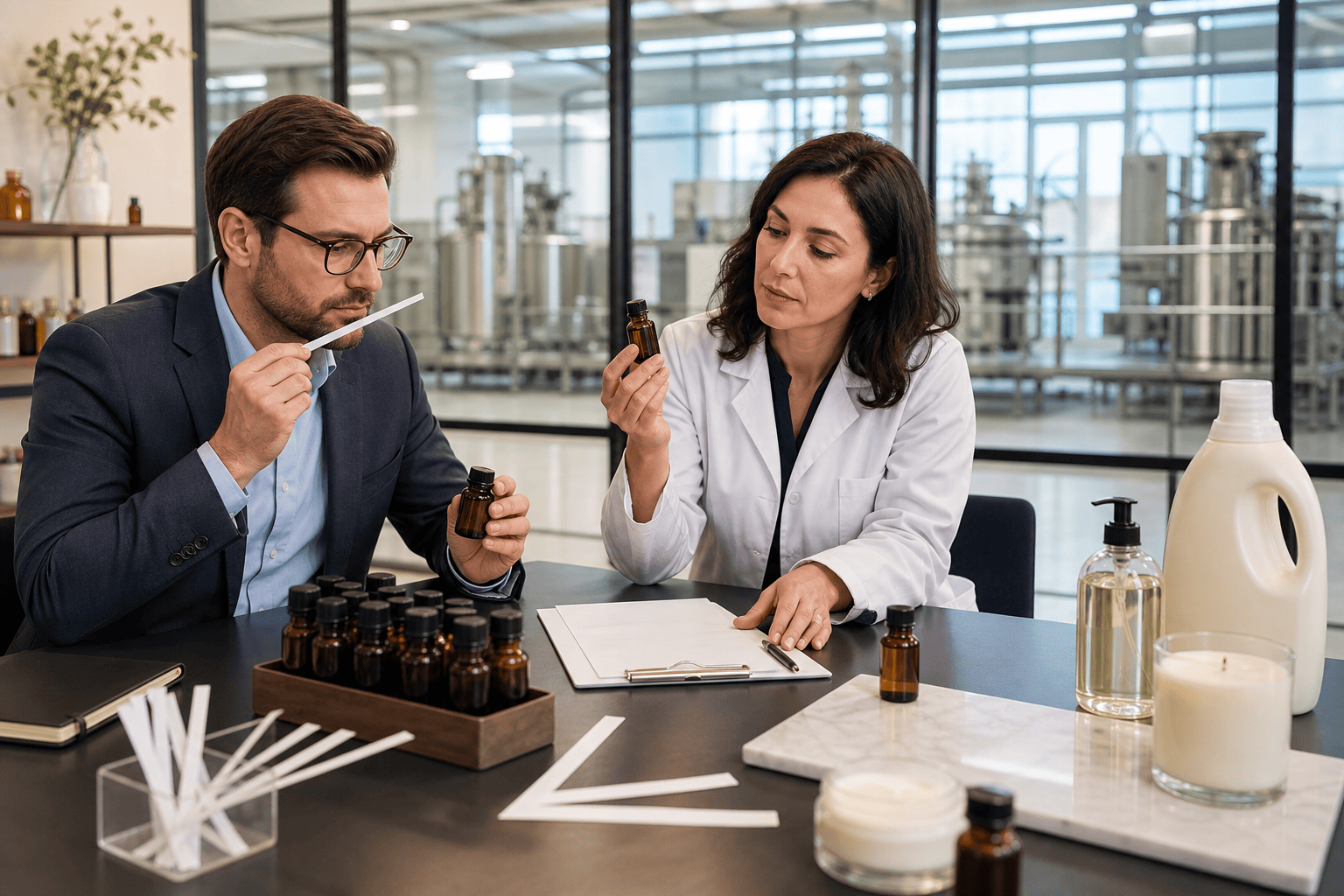
A qualified manufacturer should ask about the finished product, base formula, target dosage, market, positioning, packaging, and desired performance before recommending a fragrance.
3. Can the Supplier Provide the Required Compliance Documents?
Professional buyers commonly require an IFRA Certificate, Safety Data Sheet, Certificate of Analysis, and, where relevant, an allergen declaration. These documents serve different purposes and should match the specific fragrance supplied.
- IFRA Certificate: communicates conformity and use limits for relevant application categories.
- SDS: provides hazard, handling, storage, and emergency information.
- COA: records batch-specific quality results or specifications.
- Allergen declaration: supports labeling and market-compliance review.
Ask whether documentation can be supplied before bulk production and whether the regulatory team can support your destination market.
4. How Does the Manufacturer Test Stability and Compatibility?
A scent can change when added to a real formulation. It may affect color, clarity, viscosity, foam, burning behavior, or long-term odor character. The manufacturer should be able to recommend application testing and explain which variables need monitoring.
Useful checks can include odor evaluation over time, heat and cold storage, light exposure, color change, solubility, pH compatibility, and performance in the final base. Testing requirements should be adapted to the product rather than treated as a universal checklist.
5. Is Custom Fragrance Development Available?
Catalog fragrances are useful for fast sampling, but a growing brand may need a distinctive scent profile. Ask whether the supplier can develop an original signature scent, adapt an existing direction, or provide a fragrance-duplication service supported by instrumental analysis and perfumer evaluation.
A good development brief should cover the target consumer, price position, preferred scent family, reference products, application, market, and any restricted ingredients or claims.
6. What Does the Sampling and Revision Process Include?
Sampling is where creative preference and technical performance meet. Before starting, confirm the number and size of samples, expected preparation time, shipping arrangements, feedback format, and how revisions are handled.
Give structured feedback. Instead of saying a sample is simply “too strong,” explain whether the opening is too sharp, the floral heart is too heavy, the dry-down is too sweet, or performance drops after application. Precise feedback helps the perfumer revise efficiently.
7. What Are the MOQ, Capacity, and Lead Time?
MOQ is affected by formula type, raw-material availability, customization, packaging, and whether you are purchasing bulk fragrance oil or a finished private-label product. Avoid comparing MOQs without confirming that the quotations cover the same scope.
Ask for separate timelines for sampling, formula approval, raw-material preparation, production, quality inspection, packing, and international shipping. Also confirm whether capacity can support repeat orders if your sales grow.
8. How Is Batch-to-Batch Consistency Controlled?
Consistency is essential for customer trust. Ask how incoming raw materials are inspected, how formulas are weighed and mixed, which in-process controls are used, how finished batches are approved, and whether retained samples and batch records are maintained.
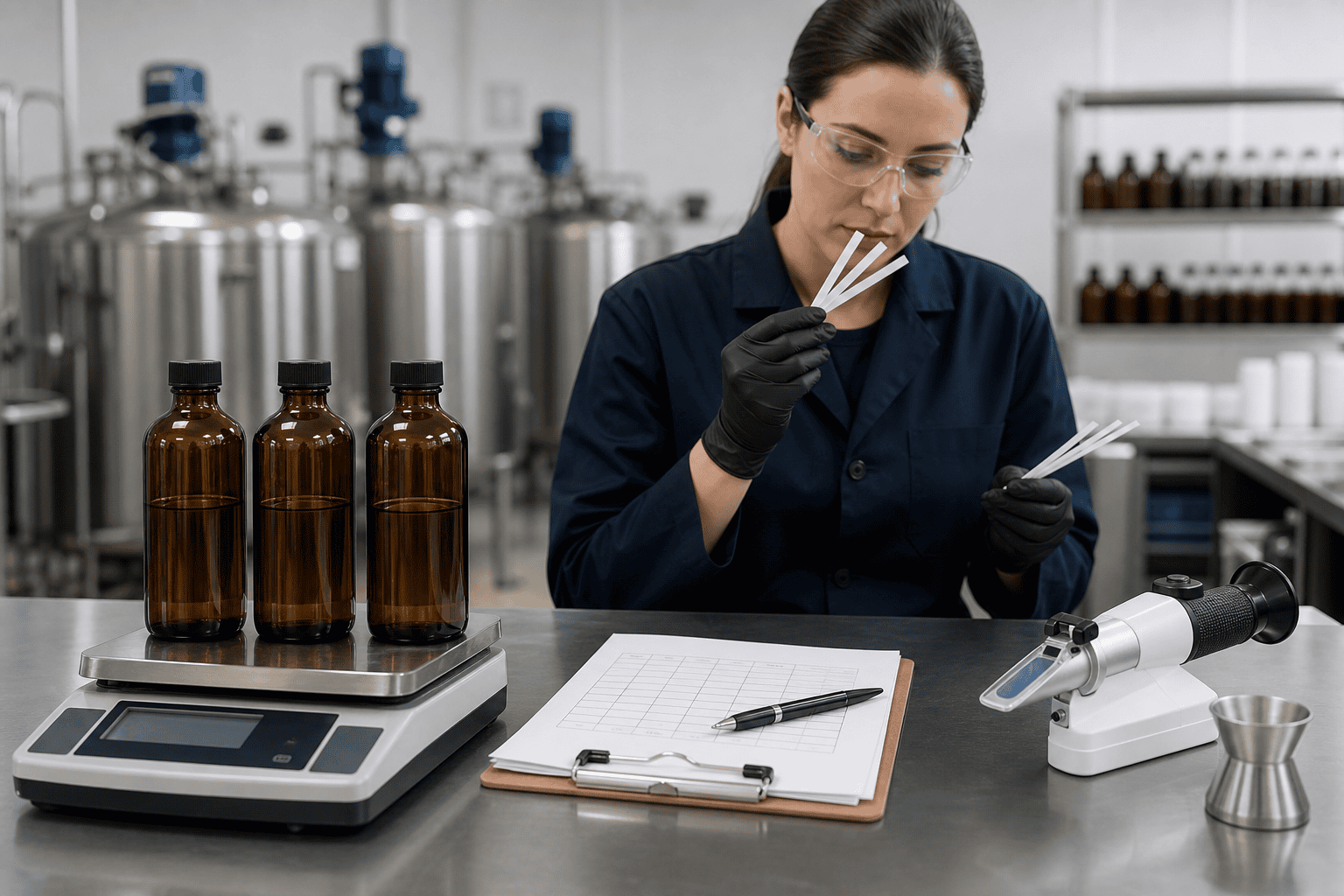
The supplier should also have a process for handling raw-material variation or discontinuation without making unauthorized changes to the approved fragrance.
9. Does the Supplier Have Export and Logistics Experience?
Fragrance oils may require specialized classification, packaging, labeling, and transport documentation. An experienced export supplier should discuss destination, shipment method, package size, documentation, and delivery terms early in the project.
Global experience is especially valuable when buyers need coordinated support for samples, production documents, customs clearance, and repeat shipments.
10. How Responsive Is the Technical and Commercial Team?
Communication quality during sampling often predicts what a long-term partnership will be like. Evaluate whether the team asks useful questions, documents decisions, provides realistic timelines, and responds clearly when a technical issue appears.
The cheapest quotation can become expensive if repeated revisions, unstable quality, incomplete documentation, or delays slow your launch.
B2B Fragrance Manufacturer Evaluation Checklist
- In-house fragrance development and application knowledge
- Documented quality-control and batch-traceability procedures
- Application-specific testing support
- IFRA, SDS, COA, and allergen documentation
- Clear sampling, revision, MOQ, and lead-time policies
- Custom fragrance, OEM/ODM, and private-label capability
- Reliable export and logistics experience
- Responsive technical communication
Why Brands Work With SHEAIN
SHEAIN develops and manufactures fragrance solutions for air and home care, fabric care, and hair and body care products. Our capabilities include custom fragrance development, fragrance duplication, OEM/ODM support, private label production, application testing, and international documentation.
With a library of more than 30,000 fragrance options, a 7,500-square-meter production facility, and experience serving customers in more than 90 countries, we help B2B partners move from initial brief to sampling and scalable production.
Learn more about our manufacturing and quality capabilities or review our OEM and private-label fragrance solutions.
Frequently Asked Questions
Can one fragrance oil be used in every product?
Not automatically. Suitability depends on application, dosage, base compatibility, performance requirements, and regulatory category. Test every fragrance in the intended finished product.
Should buyers request samples before ordering?
Yes. Sampling allows your team to assess scent direction and conduct application, stability, and consumer testing before bulk approval.
Is an IFRA Certificate the same as an SDS?
No. They address different needs. The IFRA Certificate concerns conformity and application-related use limits, while the SDS communicates safety, handling, and hazard information.
Can a manufacturer create a signature scent?
Yes. A custom fragrance can be developed from a written brief, scent references, market positioning, and application requirements.
Start Your Fragrance Project
Looking for a dependable fragrance oil manufacturer for your next product line? Contact SHEAIN to request samples or discuss your project. Tell us your application, target market, scent direction, and estimated order quantity so our team can recommend an efficient starting point.


