
Private label fragrance products are finished goods manufactured and packed for sale under a buyer’s brand. A successful project requires more than selecting a scent: the buyer and manufacturer must define product type, formula, packaging, artwork, testing, compliance responsibility, MOQ, quality standard, logistics, and post-market duties before production.
What Does Private Label Mean?
In a private-label model, an established or adapted product is supplied under the buyer’s brand. OEM often emphasizes manufacturing to the buyer’s specification, while ODM may include more supplier-led formulation, packaging, and development. In practice, suppliers use these terms differently, so the contract and specification matter more than the label.
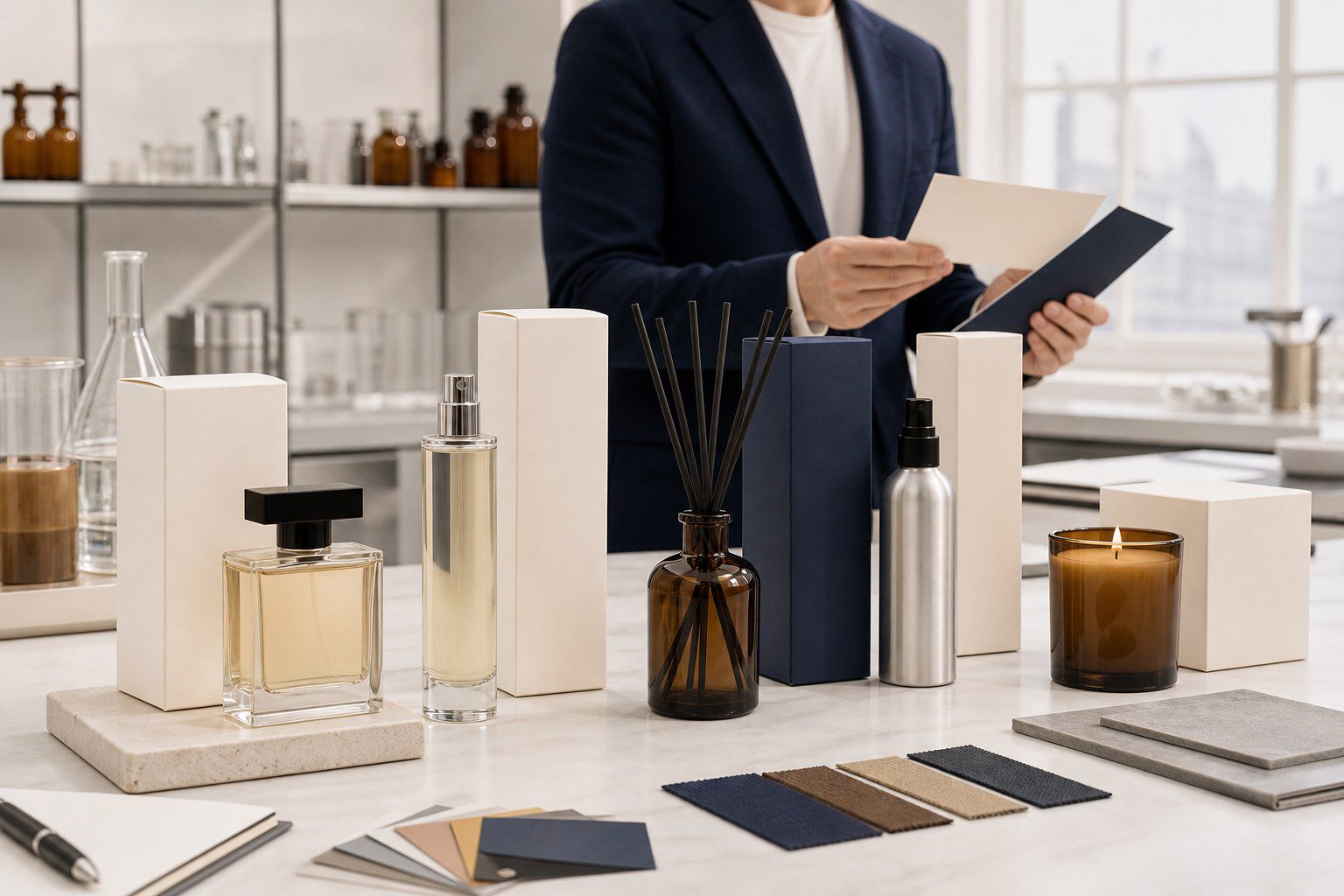
Private label can cover perfume, body mist, reed diffuser, room spray, scented candle, fragrance oil, and other products. Regulatory category depends on intended use and market—not on the commercial term “private label.”
Private Label, OEM, and Bulk Fragrance Compared
| Model | Buyer receives | Typical project scope |
|---|---|---|
| Bulk fragrance | Concentrated fragrance in industrial packaging | Buyer manufactures the finished product |
| Private label | Finished product with buyer branding | Formula selection, filling, packaging, and artwork |
| OEM | Product manufactured to agreed buyer requirements | More buyer-defined specification and process |
| ODM | Supplier-supported product concept and manufacture | More supplier-led development and options |
Decisions to Make Before Requesting a Quote
- Product category, format, fill size, and target consumer
- Destination countries and sales channels
- Stock fragrance, custom scent, or reference direction
- Formula claims and restricted ingredients
- Bottle, cap, pump, label, box, and decoration
- Expected first order and annual forecast
- Required tests, documents, certifications, and language
- Target cost, Incoterm, delivery date, and launch date
Private Label Production Workflow
- Project brief: define brand, product, market, quantity, packaging, cost, and timing.
- Feasibility: review formula, claims, sourcing, MOQ, compliance, and schedule.
- Sample selection: test stock or custom fragrance directions.
- Formula and package development: prepare finished-product samples in the proposed components.
- Testing: complete stability, compatibility, performance, safety, and regulatory work appropriate to the product.
- Artwork review: confirm dimensions, text, ingredients, warnings, batch information, and responsible-party details.
- Golden-sample approval: approve formula, scent, color, fill, package, decoration, and outer carton in writing.
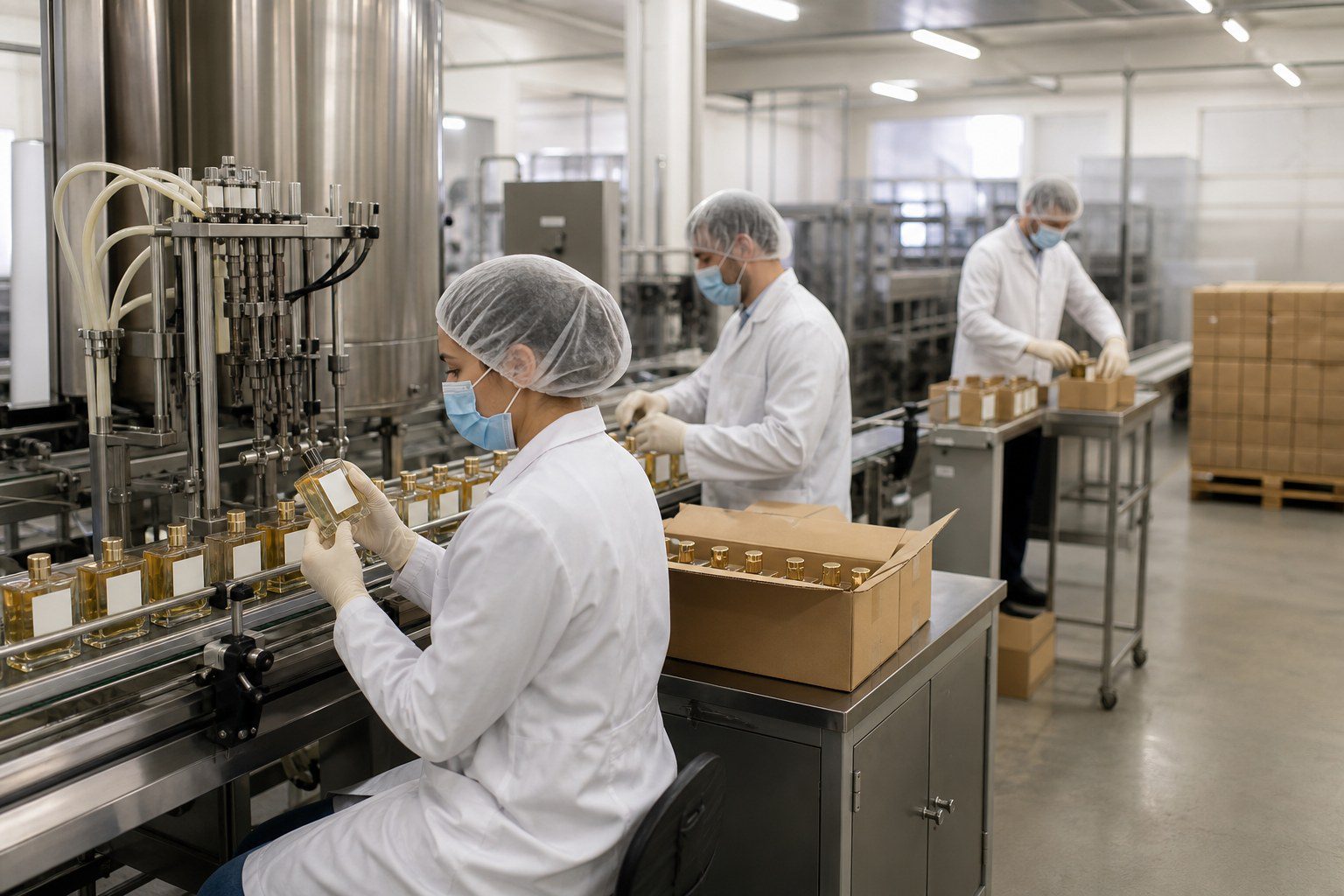
- Production and quality control: manufacture, fill, assemble, inspect, code, and release against specifications.
- Shipping and records: confirm documents, transport classification, customs, traceability, and retained samples.
Who Is Responsible for Compliance?
Responsibility depends on the product and market and cannot be transferred by a marketing phrase. For U.S. cosmetics, FDA describes the “responsible person” under MoCRA as the manufacturer, packer, or distributor whose name appears on the label. Facility registration and cosmetic product listing may apply, with defined exemptions.

For cosmetics sold in the European Union, Regulation (EC) No 1223/2009 requires an EU responsible person. The responsible person must address obligations including safety assessment, Product Information File, good manufacturing practice, notification, labeling, and serious undesirable effects. CPNP notification does not replace compliance with the rest of the Regulation.
Other categories such as candles, detergents, and air-care products follow different rules. Obtain qualified advice for each destination and do not assume the factory automatically becomes the legal responsible party.
Formula and Fragrance Selection
A stock formula can lower development time and MOQ, while a custom formula offers greater differentiation. In both cases, test the fragrance in the final base and package. Confirm fragrance dosage, applicable IFRA category, allergen information, color, odor stability, performance, and raw-material restrictions.
Packaging Can Control MOQ and Lead Time
Custom molds, coated bottles, printed caps, special pumps, labels, and cartons may each have a separate supplier MOQ. Stock components with customized labels often provide a practical first launch. Ask whether excess components are stored, returned, billed, or discarded, and who owns custom tooling.
Approve drawings and physical samples. Check leakage, pump output, crimp or closure fit, decoration adhesion, label position, shipping protection, and compatibility with the formula.
Documents Buyers May Need
- Finished-product specification and bill of materials
- Fragrance IFRA Certificate and allergen information where applicable
- SDS and transport information
- Batch COA and production record
- Stability and compatibility results
- Ingredient list and label-support information
- Safety assessment or product file inputs as required
- documented manufacturing controls or quality documentation
- Artwork approval and golden sample
Quality Agreement and Change Control
A purchase order alone rarely covers every quality decision. Define specifications, sampling, acceptance, defect categories, retained samples, traceability, complaint handling, recall support, rework, and dispute procedure. Require written approval before changes to formula, fragrance, raw materials, packaging, artwork, manufacturing site, or test method.
Common Private Label Mistakes
- Choosing packaging before confirming formula compatibility
- Using a fragrance approved only on a blotter
- Printing artwork before regulatory review
- Comparing quotes with different formula, fill, package, or Incoterm
- Assuming “natural” or “destination-market requirements when applicable” claims are automatically acceptable
- Ignoring component MOQs and excess inventory
- Skipping the signed golden sample
- Leaving responsible-person and post-market duties undefined
How to Compare Supplier Quotations
Normalize product formula, concentration, net fill, fragrance, packaging, decoration, carton, testing, documentation, tooling, sample fees, inspection, freight assumptions, taxes, Incoterm, payment, production time, and validity period. The lowest unit price can become the highest project cost if critical items are excluded.
How SHEAIN Supports Private Label Projects
SHEAIN provides fragrance selection, custom development, bulk supply, OEM/ODM, packaging coordination, sampling, and production support. Review our OEM and private-label solutions, MOQ and lead-time guide, and supplier-document checklist.
Frequently Asked Questions
What is the MOQ for private label fragrance products?
It depends on formula, fragrance, fill size, bottle, decoration, carton, and component-supplier minimums. Request a project-specific breakdown.
Can I use my own logo and packaging design?
Usually yes, subject to technical feasibility, intellectual-property rights, print requirements, and regulatory review.
Who owns the fragrance formula?
Ownership and exclusivity depend on the written agreement. Confirm them before custom development.
Can one formula be sold in the U.S. and EU?
Possibly, but the responsible parties, assessment, notification or listing, label, allergens, and other obligations must be reviewed for each market.
What should be approved before mass production?
Approve the formula, fragrance, dosage, package, artwork, tests, documents, specification, golden sample, quantity, price, and delivery terms in writing.
Authoritative References
- FDA: Cosmetic Facility Registration and Product Listing Guidance
- EU Cosmetics Regulation (EC) No 1223/2009
- European Commission: Cosmetic Product Notification Portal
Request a Private Label Project Review
Contact SHEAIN with the product, market, quantity, packaging, target cost, and launch date.


