
Custom fragrance development turns a brand idea into a repeatable, application-ready fragrance formula. The process normally moves from a precise creative brief through perfumer interpretation, laboratory samples, application testing, revision, compliance review, approval, and controlled bulk production.
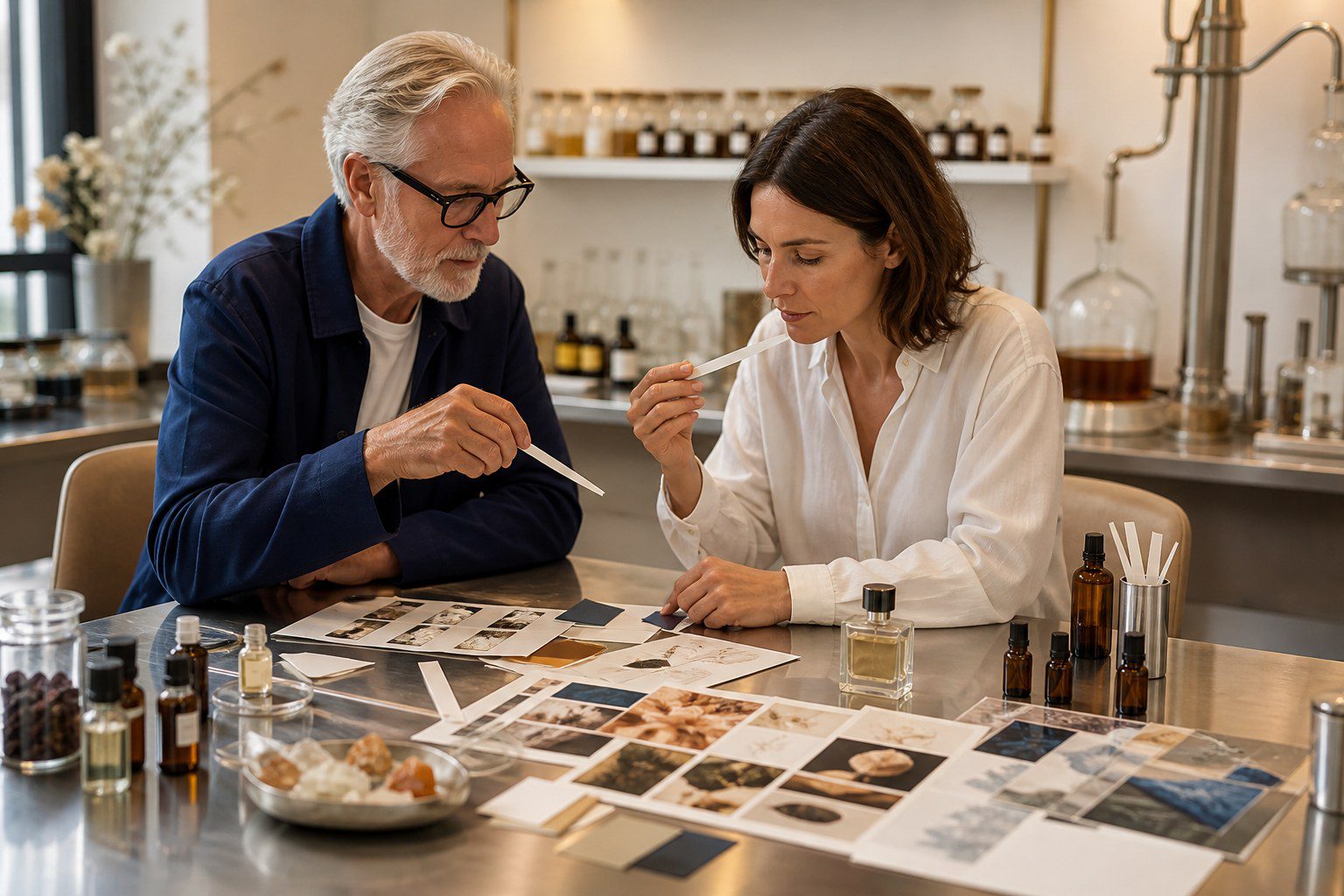
What Is Custom Fragrance Development?
Custom development creates or adapts a fragrance for a defined product, consumer, market, performance target, and commercial range. It is different from simply choosing a popular sample from a catalog. The output should include an approved odor standard, formula control, application guidance, documentation, and a production specification.
When Does a Brand Need a Custom Fragrance?
- The brand needs a recognizable signature rather than a common catalog profile.
- The product base makes existing fragrances unstable or weak.
- A target market requires specific restrictions or documents.
- The project has a defined cost, natural-origin, allergen, or ingredient policy.
- The buyer wants a new interpretation of a scent direction.
- A fragrance must perform consistently across a product collection.
From Brief to Formula: The Eight-Step Process
- Discovery: clarify brand, consumer, application, market, price, quantity, and timing.
- Creative brief: translate the concept into scent families, references, emotions, exclusions, and success criteria.
- Technical brief: document base chemistry, dosage, processing, package, testing, and compliance needs.
- Perfumer creation: build initial directions that balance scent identity with technical constraints.
- Laboratory screening: check odor, basic compatibility, raw-material availability, and estimated cost.
- Application samples: dose selected candidates into the actual candle, detergent, diffuser, shampoo, or perfume base.
- Customer review: collect structured feedback and revise with one clear priority per round.
- Approval and scale-up: lock the standard, documentation, specification, and production controls.
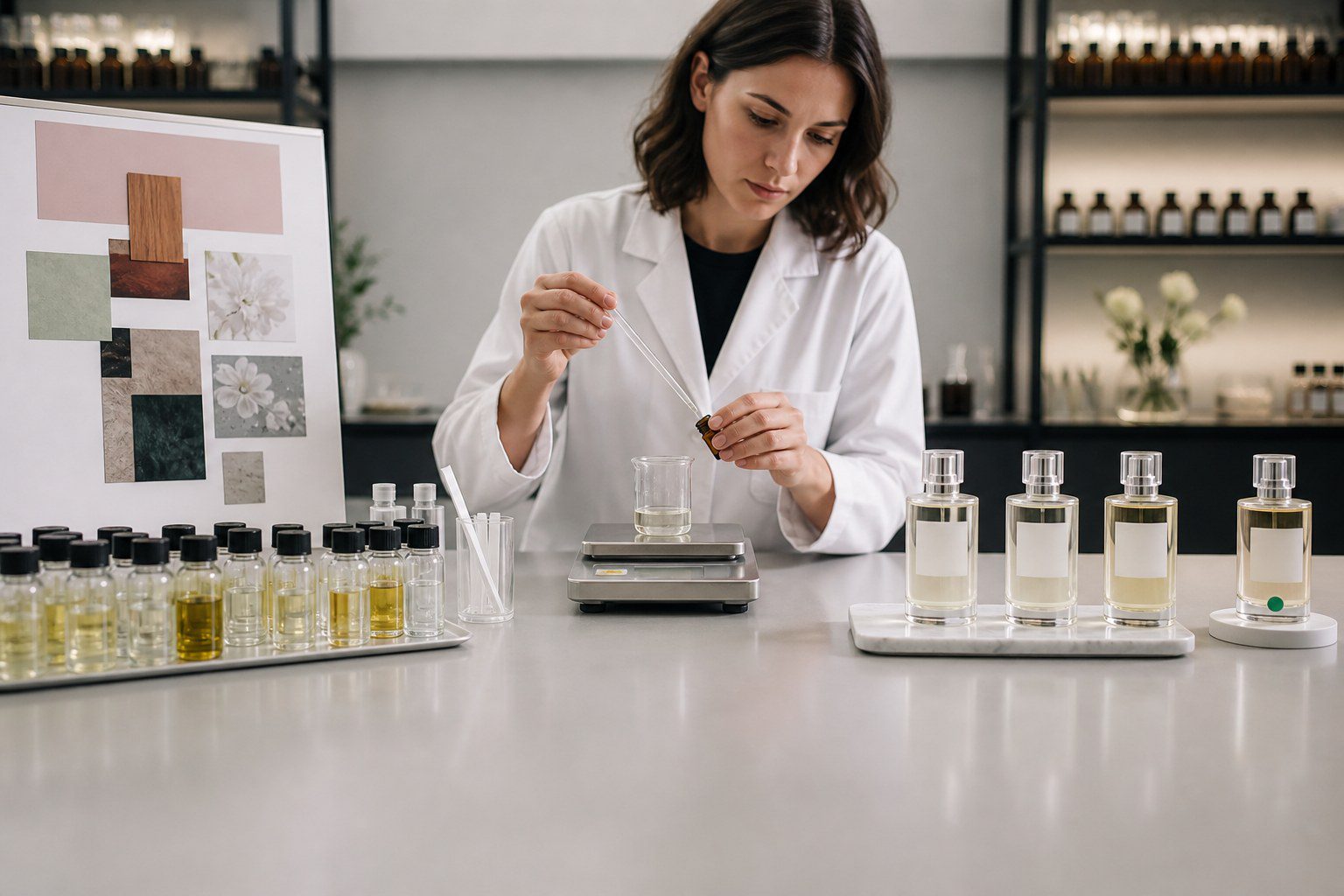
What Makes a Strong Fragrance Brief?
| Brief element | Useful information |
|---|---|
| Brand and audience | Position, price tier, consumer, channel, and market |
| Application | Exact product base, dosage, process, and package |
| Scent direction | Families, notes, references, mood, and dislikes |
| Performance | Diffusion, retention, heat, wash, or skin profile |
| Compliance | Destination, IFRA category, allergens, and restrictions |
| Commercial scope | Target cost, volume, launch date, and forecast |
Words such as “luxury,” “clean,” or “fresh” are useful only when explained. Add visual references, competitor positioning, preferred notes, and what the fragrance must not smell like.
How Many Sample Rounds Are Normal?
There is no universal number. A focused brief may reach approval quickly; a new concept with difficult technical limits may require more rounds. Agree in advance on the number of initial directions, sample size, revision policy, evaluation time, and any development fee.
Feedback should be specific: identify which sample, tested dosage, product base, conditions, preferred attributes, and the single most important change. “Make it better” creates unnecessary cycles.
Application Testing and Approval
A fragrance is not finished when it smells good on a blotter. It must work in the intended base and package. The test plan may include odor stability, color, clarity, pH, viscosity, separation, candle burn, diffuser evaporation, wash retention, fabric deposition, or packaging interaction.
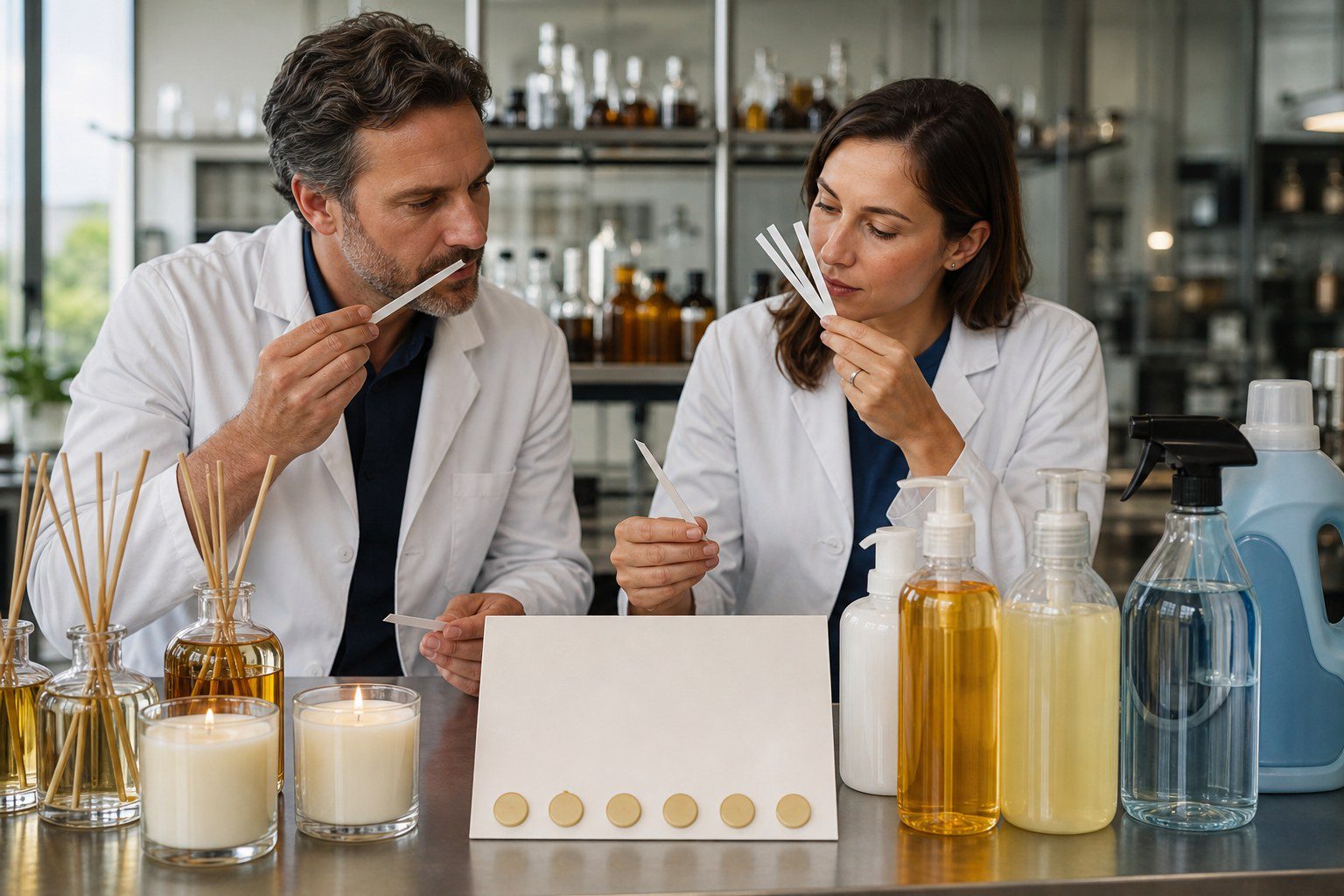
Approve both the fragrance concentrate and the application sample when possible. Record formula code, dosage, base version, preparation method, test date, and evaluator. This prevents an attractive but unrepeatable sample from becoming the production target.
Safety, IFRA, and Market Requirements
IFRA Standards are a risk-management system that may prohibit, restrict, or set purity criteria for specific fragrance ingredients. Limits depend on the finished-product category and exposure. Compliance with IFRA Standards supports safe use but does not replace national law or the finished-product manufacturer’s responsibility.
Tell the supplier where the product will be sold. Cosmetic, detergent, candle, and air-care products can have different labeling, safety, transport, and notification requirements. Claims may also change a product’s regulatory category.
Ownership, Exclusivity, and Confidentiality
Clarify commercial terms before development. Questions include whether the formula is exclusive, whether exclusivity is regional or application-specific, who owns the formula, whether the formula is disclosed, the minimum volume, the confidentiality period, and what happens if ingredients become unavailable.
A custom formula is often supplied as a confidential compounded fragrance rather than a disclosed recipe. This can protect perfumery know-how while the buyer receives the documents needed for safe and lawful use.
What Affects Cost and Timeline?
- Complexity and number of directions
- Natural or specialty raw materials
- Application difficulty and test duration
- Restricted-material or allergen requirements
- Customer feedback speed
- Number of revisions
- Documentation and destination markets
- Packaging and scale-up requirements
Approval Checklist
- Final fragrance code and approved reference
- Application, base version, and dosage
- Odor and performance acceptance criteria
- Stability and packaging results
- IFRA, SDS, COA, and allergen needs
- Price, MOQ, lead time, and Incoterm
- Change-control and repeat-order process
- Written commercial approval
Custom Development vs Fragrance Duplication
Custom development begins with a new brand brief. Fragrance duplication begins with a reference odor and aims to reproduce its key sensory direction for a stated application. Both require perfumer judgment, testing, customer review, and final approval; neither should be confused with copying another brand’s identity or packaging.
How SHEAIN Develops B2B Fragrances
SHEAIN supports creative briefing, fragrance selection, custom creation, application sampling, revisions, documentation, and bulk supply. Projects can cover fine fragrance, home fragrance, personal care, and household products. Review our wholesale services and MOQ and sampling guide.
Frequently Asked Questions
Can a small brand request a custom fragrance?
Yes, but development scope, sample fee, MOQ, packaging, and commercial potential should be discussed at the start.
Do I need to send my product base?
It is strongly recommended for accurate compatibility and performance testing.
Can one fragrance be used in several products?
Possibly, but every application needs its own dosage, IFRA-category review, stability assessment, and performance test.
How do I protect the project?
Use a confidentiality agreement where appropriate and define ownership, exclusivity, permitted use, and change control in writing.
When is the formula ready for production?
After sensory approval, application testing, documentation review, commercial confirmation, and written approval of the final standard.
Authoritative References
Start a Custom Fragrance Brief
Contact SHEAIN with your brand, application, scent direction, market, quantity, budget, and launch date.


