

Candle fragrance load testing determines whether a fragrance dosage works safely and consistently with a particular wax, wick, vessel and manufacturing process. The highest percentage is rarely the best target: buyers must balance cold throw, hot throw, combustion behavior, appearance and stability.

What Is Candle Fragrance Load?
Fragrance load is normally expressed relative to the wax or finished blend, but manufacturers must define their calculation method clearly. Wax supplier limits are starting points, not automatic approvals for every fragrance and wick combination.

| Measure | What it describes | When to assess |
|---|---|---|
| Cold throw | Scent from an unlit candle | After controlled cure |
| Hot throw | Scent during burning | Across repeated burn cycles |
| Flame behavior | Height, stability and soot tendency | Throughout each cycle |
| Wax appearance | Bleeding, sweating, frosting or discoloration | Initial and aged samples |
A Practical Candle Test Matrix
- Select the exact wax, vessel and intended wick family.
- Prepare a control and several fragrance loads.
- Keep melt temperature, addition temperature and mixing time constant.
- Allow every candle the same cure period.
- Record cold throw and surface appearance.
- Run complete burn cycles under controlled conditions.
- Measure melt pool, flame, residue, soot and hot throw.
- Repeat with production-representative samples before launch.
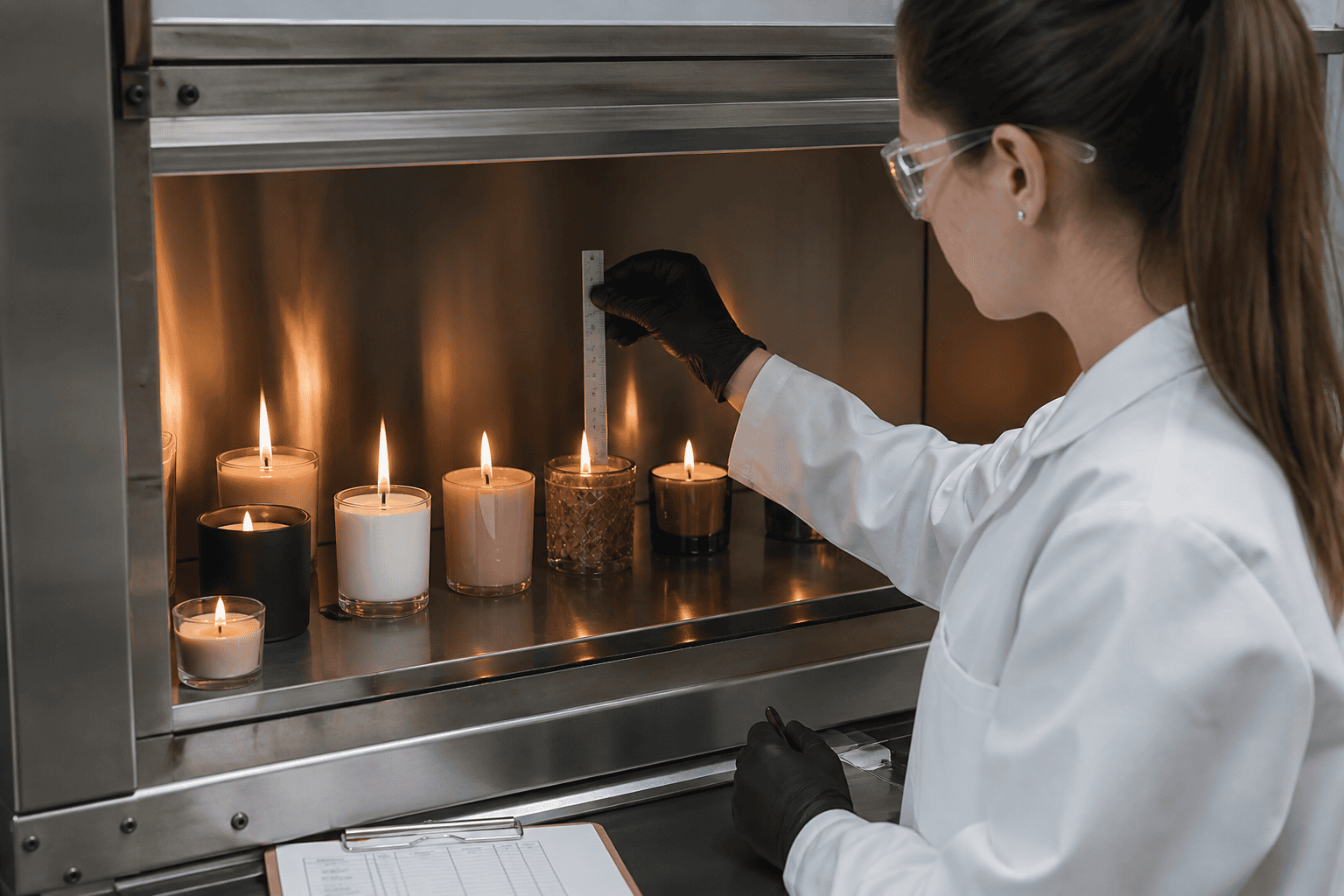
Why Wick Testing Must Be Repeated
Fragrance changes blend viscosity and combustion. A wick selected for unfragranced wax may not remain appropriate after scent is added. Test wick size and construction with the final vessel, dye and fragrance load. Never use fragrance strength as the only approval criterion.
Cure Time and Evaluation Bias
Different wax systems need consistent conditioning before comparison. Blind coding helps prevent expectations about fragrance price or dosage from influencing sensory scores. Evaluate scent at defined room size, ventilation and burn time.
Documentation and Safety
Request relevant fragrance documentation and follow applicable candle labeling and fire-safety requirements in the destination market. The candle manufacturer is responsible for testing the finished candle. See our candle fragrance capabilities.
How SHEAIN Supports Candle Development
SHEAIN can provide fragrance directions and samples for the selected wax system, then support revisions based on cold- and hot-throw feedback. Send us your wax, vessel, wick and target scent profile.
Frequently Asked Questions
Does more fragrance always increase hot throw?
No. Excess load can reduce stability or combustion quality without improving diffusion.
Can a fragrance load be copied between waxes?
No. Each wax, wick, vessel and process combination requires validation.
Why is cold throw strong but hot throw weak?
Wax release, wick performance, volatility balance and room conditions can all contribute.
Should fragrance be added at one universal temperature?
No. Follow the wax and process guidance, then validate the finished result.
Who is responsible for burn safety?
The finished-candle manufacturer must conduct and document appropriate safety testing.


