

Wax melt fragrance oil must deliver a clear scent profile when the wax is cold and a controlled release when warmed. A fragrance that performs well in a candle, diffuser or bottle may behave differently in a flameless wax melt because wax chemistry, fragrance load, warmer temperature, cure time and room conditions all influence diffusion.
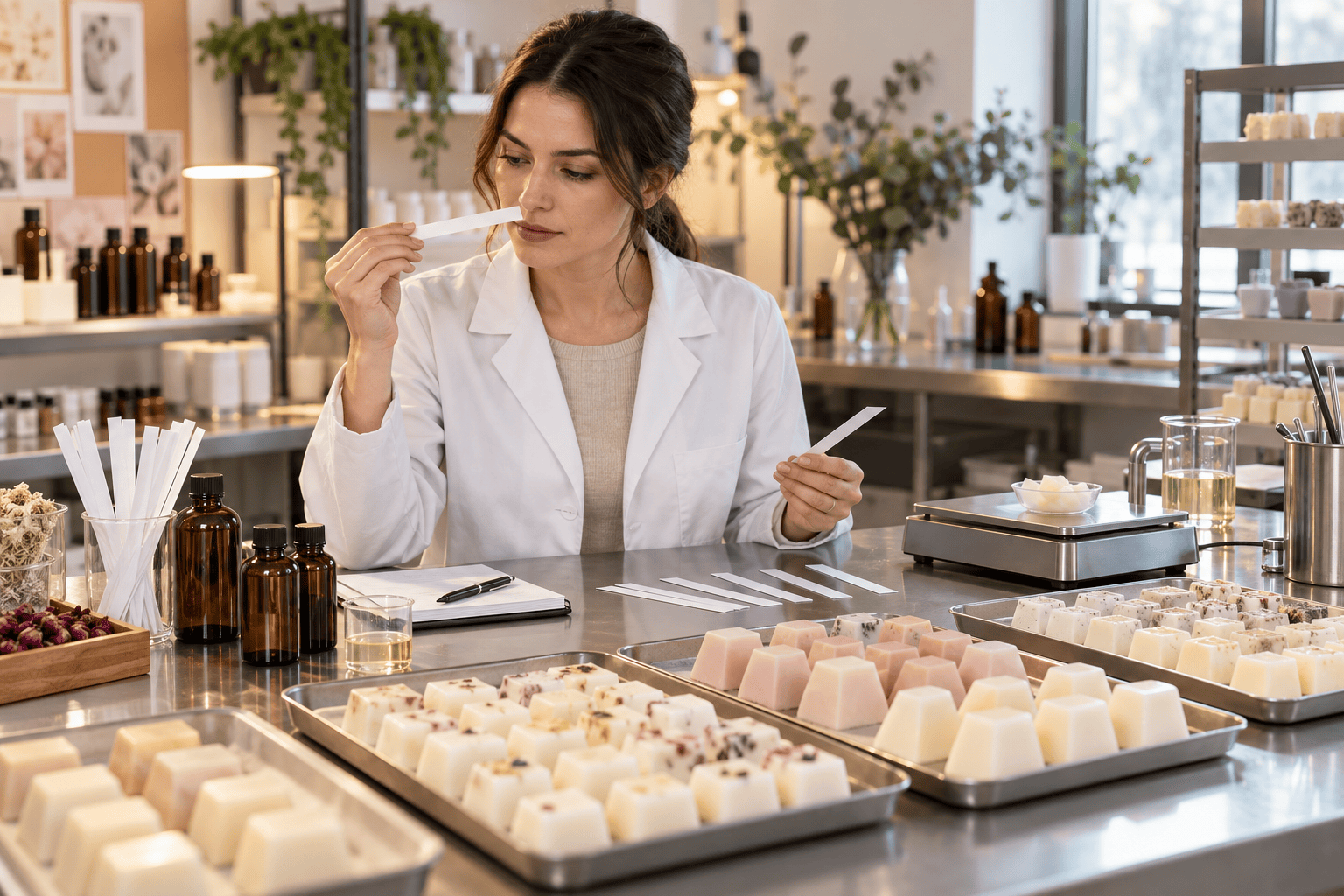
Why Wax Compatibility Matters
Soy, paraffin, coconut and blended waxes differ in polarity, crystallization and oil-holding capacity. The same fragrance percentage can produce different hardness, surface appearance, sweating and scent throw. Start with the wax supplier’s guidance, then test the actual fragrance, dye, mold and production process together.
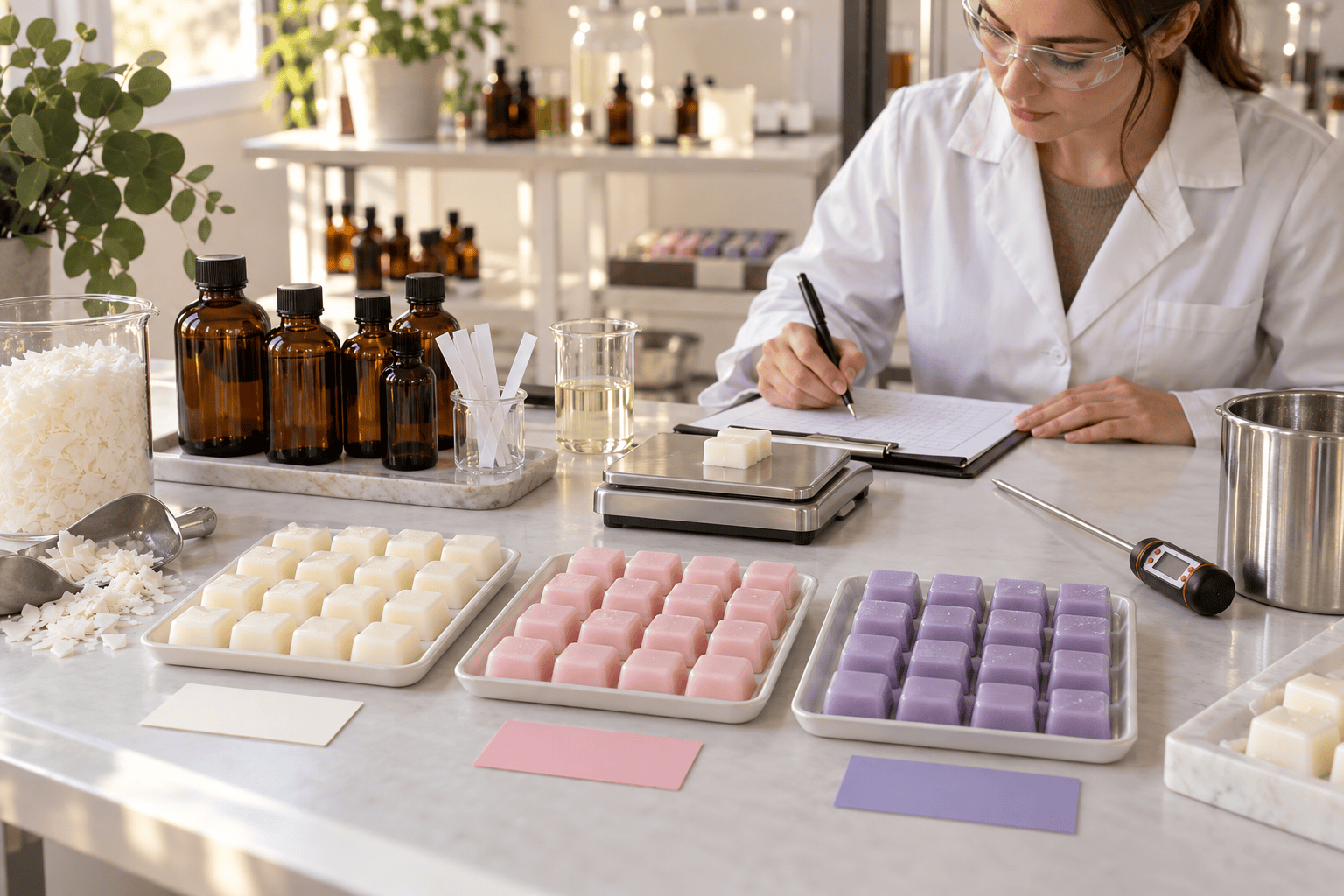
| Variable | What to observe | Why it matters |
|---|---|---|
| Fragrance load | Oil retention and intensity | More oil does not always improve release |
| Addition temperature | Mixing and volatility | Excess heat can change top notes |
| Cure time | Cold and warm throw | Comparisons require equal conditioning |
| Warmer temperature | Melt pool and release rate | Consumer devices operate differently |
A Practical Wax Melt Test Plan
- Select the exact wax, mold, dye and intended warmer type.
- Prepare a control and several fragrance levels with identical batch size.
- Record melt, addition, mixing and pour temperatures.
- Condition every sample for the same period.
- Inspect hardness, color, sweating, frosting and package interaction.
- Evaluate cold scent before warming.
- Run timed warming cycles and score strength, character and longevity.
- Repeat the best result at pilot scale before commercial approval.
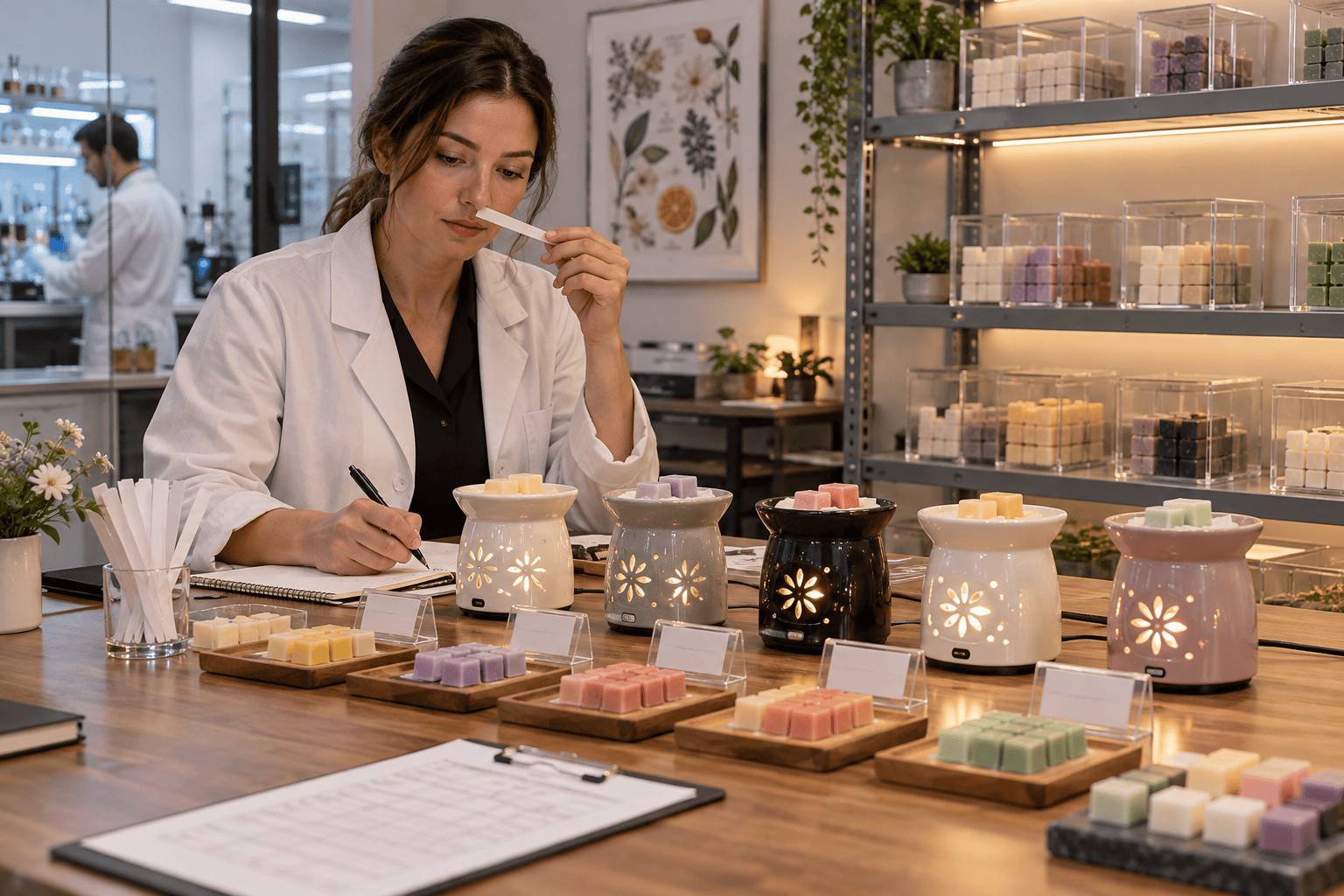
Measuring Scent Throw Without Bias
Use coded samples, a consistent room volume, fixed ventilation and identical warmers. Score intensity and scent character separately. A very strong opening that collapses quickly is not the same as stable performance across repeated cycles.
Packaging and Storage Stability
Test the melt in its final clamshell, pouch or box. Fragrance may soften some polymers, migrate into packaging, discolor the wax or lose volatile notes during warm storage. Keep retained samples and compare them against an approved reference.
How SHEAIN Supports Wax Melt Projects
SHEAIN supplies fragrance oil concentrates for B2B manufacturers and can adjust scent direction after testing in the buyer’s wax system. Share the wax type, target load, warmer temperature, market, packaging and desired scent profile. Request samples for your wax melt project.
Frequently Asked Questions
Can candle fragrance oil be used in wax melts?
Possibly, but performance must be validated in the exact wax melt format and intended dosage.
Does a higher fragrance load always create stronger throw?
No. Excess oil can cause sweating, softness or inefficient release.
How long should wax melts cure?
There is no universal period. Use the wax supplier’s starting guidance and compare all samples after equal conditioning.
Why does the scent change after warming?
Heat changes evaporation rates, so volatile top notes and heavier base notes develop at different speeds.
Who validates the finished product?
The wax melt manufacturer must test the final formulation, packaging, labeling and intended use.


