

Fragrance oil for dishwashing liquid has a difficult job. It must smell clean in the bottle, remain stable in a surfactant-rich base, support the impression of grease removal, and leave dishes feeling rinsed rather than perfumed. A fragrance that performs well in soap, shampoo, or air care cannot automatically be transferred into a dishwashing formula.
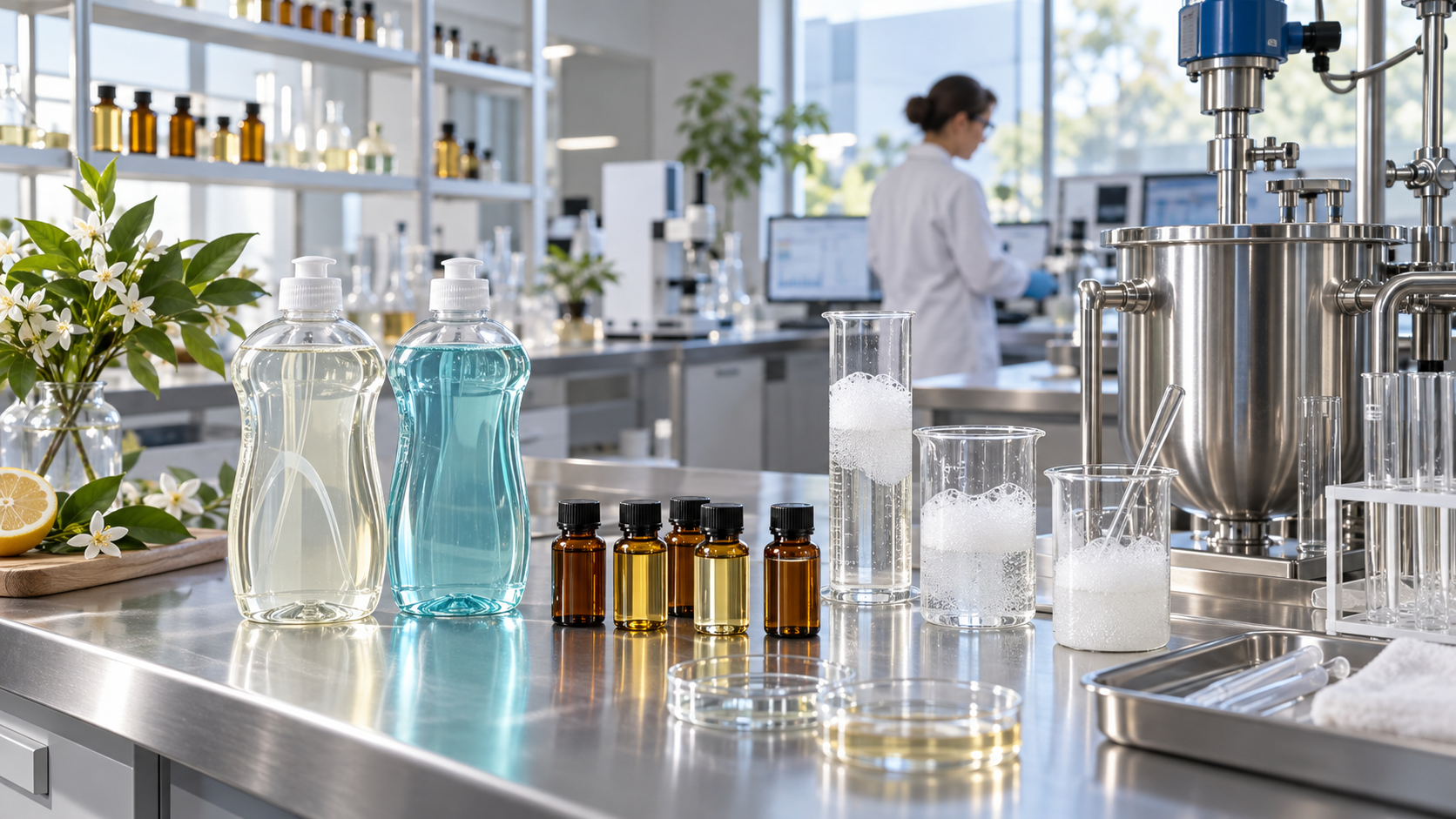
This guide gives home-care brands and contract manufacturers a practical development process. It focuses on compatibility, foam, food-odor control, rinse character, dosage, stability, and the information a fragrance supplier needs before creating samples.
What Makes Dishwashing Fragrance Different?
Manual dishwashing liquids contain surfactants, hydrotropes, salts, preservatives, colorants, and sometimes solvents or botanical claims. These materials can change fragrance solubility, clarity, viscosity, and odor. The product is also judged at several moments: opening the bottle, dispensing, washing greasy dishes, and rinsing under running water.
Consumers usually expect freshness without a strong perfume residue on plates or glasses. Development therefore requires balance. A powerful top note can communicate cleanliness, but excessive tenacity may create an unwanted food-contact impression.
Start with the Finished Base, Not Fragrance Alone
Send the fragrance supplier the real unperfumed base whenever possible. Include target pH, surfactant system, color, viscosity range, preservative system, expected fragrance dosage, packaging material, and target markets. Testing in water or a generic soap base is not a reliable substitute.
Prepare a control without fragrance and several fragrance levels. Record appearance, odor, pH, and viscosity after addition and again after the formula has rested. Cloudiness, separation, color movement, or a sharp viscosity change signals that the fragrance and base need further work.
Test Foam and Cleaning Perception
Fragrance does not replace cleaning performance, but it strongly influences how users interpret the wash. Citrus, green, herbal, and light floral directions are common because they can reinforce freshness. The best choice still depends on the market, brand position, and base odor.
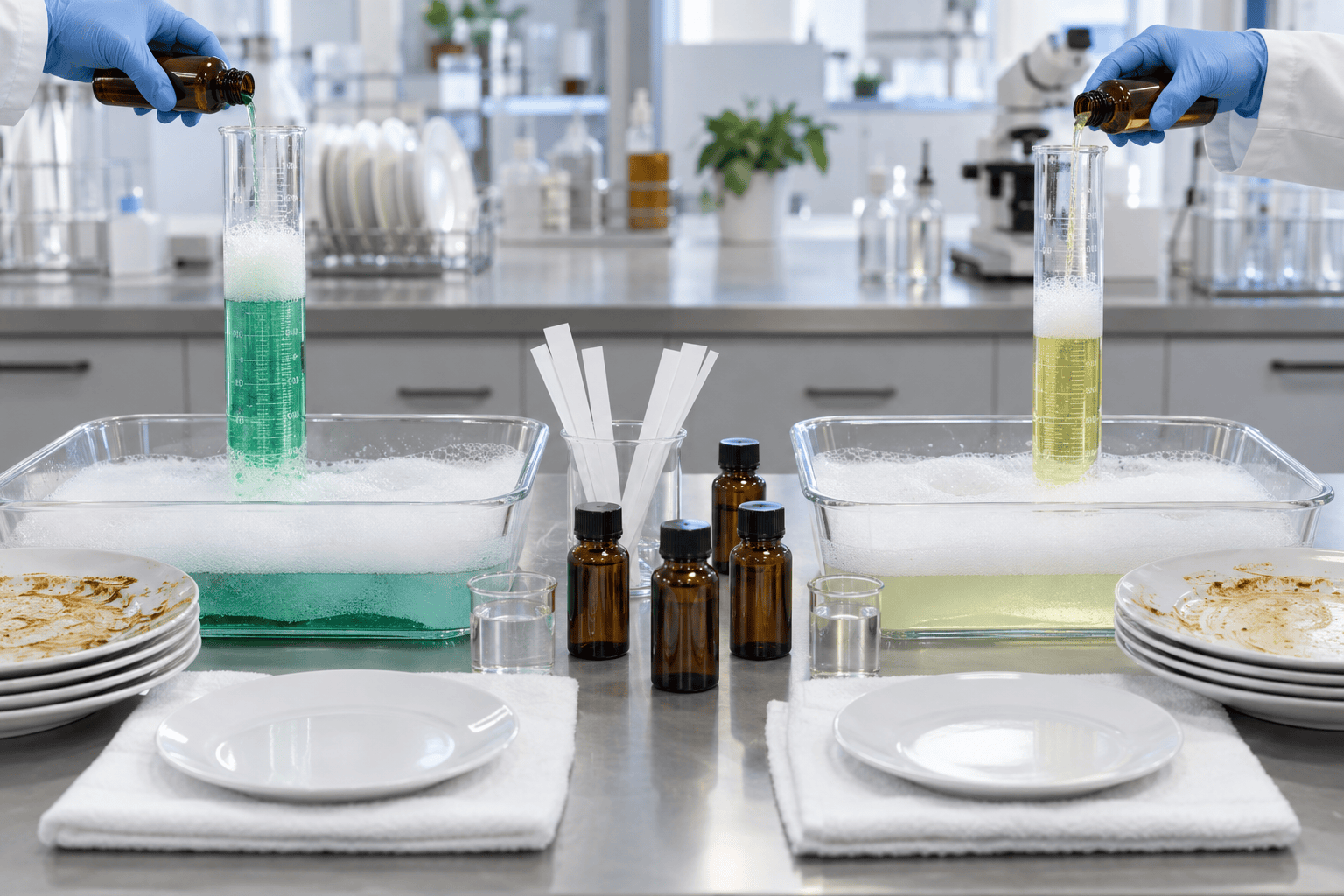
Run foam tests with consistent water hardness, product dose, temperature, and soil load. Compare foam height and persistence against the unperfumed control. Then use a small trained panel to evaluate fragrance intensity during washing and whether the scent supports or distracts from the cleaning experience.
Evaluate Grease and Food-Odor Control
Onion, garlic, egg, fish, dairy, and cooking oil create different odor challenges. A single pleasant accord may mask one odor while combining poorly with another. Use standardized soiled plates and evaluate the air above the wash bowl, the cleaning tool, the rinsed dish, and the user’s hands.
Score malodor reduction and fragrance character separately. This prevents a strong perfume from being mistaken for true odor control. For a broader view of this subject, see our guide to malodor control fragrance technology.
Choose Dosage by Performance, Not Habit
A higher dosage does not always produce a better product. It can reduce clarity, change viscosity, increase cost, affect foam, or leave an overly persistent scent. Build a small dosage ladder around the supplier’s recommended starting level and compare samples blind.
Select the lowest level that delivers a clear bottle impression, acceptable wash bloom, controlled food odors, and a clean rinse. Confirm the result after stability testing because top notes can decline and base notes can become more prominent over time.
Run Stability and Packaging Tests
Store the finished product under controlled cold, room-temperature, elevated-temperature, and light conditions appropriate to the project. Check clarity, separation, sediment, color, odor, pH, and viscosity at planned intervals. Include freeze-thaw testing when distribution conditions make it relevant.

Test the actual bottle, cap, liner, label, and colorant. Fragrance materials can interact with plastics, seals, and inks. A stable bulk sample is not enough if the retail pack leaks, softens, stains, or loses fragrance during storage. Our fragrance oil stability testing guide explains how to build a wider protocol.
A Practical Supplier Brief
- Product type, full base sample, pH, and surfactant system
- Target fragrance family and examples of preferred character
- Target dosage, cost range, and required clarity
- Priority food odors and expected wash conditions
- Packaging format, storage conditions, and launch markets
- Required documents and restricted-material requirements
A precise brief reduces unnecessary sampling rounds. Ask for a small number of clearly differentiated options, test them in the final base, then give structured feedback about strength, character, technical behavior, and cost.
Frequently Asked Questions
What fragrance oil is best for dishwashing liquid?
There is no universal best fragrance. Citrus, green, herbal, and fresh floral profiles are common, but the right choice depends on base compatibility, target market, food-odor performance, rinse character, brand positioning, and cost.
How much fragrance should be added?
Use the fragrance supplier’s recommended starting range and confirm it with dosage-ladder tests in the actual formula. The final level must meet sensory targets without harming clarity, viscosity, foam, stability, or packaging.
Can fragrance reduce foam?
Yes. Some fragrance compositions can change foam generation or persistence, especially at higher dosage. Compare the perfumed formula with an unperfumed control using consistent water, soil, temperature, and agitation.
How do I test odor control?
Use repeatable food soils and evaluate malodor and fragrance separately at the wash, rinse, dish, sponge, and hand stages. Blind comparison and a simple scorecard improve reliability.
Should dishes retain fragrance after rinsing?
Usually the goal is a clean impression with little or no obvious perfume residue. Requirements vary by market, so define the desired rinse character in the brief and validate it with users.
Build a Better Dishwashing Fragrance
The strongest result comes from developing fragrance and base together. Share the real formula, define the priority odors, test realistic washing conditions, and approve performance only after stability and packaging review. Contact SHEAIN to discuss fragrance oil for dishwashing liquid, request samples, or build an application-specific test plan.


