

Opened vs unopened fragrance oil storage is a comparison of documented handling conditions, not a universal countdown that starts whenever a cap is removed. Obtain the supplier’s storage guidance for the exact material and retain the opening and dispensing history. A sealed reference and a partly used bottle may differ in several ways. Plan the comparison before concluding that opening alone caused an observed odor or appearance change.
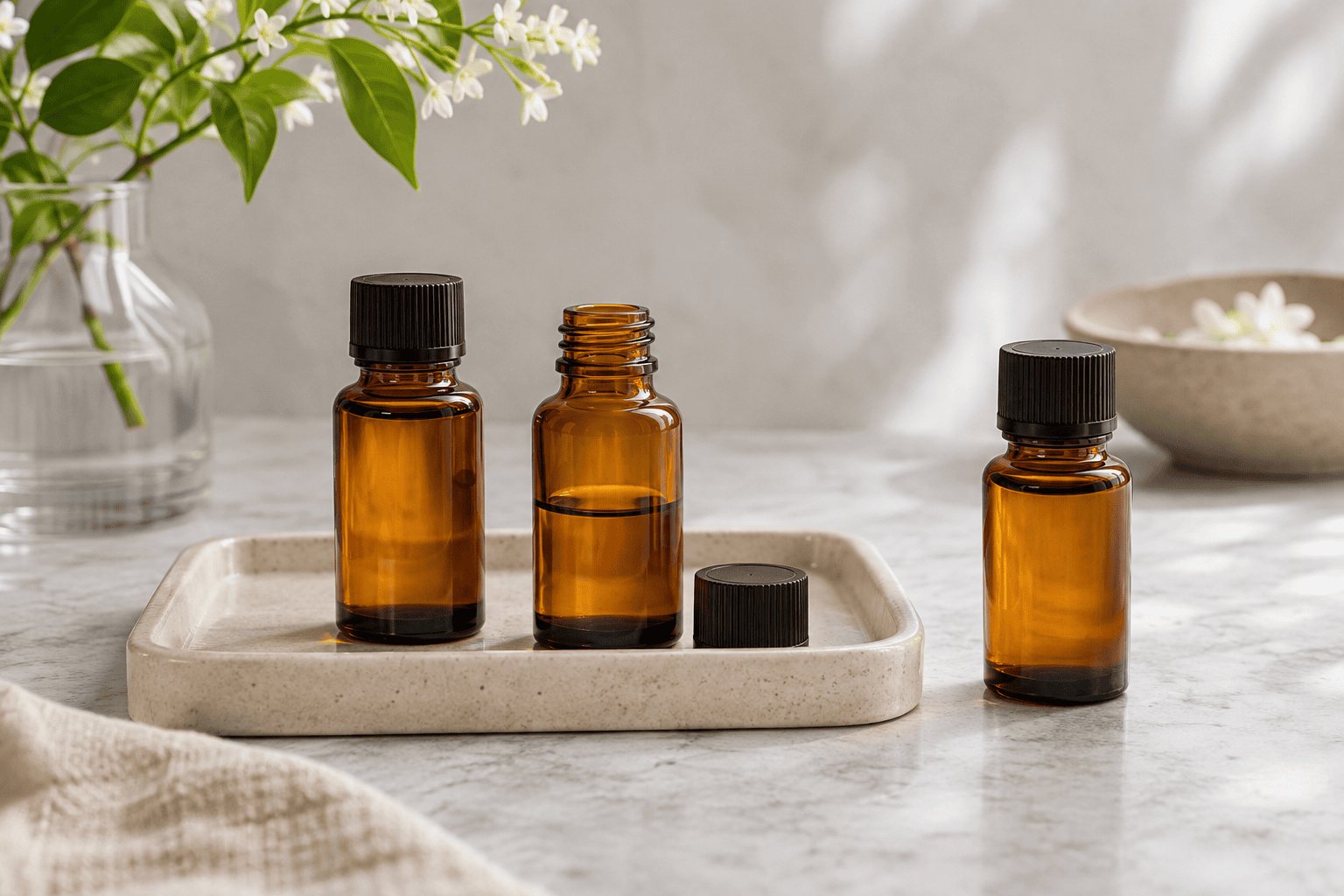
Define the material and the storage question
Record the concentrate code, revision, lot, container, closure and supplier instructions. Decide whether the question concerns a repeatedly dispensed working bottle or a single opening followed by storage. Intertek’s stability guidance distinguishes product behavior and packaging assessment in relevant cosmetic studies.Source: Intertek: cosmetic product and packaging stability assessment That is not a shelf-life specification for your concentrate. Use the material supplier’s actual information rather than borrowing a finished-perfume or cosmetic time limit.
Use a matched retained reference where practical
Choose reference samples from the same lot and document how they were filled and stored. Record container and closure differences, initial fill and available handling history. Comparing an old working bottle with a newly received different batch cannot isolate opening effects. A retained reference is most useful when its relationship to the questioned bottle is known, not simply because it has remained capped in a cupboard.
Record each dispensing event and closure condition
Keep a practical log of opening dates, approximate handling duration, dispensing method and any observed closure problem. Follow appropriate material-handling instructions and avoid contaminating or mixing retained samples. If decanting is necessary, use a technically approved container and procedure. Do not assume a smaller bottle automatically improves preservation or that any attractive packaging is compatible with the concentrate; those are specification and qualification questions.
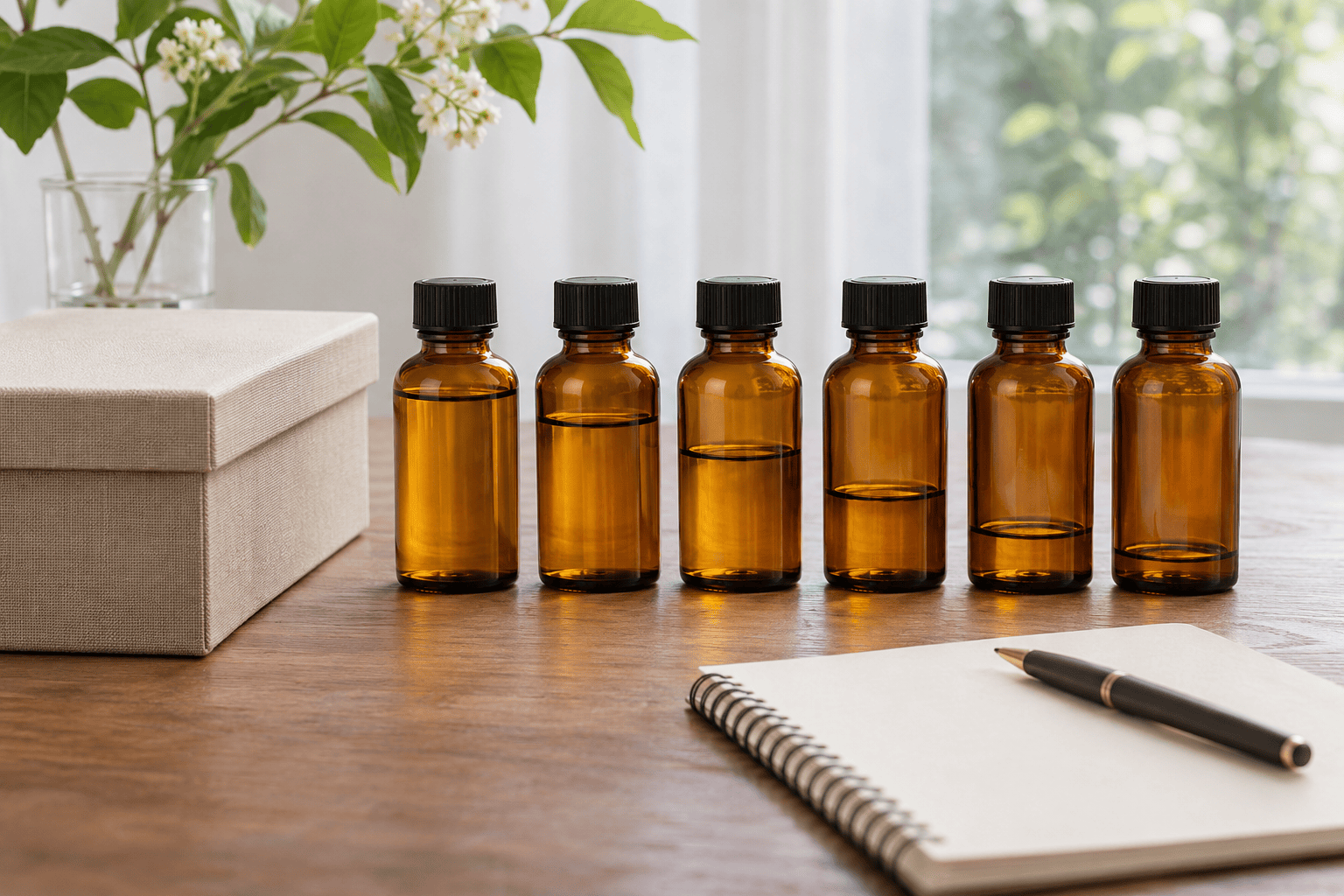
Separate environmental differences from opening history
Record storage location and relevant environmental conditions for the comparison. If one bottle sits near changing light or heat while another remains protected, the study concerns more than opening. Keep intentional differences explicit and use a qualified plan where a commercial conclusion is required. Do not diagnose oxidation, contamination or another mechanism from smell alone. Hold unaccepted anomalies for investigation against the agreed quality specification.
Assess quality without resetting the clock
Compare odor, color, visible condition and other relevant criteria through appropriate procedures. An acceptable sniff does not renew a supplier’s shelf-life statement or establish indefinite suitability. Reclosing a bottle does not erase its handling history. The table is an editorial records framework, not a validated aging study or SHEAIN test result. Use qualified technical review when deciding whether a questioned lot can still be used commercially.
| Record | Purpose | Avoid |
|---|---|---|
| Lot and reference | Establish a meaningful comparison | Comparing unrelated batches |
| Opening history | Describe actual handling | Treating all opened bottles alike |
| Container and environment | Identify other changed conditions | Assigning every change to oxygen |
| Quality review | Use agreed criteria and supplier guidance | Resetting shelf life after a sniff |
Set a practical controlled-use policy
Provide SHEAIN the material code, lot, opening history, actual container and observations when discussing a storage concern. Agree the required documentation and any justified retest procedure instead of assigning one arbitrary opened-bottle lifetime to every fragrance. Keep purchase date, manufacture information and opening date as separate records. Approve handling practices for the actual operation, and reassess changes to dispensing, container or storage conditions rather than relying on memory.
Frequently Asked Questions
Does opening always create one fixed use-by period?
No universal period follows from this framework. Obtain the exact supplier guidance and appropriate assessment.
Can I recalculate shelf life from the purchase date?
Do not substitute purchase date for the supplier’s defined basis. Keep the relevant dates separately.
Does a normal smell prove the oil remains acceptable?
No. Odor is only one quality observation and cannot replace the required review.
Related Guides and Application Support
- Fragrance Oil Shelf Life: Storage, Packaging and Temperature Control
- Fragrance Oil Stability Testing: How to Check Compatibility Before Mass Production
Contact SHEAIN. Share your end-use application, target market and scent brief to discuss fragrance oil concentrate samples.


