
Fragrance compatibility with PVA film cannot be established from the fragrance name or a clear bottle of concentrate. For laundry pods, evaluate the complete detergent, fragrance, water-soluble film, seal and outer package together. In this context, PVA commonly refers to polyvinyl alcohol, also written PVOH; confirm the actual polymer and film grade with the supplier. Similar shorthand does not mean every soluble film has identical behavior.
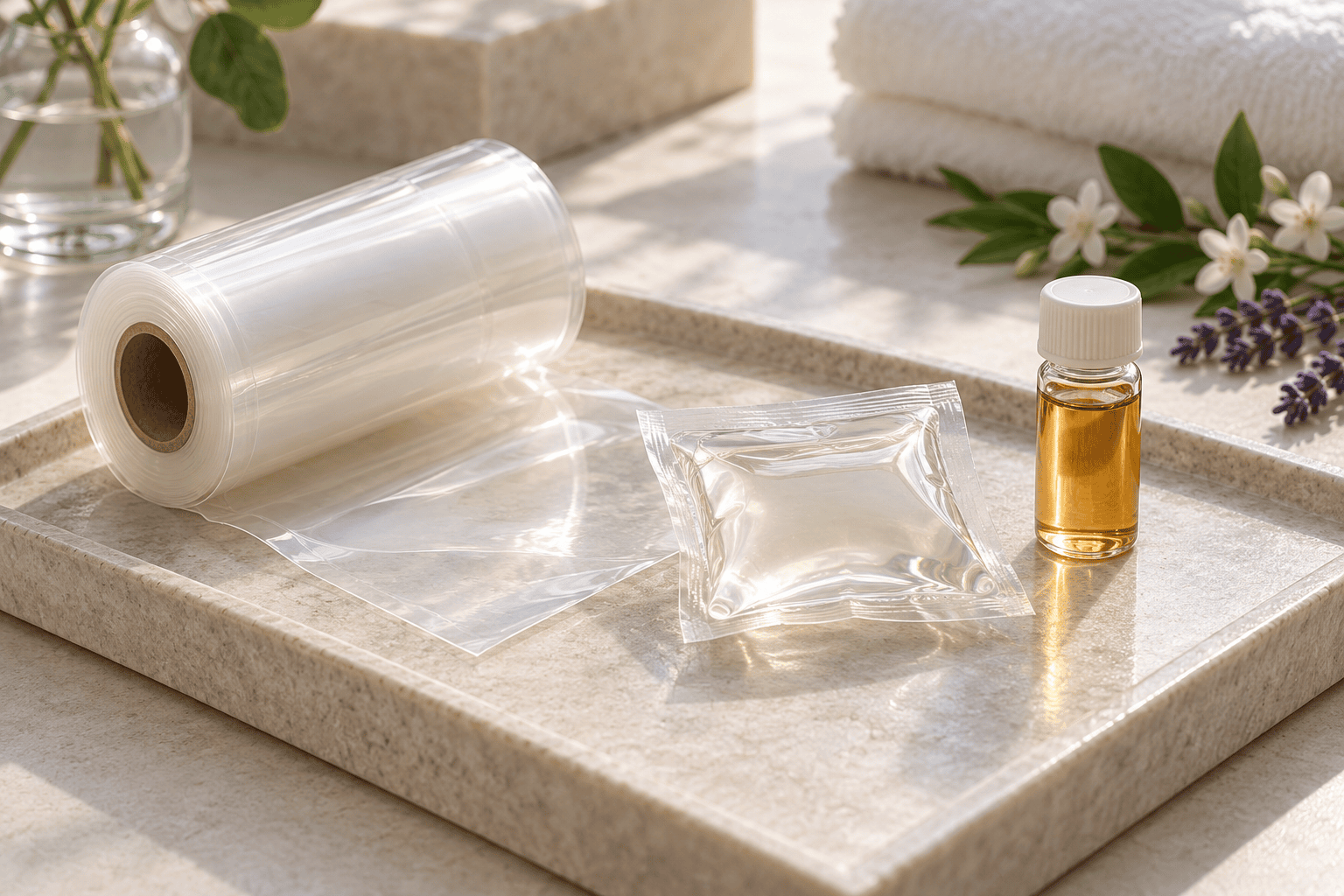
Identify the actual film and detergent system
Record the film supplier, grade, thickness, converting conditions and intended detergent formula revision. Ask the film supplier what compatibility information it needs and which qualification methods it recommends. Do not substitute generic plastic film for the real material in the final assessment. The same fragrance may be evaluated differently when the detergent solvent system or film construction changes. A purchasing specification should name the qualified combination so a later component substitution is not mistaken for an unchanged product.
Assess fragrance changes within the whole formula
Provide the responsible formulator with the concentrate code, loading under review and available technical information. Compare an appropriate unfragranced or approved-fragrance control while holding other ingredients and processing constant. Do not conclude that a fragrance is the cause of a film defect when solvent, water or process variables changed at the same time. Avoid treating a concentrate-only contact test as the sole acceptance test: it may not represent the packaged detergent. Use screening results to guide further investigation, not to replace complete-system qualification.
Inspect both film contact and sealed-pouch behavior
The team should select suitable observations for appearance, tackiness, deformation, seal integrity and leakage, together with any mechanical or chemical assessments needed for the product. Record the location and timing of a change. An issue at a seal can have a different origin from a change across the film surface. Treat migration or interaction as hypotheses to investigate rather than diagnoses established by appearance alone. Keep retained controls and photographs so the supplier and converter can review the same evidence.
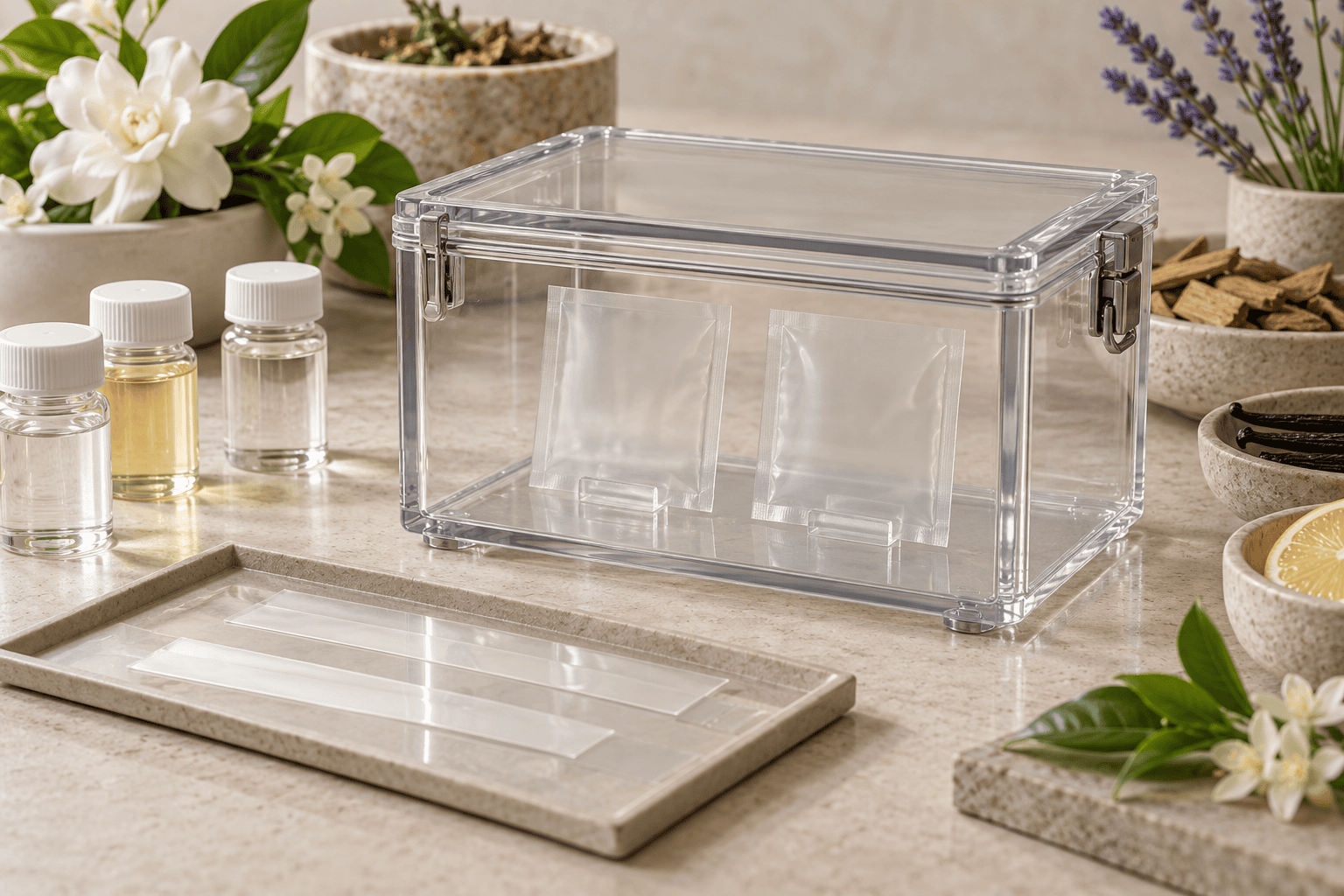
Control storage conditions and outer packaging
MonoSol notes that PVOH film is sensitive to temperature and relative humidity. MonoSol: film storage and conversion technical bulletin Follow the actual film supplier’s guidance and qualify the final packaged product under conditions selected for its distribution and use. Do not transfer a film-reel storage recommendation directly into a finished-pod shelf-life claim. Record the outer pack, closure and storage history because those are part of the system. A fragrance comparison is difficult to interpret if one group of samples was exposed to different moisture conditions or packaging.
Check dissolution and function after the relevant storage period
An intact pouch is not the only acceptance endpoint. The responsible team should also evaluate release or dissolution behavior and the intended detergent function after storage using appropriate methods. Do not improvise consumer handling tests or leave experimental pods accessible to children. This guide does not prescribe a passing time, force or universal test temperature. Product-specific requirements and applicable rules must be determined by qualified staff. The table below is a planning aid, not a legal compliance checklist or evidence that a proposed combination passes.
| Component | Identify precisely | Qualification question |
|---|---|---|
| Fragrance and detergent | Codes, revisions and loading | Was the complete formula assessed? |
| Film and seals | Grade, thickness and process | Do contact and seals remain acceptable? |
| Outer package | Material, closure and conditions | Is storage exposure controlled? |
| Aged product | Defined storage and use methods | Does release and product function remain acceptable? |
Qualify changes jointly before production release
Bring the fragrance supplier, detergent formulator, film supplier and converter into the review when a change is proposed. Lock the accepted fragrance version and loading with the detergent, film and package specifications. SHEAIN can discuss fragrance-concentrate candidates; it does not follow that every candidate is qualified for pods or that SHEAIN supplies the film or finished capsules. Retain the compatibility record and identify which changes trigger re-evaluation so a familiar scent name never becomes a substitute for the approved system.
Frequently Asked Questions
Does PVA mean every water-soluble film is interchangeable?
No. Confirm the polymer, supplier grade and construction. Similar naming does not establish equivalent compatibility.
Can fragrance oil be tested alone on the film?
It may support a specific screening question, but final qualification needs the actual detergent and packaged system, using supplier-recommended methods.
Does no leakage mean the pod is approved?
No. Other requirements can include mechanical integrity, release behavior, product function, packaging and the relevant safety and regulatory assessment.
Related Guides and Application Support
- Fragrance Oil Stability Testing: How to Check Compatibility Before Mass Production
- What Documents Should a Fragrance Oil Supplier Provide? IFRA, SDS, COA and Allergen Declarations Explained
Contact SHEAIN with your end-use application, target market and scent brief to discuss fragrance oil concentrate samples.


