

The fragrance effect on shampoo viscosity should be investigated separately from fragrance liking or hair scent. If a shampoo becomes thinner after fragrance addition, first check whether the formulation, process and measurement conditions were controlled. Do not immediately assume the oil is defective or add more salt to the production batch. A small comparative investigation can show which variables need the formulator’s attention.

Confirm that the viscosity comparison is valid
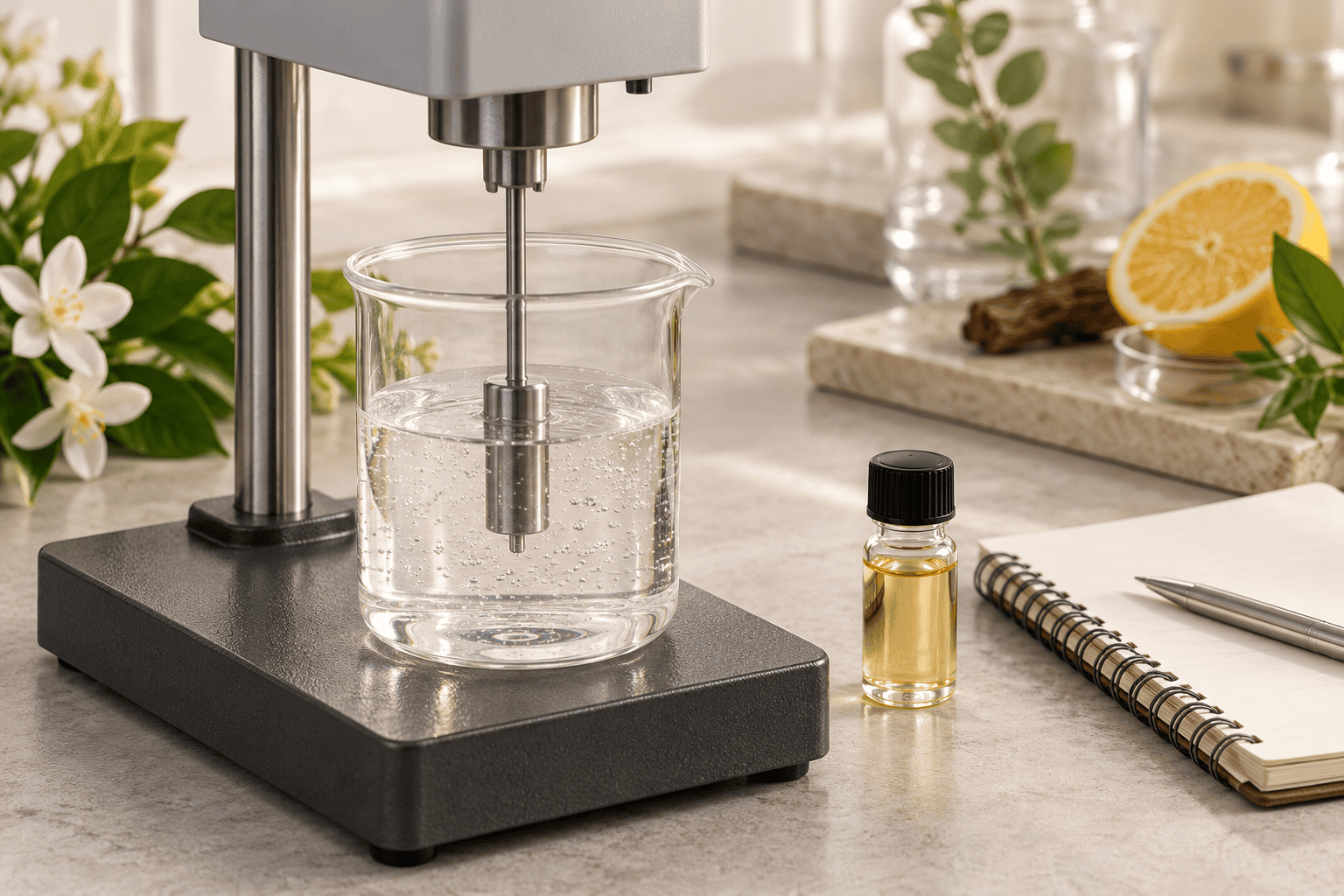
Record the instrument, geometry or spindle, speed, temperature, sample conditioning and measurement timing used for both readings. Compare like with like rather than an immediate warm sample against a cooled sample measured the next day. Check for entrained air and other preparation differences according to the laboratory method. A visible change in flow is useful to note, but it is not a substitute for a repeatable measurement. Preserve the original batch record before attempting any adjustment so the investigation starts from known conditions.
Build controls from one base batch
Divide a consistent base into controlled trial portions. Include an unfragranced control, the approved fragrance if available and the candidate at the reviewed loading. Keep the addition process and other ingredients constant. If a carrier or premix changed, the formulator may need a separate control for that variable. Label every sample with its formula and process details. Do not compare unrelated batches and assign the whole difference to fragrance without checking whether raw materials, water, pH or processing also changed.
Consider the surfactant system without guessing a single cause
Fragrance addition can be one part of a broader formulation change, and different bases may respond differently. Croda notes that customizing its shampoo chassis can require viscosity-builder adjustment. Croda: customizable conditioning shampoo chassis That does not identify the cause in your product or prescribe a correction. Ask the formulator to examine the complete system, including any solvent or solubilizer introduced with the candidate. A fragrance that behaves differently is not necessarily poor quality; it may simply need a different compatibility evaluation in that particular base.
Do not assume extra salt will always thicken the product
Published shampoo research describes viscosity rising and then falling as salt content increases in relevant surfactant systems. Penfield: rheology and the shampoo salt curve Therefore, adding salt without understanding the base’s response can move the result in the wrong direction. Have the formulator establish an appropriate response study with the actual fragranced formula where applicable. This guide deliberately gives no universal salt addition or rescue recipe. Keep production material on the appropriate quality hold until the responsible team approves a controlled, documented decision.
Assess the whole product after any approved revision
A correction that restores one viscosity reading may still alter appearance, foam, dispensing, stability or scent expression. Recheck the requirements relevant to the actual shampoo rather than treating the target viscosity as the sole release criterion. Record both the physical result and the sensory result, with the same sample identifiers. The table below is an investigation framework, not a validated test protocol or a report of successful repairs. Stability and package checks should follow the team’s established qualification process before a revised product is released.
| Step | Keep controlled | Question answered |
|---|---|---|
| Measurement | Method, temperature and sample age | Is the change reproducible? |
| Sample controls | One base and consistent process | Which change accompanies the effect? |
| Formulation review | Actual fragrance and thickening system | What adjustment needs testing? |
| Requalification | Full product requirements | Does the revised product remain acceptable? |
Send an evidence package to the fragrance supplier
Provide the base description, fragrance code and revision, loading, addition conditions, measurement method and controlled comparison results. Explain whether thinning occurs immediately or later and whether an approved fragrance behaves differently under the same conditions. SHEAIN can use this information in a fragrance-concentrate compatibility discussion, but the finished-formula decision belongs with the responsible formulator and quality team. Avoid replacing or modifying a production fragrance based only on bottle odor or an unverified assumption about one ingredient.
Frequently Asked Questions
Does thinning prove the fragrance is defective?
No. It can reflect a formulation interaction or another changed variable. Use controlled comparisons before assigning a cause.
Should I add salt until viscosity returns?
Do not do this blindly. The response can be non-linear, and some systems do not rely on salt thickening. Have the formulator establish the correct approach.
Can a fragrance pass odor testing but fail viscosity requirements?
Yes. Sensory acceptance and physical compatibility are separate. Both must meet the requirements of the actual shampoo.
Related Guides and Application Support
- Shampoo Fragrance Performance: Surfactants, Rinse-Off and Hair Retention
- Fragrance Oil Stability Testing: How to Check Compatibility Before Mass Production
Contact SHEAIN with your end-use application, target market and scent brief to discuss fragrance oil concentrate samples.


