

Fragrance product line differentiation becomes a practical problem when three attractive samples smell too similar to justify three separate variants. Different names, colors and note lists do not guarantee a different customer experience. Start by defining the role of each scent in the range, then compare the actual application samples without branding. The goal is a coherent family with recognizable choices, not maximum difference at any cost.
Give each variant a specific job in the range
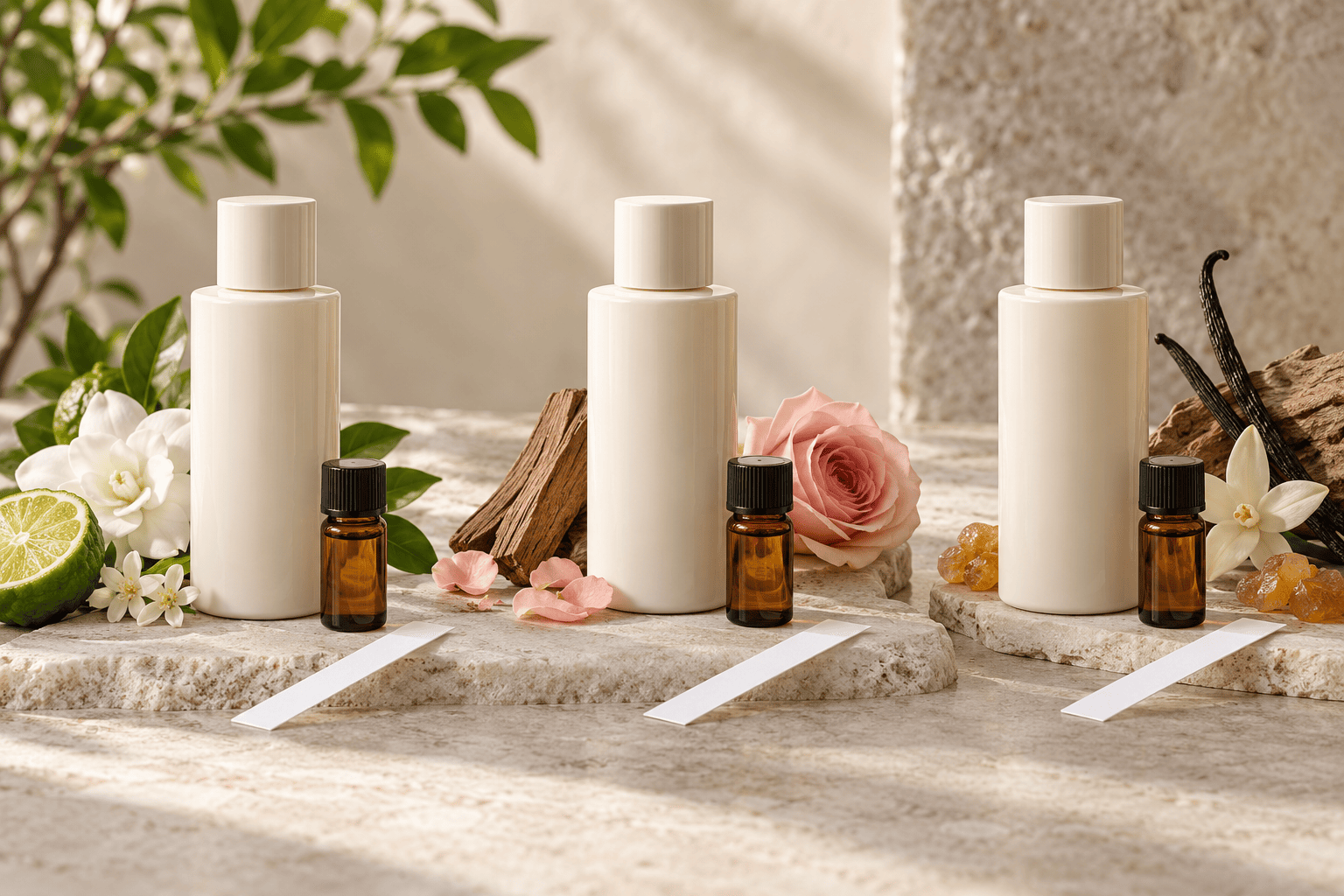
Write a one-sentence role for every proposed SKU before selecting final samples. For example, one may be the fresh bright option, another the soft floral option and a third the dry woody option. These are illustrative roles, not a required assortment or a claim about consumer preference. Identify the shared brand quality as well, such as restrained sweetness or a clean finish. This separates what should remain consistent across the line from what must be different enough to support a meaningful choice.
Map differences that customers can actually perceive
Choose a few useful dimensions for the category, such as freshness, sweetness, floral body, woody depth or texture. Avoid a long list of named ingredients that the panel cannot identify in the finished product. Record where each candidate sits using a consistent evaluation approach. If all three share the same dominant sweet base, their different openings may not create a durable distinction. Use the map as a discussion aid, not as objective consumer data or proof that one position will sell better.
Compare blind before revealing names and packaging
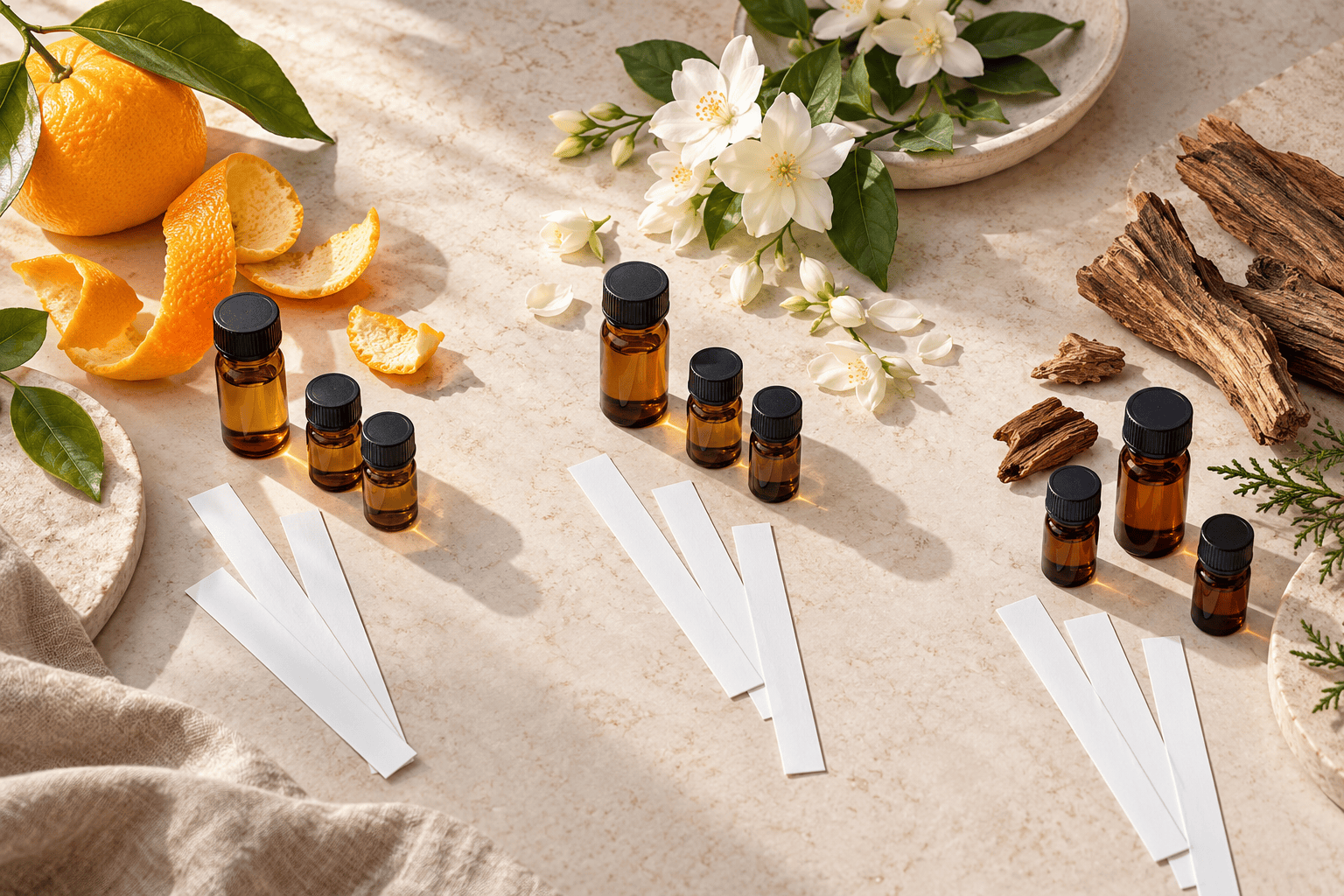
Use coded application samples with the same preparation and presentation conditions. Ask assessors to describe each scent and then explain how it differs from the others. Record observations before group discussion so the strongest opinion does not become everyone’s vocabulary. A formal sensory or consumer study needs an appropriate design and qualified interpretation; a small internal review is only a development screen. Do not turn a few colleagues’ preferences into a percentage claim about a whole country or target market.
Look beyond the first impression for overlap
Choose observation points relevant to the product’s use and compare whether the intended distinctions remain noticeable. Three different openings may converge into a similar later character, while subtle bottle differences may become clearer during use. Keep intensity separate from identity so the loudest option does not automatically appear most differentiated. If the range already has established fragrances, include them in the review. A new SKU should be distinct from the existing assortment as well as from the other two candidates in the current project.
Revise the closest pair with a controlled objective
Identify which two samples overlap most and decide which one should move. Request one primary change that supports its assigned role while preserving the shared brand character. For example, reduce the common sweet background in the woody candidate rather than changing every sample at once. Keep the previously preferred version as a reference. The table below is a planning example, not a stocked collection or measured market result. Evaluate the revised sample alongside the full range before assuming the overlap has been resolved.
| Illustrative role | Primary distinction | Shared requirement |
|---|---|---|
| Fresh option | Clear bright identity | Agreed brand character |
| Soft floral option | Rounded petal texture | Same application quality expectations |
| Dry woody option | Restrained sweetness and woody depth | Same documentation standards |
| Whole range | Recognizable choices in use | Coherent positioning without duplication |
Lock the portfolio decision and the individual specifications
Approve the role and reference for each variant, then confirm technical suitability, documents and commercial feasibility for every concentrate. Similar scent families do not guarantee identical application behavior or costs. Send SHEAIN the range brief and accepted comparisons when discussing fragrance-concentrate candidates. Retain the final codes, revisions and rationale so a later substitution does not erase the distinction the team worked to create. Keep consumer-facing claims tied to actual evidence rather than relying on naming alone.
Frequently Asked Questions
Do different fragrance names guarantee different scents?
No. Names and note lists can hide similar dominant accords. Compare the actual products without labels.
Should the three scents be completely unrelated?
Not necessarily. They can share a brand character while differing clearly in their leading identity or texture.
Can an internal panel prove market demand?
No. It can help refine development choices. Broader preference or sales claims require appropriate market evidence and study design.
Related Guides and Application Support
- Regional Fragrance Preference: How to Localize a Scent for Different Markets
- Fragrance Sensory Evaluation: How to Build a Reliable Sample-Scoring Process
Contact SHEAIN with your end-use application, target market and scent brief to discuss fragrance oil concentrate samples.


