

Regional fragrance preference is the pattern of scent expectations found within a target market, product category and consumer group. It should guide research, not become a stereotype: climate, age, culture, price tier, usage habits and competitive context can matter as much as country.

What Shapes Regional Fragrance Preference?
Consumers learn scent associations through food, botanicals, personal-care habits, cleaning rituals and local brands. Climate can affect desired intensity and product use. Market maturity and channel also matter: a mass detergent, luxury hotel and salon shampoo address different expectations even in the same city.

| Factor | Research question | Evidence |
|---|---|---|
| Category norms | What signals performance in this product? | Competitive audit |
| Climate/use | How and when is the product used? | Usage observation |
| Consumer language | How are scents described locally? | Qualitative interviews |
| Preference | Which option is liked by the target group? | Controlled hedonic test |
A Fragrance Localization Workflow
- Define the product, audience, price tier and channel.
- Audit leading local products and scent intensity.
- Translate the brand brief into several distinct directions.
- Screen technical compatibility in the actual base.
- Run blinded descriptive and preference research.
- Analyze segments rather than only the average score.
- Pilot packaging and in-use performance locally.
- Approve a market formula with documented rationale.
Separate Description from Preference
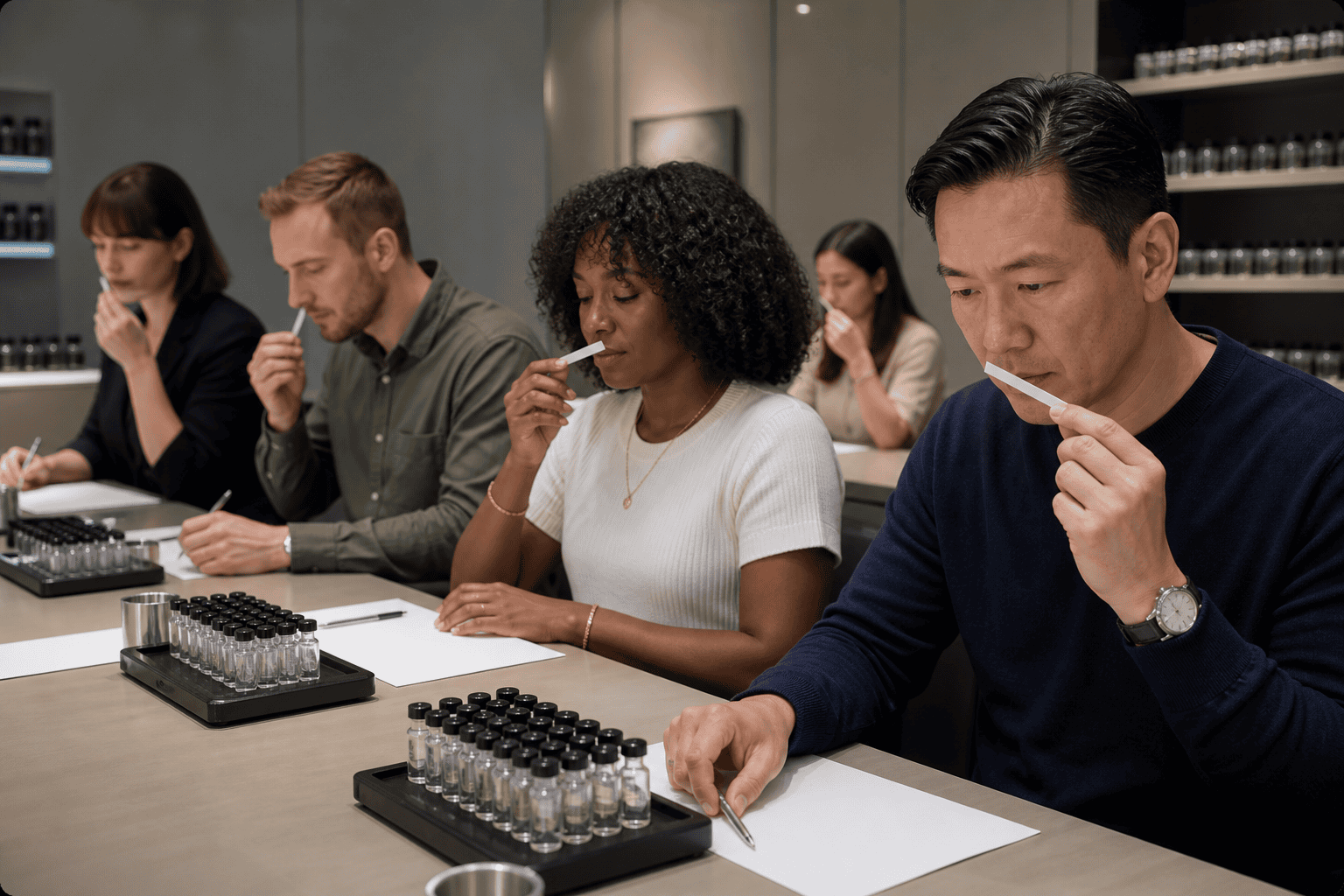
A trained panel can describe citrus intensity, sweetness or diffusion, while target consumers answer liking and purchase-relevance questions. Do not ask an internal technical team to stand in for a regional consumer sample. Our fragrance sensory evaluation guide explains the distinction.
Keep a Global Brand Core
Localization does not always require a completely different fragrance. Brands can preserve recognizable signature elements while adjusting intensity, accents or application performance. Establish which attributes are fixed and which can change before creating samples.
Avoid Cultural Stereotypes and Unsupported Claims
Country-level assumptions can hide meaningful subgroups. Use current research, recruit the intended users and document sample limitations. Preference data from one city or season should not be presented as a universal national truth.
How SHEAIN Supports Market Localization
SHEAIN can translate a regional brief into differentiated fragrance directions and application samples, then revise them using market feedback. Send us the target market, product category and brand position.
Frequently Asked Questions
Does every country need a different fragrance?
No. Research may support one global scent, adjusted intensity, or a localized formula.
Can a distributor choose based on personal preference?
Experience is useful, but target-user evidence reduces individual bias.
Should concepts be translated literally?
No. Local scent language and associations should be checked with native participants.
How many fragrance directions should be tested?
Use enough distinct options to test the brief without creating respondent fatigue.
Can online surveys replace smelling tests?
No. Online research can study concepts, but odor preference requires controlled physical samples.


