

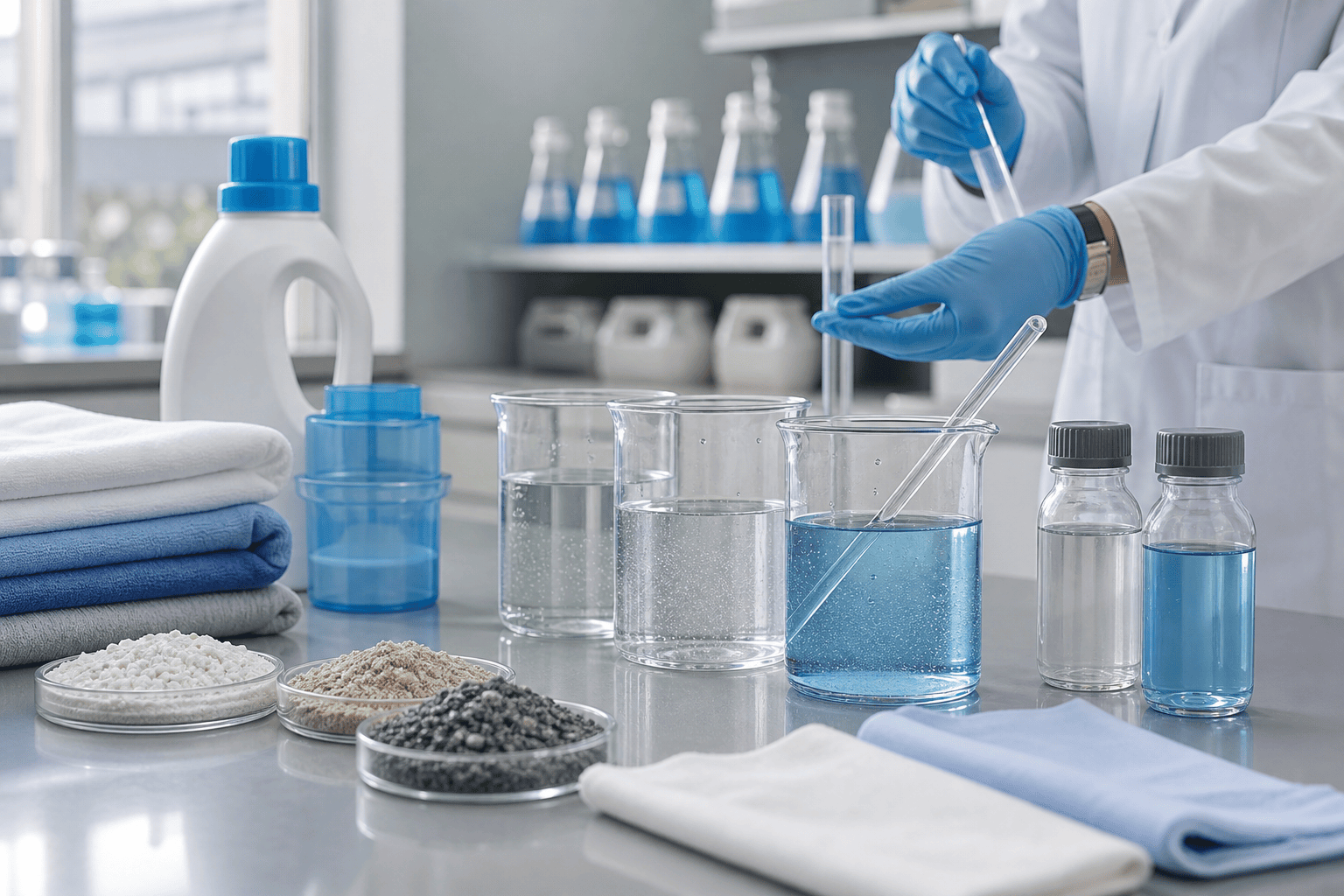
Hard water fragrance testing evaluates how mineral-rich water changes a scented laundry or cleaning product during dilution, washing, rinsing and drying. Calcium and magnesium can affect surfactant performance, deposits, foam and soil removal, which can indirectly change both fragrance release and the odor background.
Why Water Hardness Changes Fragrance Perception
Water hardness is not merely a fragrance variable. It changes the product system around the fragrance. A formula that performs well in soft laboratory water may create different foam, residue or fabric feel in a hard-water market, changing the overall clean-scent impression.
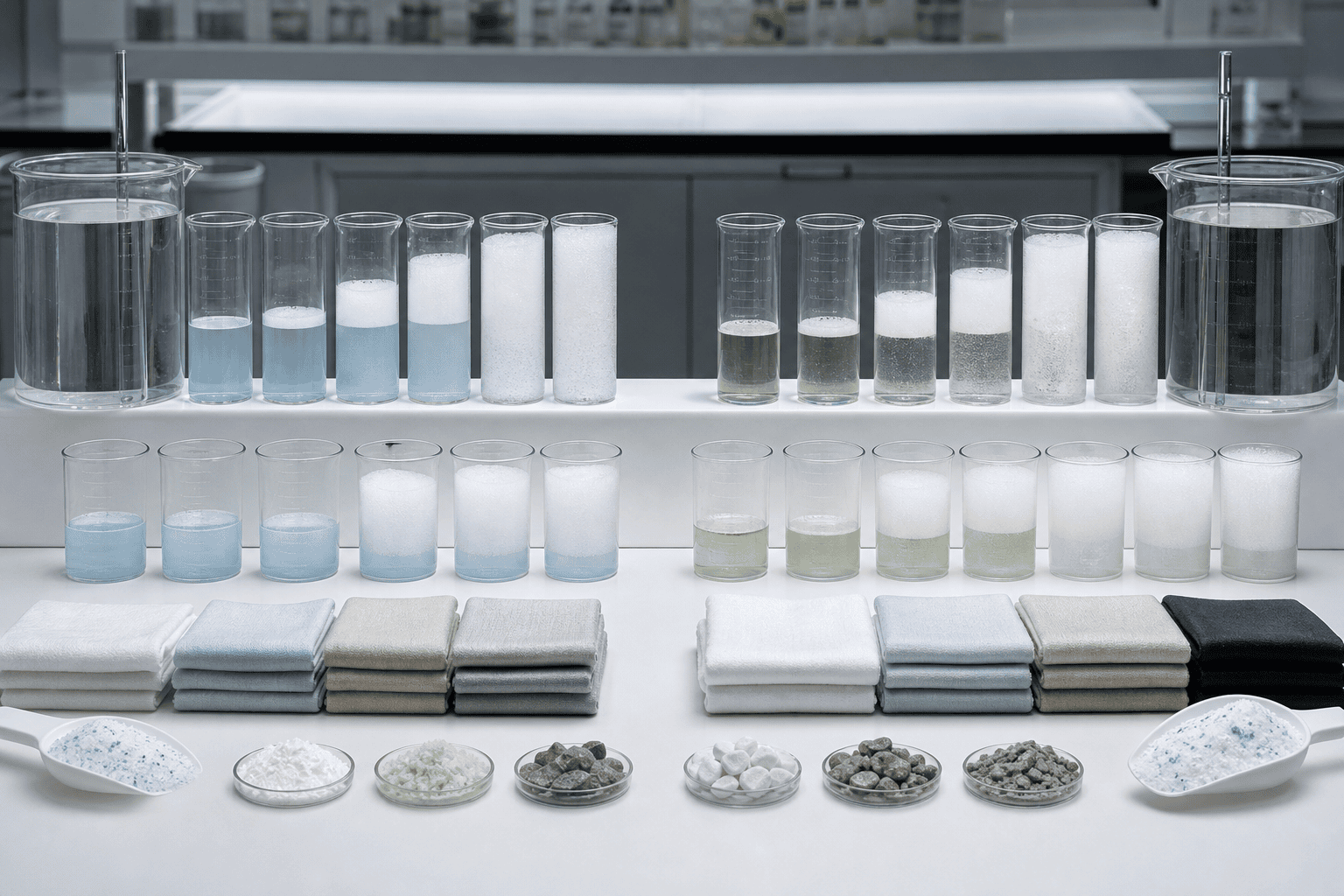
| Stage | Possible hard-water effect | Sensory check |
|---|---|---|
| Dilution | Cloudiness or reduced dispersion | Solution odor and appearance |
| Wash | Changed surfactant efficiency | Malodor removal and fragrance bloom |
| Rinse | Mineral or formula deposits | Wet substrate character |
| Drying | Different residual background | Dry fabric or surface odor |
A Controlled Hard-Water Test Design
- Define target-market hardness ranges using measured units.
- Prepare soft, medium and hard test water reproducibly.
- Keep product dose, soil load, substrate, temperature and cycle constant.
- Include unfragranced and market-reference controls.
- Evaluate dilution, wash, wet substrate and dry substrate.
- Use blind codes and repeat across batches.
- Confirm the preferred result in representative local water.
Do Not Confuse Scent Loss with Cleaning Failure
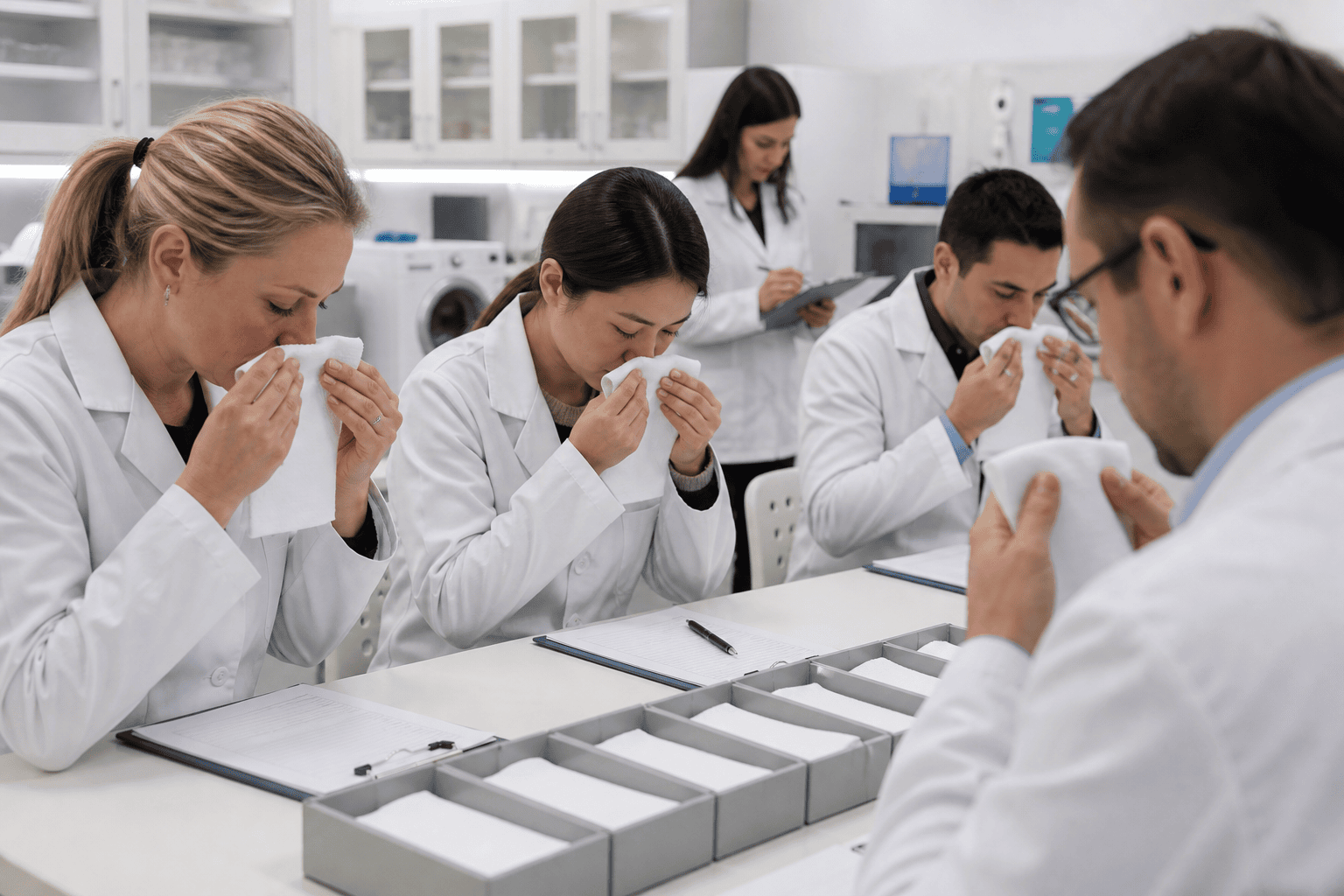
Residual soil or mineral deposits may create an odor background that masks the fragrance. Record cleaning performance and malodor separately from fragrance intensity. This distinction helps determine whether to adjust the fragrance, builder system, dosage or wash instructions.
Applications Beyond Laundry
Hard-water effects can appear in floor cleaner, bathroom cleaner and concentrated products diluted by users. Link the testing program to the intended market and application. For laundry scent retention, see our guide on improving fragrance longevity.
How SHEAIN Supports Market-Specific Testing
SHEAIN can develop fragrance directions around the target base and regional use conditions, while the finished-product manufacturer controls the cleaning formula and substantiates performance. Send us the application, dosage and target water conditions.
Frequently Asked Questions
What counts as hard water?
Definitions and units vary, so report the measured hardness and method rather than relying only on labels.
Does hard water chemically destroy fragrance?
Not necessarily. It often changes the surrounding formula and odor background.
Can laboratory hard water represent a real market?
It supports controlled comparison, but final validation should include representative local water.
Should fragrance intensity and cleanliness be scored separately?
Yes. Otherwise a cleaning failure may be misinterpreted as poor fragrance performance.
Can the same test apply to surfaces and fabrics?
No. Substrate, soil, rinse and drying conditions require application-specific protocols.


