

Fragrance sensory evaluation is a controlled process for describing, comparing and scoring odors with human assessors. Reliable evaluation separates analytical description from personal preference, uses blind samples and reference standards, and tests the fragrance in its intended finished-product application.

What Is Fragrance Sensory Evaluation?
Sensory evaluation turns human perception into structured data. Descriptive testing asks what attributes are present and how intense they are. Discrimination testing asks whether samples are detectably different. Hedonic testing asks which sample people prefer. Mixing these questions in one informal smelling session produces weak conclusions.
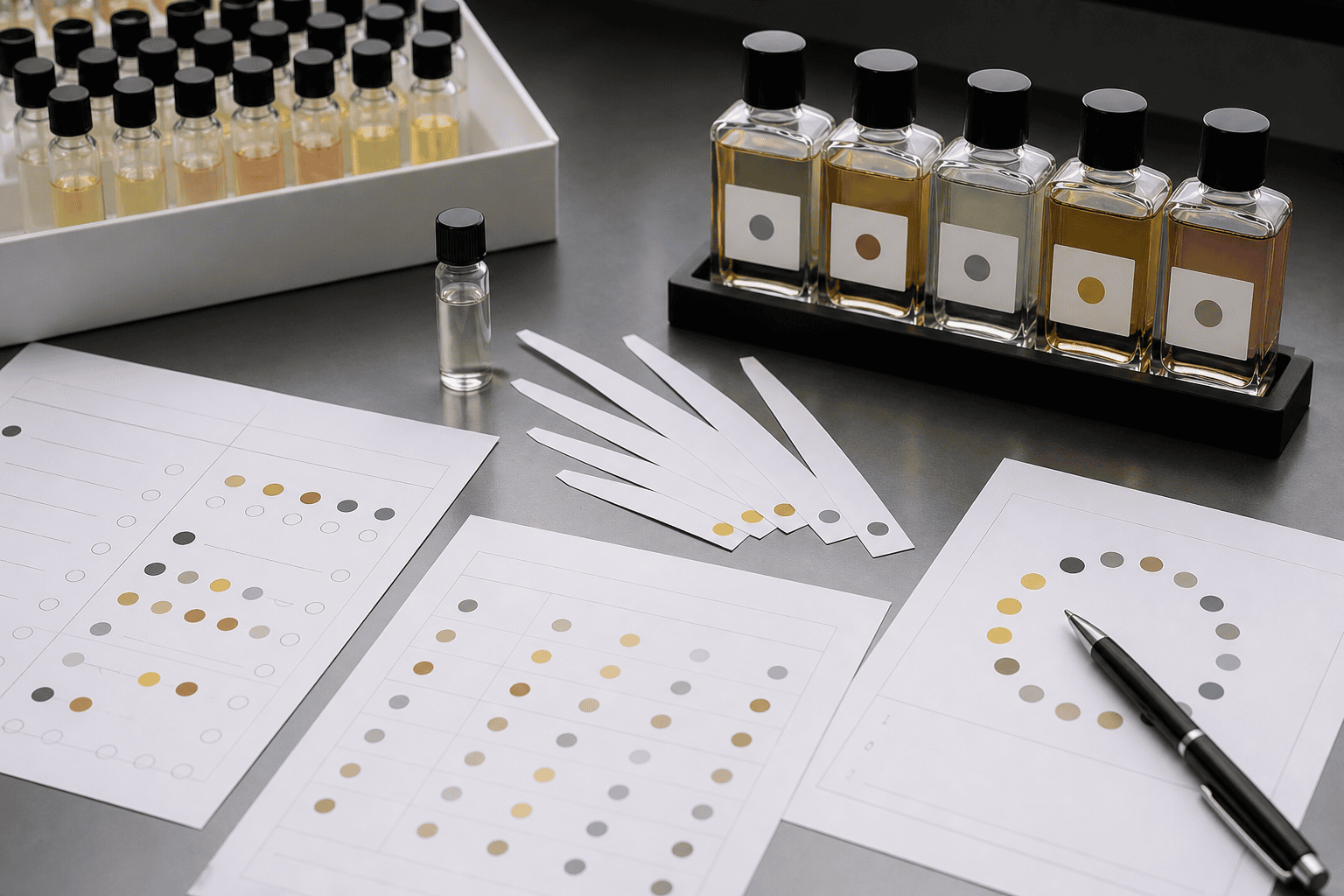
| Method | Main question | Typical assessors |
|---|---|---|
| Descriptive profile | What does it smell like and how strong is each attribute? | Selected or trained panel |
| Difference test | Can people detect a difference? | Qualified assessors |
| Hedonic test | Which option is liked more? | Target consumers/users |
Control the Test Before Scoring
Define the objective, sample preparation, dose, vessel, temperature, resting time and evaluation sequence. Use random blind codes and rotate presentation order to reduce expectation and order bias. Ventilate the room, limit strong personal odors and build rest periods into longer sessions. A known reference sample anchors the panel across days.
A Reliable Evaluation Workflow
- Write one measurable decision question.
- Select the appropriate method and assessors.
- Prepare identical vessels and controlled sample doses.
- Assign blind codes and randomize order.
- Train on clear attribute definitions and references.
- Record intensity, character and acceptance separately.
- Review panel agreement and repeat uncertain comparisons.
- Confirm the winner in the actual application and stability program.
Build a Useful Scorecard
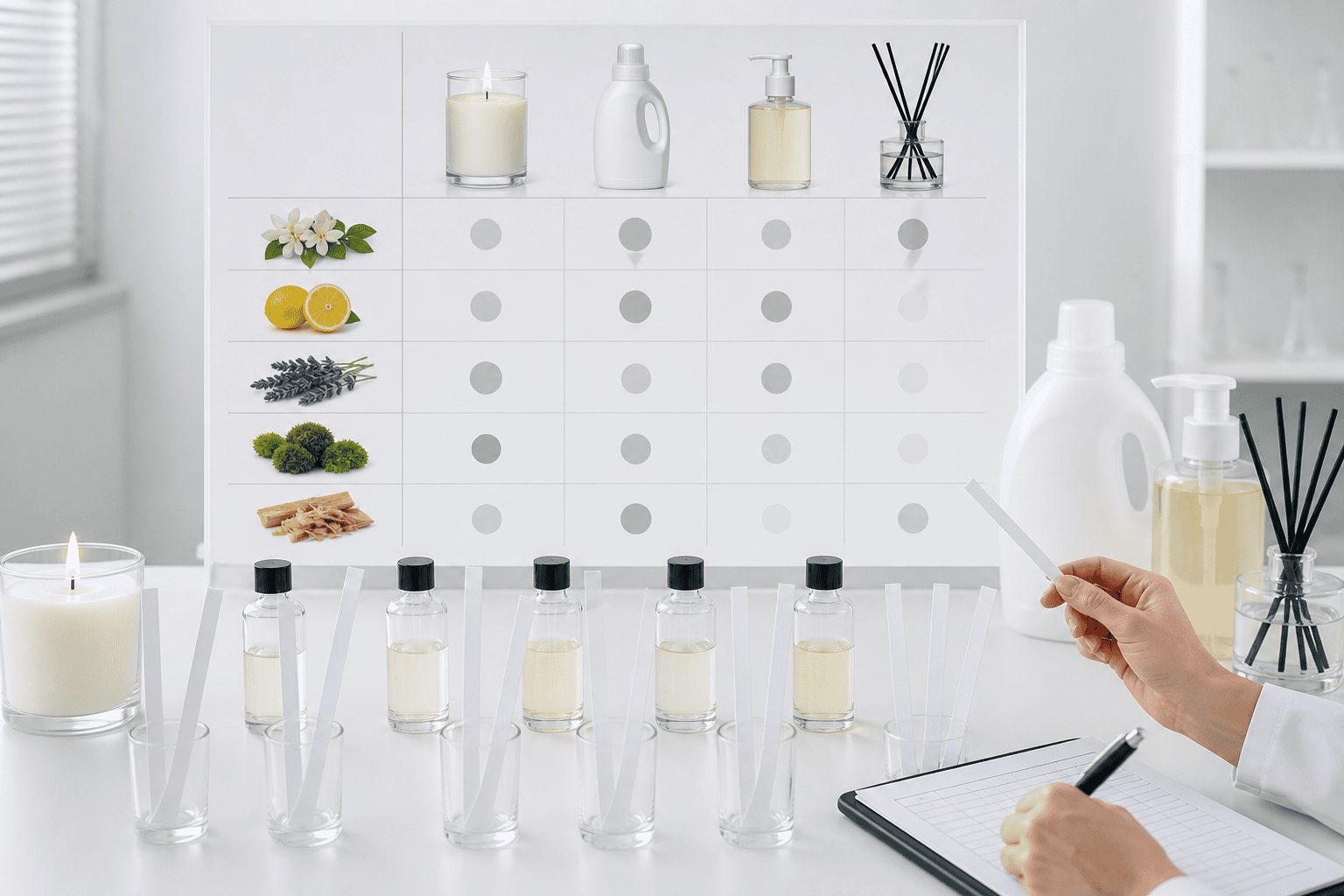
A scorecard should use plain, agreed language. Depending on the brief, attributes might include citrus lift, floral body, sweetness, diffusion, off-note intensity, cleanliness, substantivity and dry-down balance. Define the scale endpoints. Include an open comment field, but do not let colorful comments replace numerical comparisons.
Evaluate the Finished Product
Carrier, surfactant, wax, alcohol, pH, packaging and use conditions can change fragrance perception. Evaluate candidates in detergent, candle, shampoo, diffuser or spray at the intended dosage, then repeat after stability testing. For a new formula, align sensory gates with the custom fragrance development process.
Interpreting Results Responsibly
A small expert panel is valuable for technical description but does not automatically represent consumer preference. A preference result in one country or demographic may not transfer to another. Record the panel, date, method, sample codes and statistical treatment so decisions can be traced and repeated.
How SHEAIN Supports Sensory Selection
SHEAIN helps buyers convert a creative brief into comparable samples, reference directions and application-specific evaluation rounds. The buyer retains responsibility for finished-product validation and consumer claims. To prepare an efficient sample round, send us your product base, market, reference and scoring priorities.
Frequently Asked Questions
How is sensory evaluation different from a perfumer review?
A perfumer review guides creation; a controlled sensory evaluation uses a defined method to answer a repeatable comparison question.
Should samples display their names?
Blind codes are preferable because names, prices and brand expectations can bias scoring.
Can trained panel results predict consumer liking?
Not by themselves. Trained panels describe differences; target-consumer testing measures preference.
How can olfactory fatigue be reduced?
Limit sample numbers, use rest intervals, ventilate the room and schedule repeat sessions when needed.
When should a fragrance be approved?
After it meets sensory targets in the real application and passes required stability, compatibility, safety and commercial checks.


