

Fragrance oil repackaging traceability means being able to identify where each smaller container came from and where it went. A fragrance name and a repacking date are not enough if the original supplier lot is lost. Build the link before opening the source drum: identify the original material, assign controlled child-container references and record quantities and destinations. This guide concerns a buyer’s handling records, not a claim that SHEAIN provides consumer filling services.
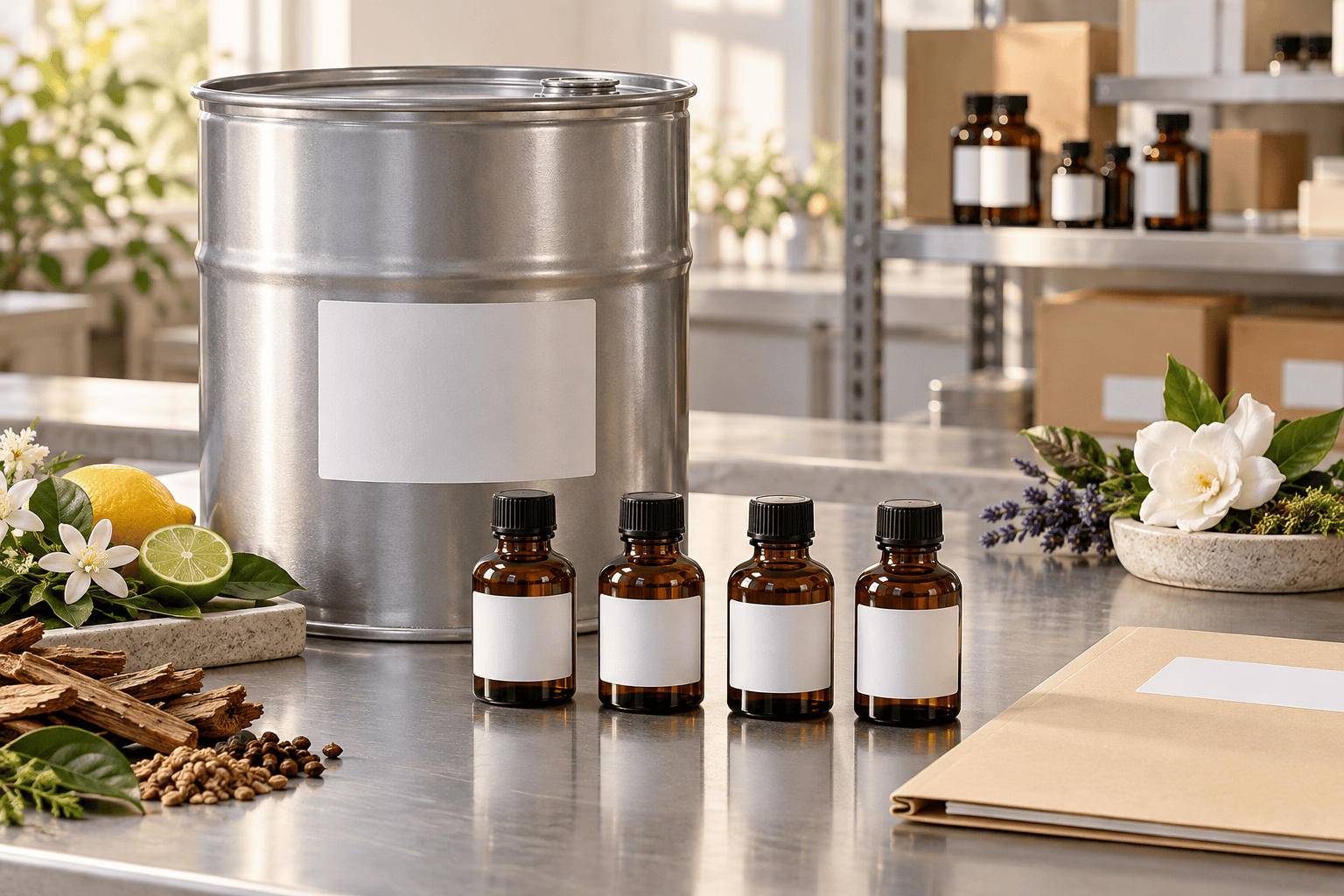
Preserve the source identity exactly as received
Record the supplier, fragrance code, revision, original lot number, receipt reference and applicable supporting documents. Keep a legible record of the original label rather than replacing it with a shortened internal nickname. If the supplier lot is unclear, resolve that issue before distributing the material into new containers. Different lots of the same fragrance should remain distinguishable. A familiar odor or matching product name cannot reconstruct a missing lot history once smaller containers have moved to several production areas.
Create a parent-to-child link for every smaller container
Assign each receiving container an internal identifier and connect it to the source drum and original lot. GS1’s traceability framework links process inputs and outputs at lot level. GS1: Global Traceability Standard The practical record can be implemented in an appropriate controlled system without assuming a particular software product. Keep supplier identifiers and internal identifiers in separate fields so neither is silently overwritten. If several source lots are intentionally combined, that becomes a different documented operation requiring appropriate authorization and a record of every contributing lot.
Reconcile quantities and record the handling event
Record the date, responsible operator, source quantity used, quantities filled, retained samples and relevant losses or remaining balance. Use an appropriate mass-based record rather than relying only on nominal bottle volume. Investigate unexplained differences according to the quality procedure. Include the equipment or transfer setup when it matters to the operation. This article is not a handling instruction: the responsible team must follow the material’s safety information and approved procedure, including suitable containers and controls for contamination and exposure.
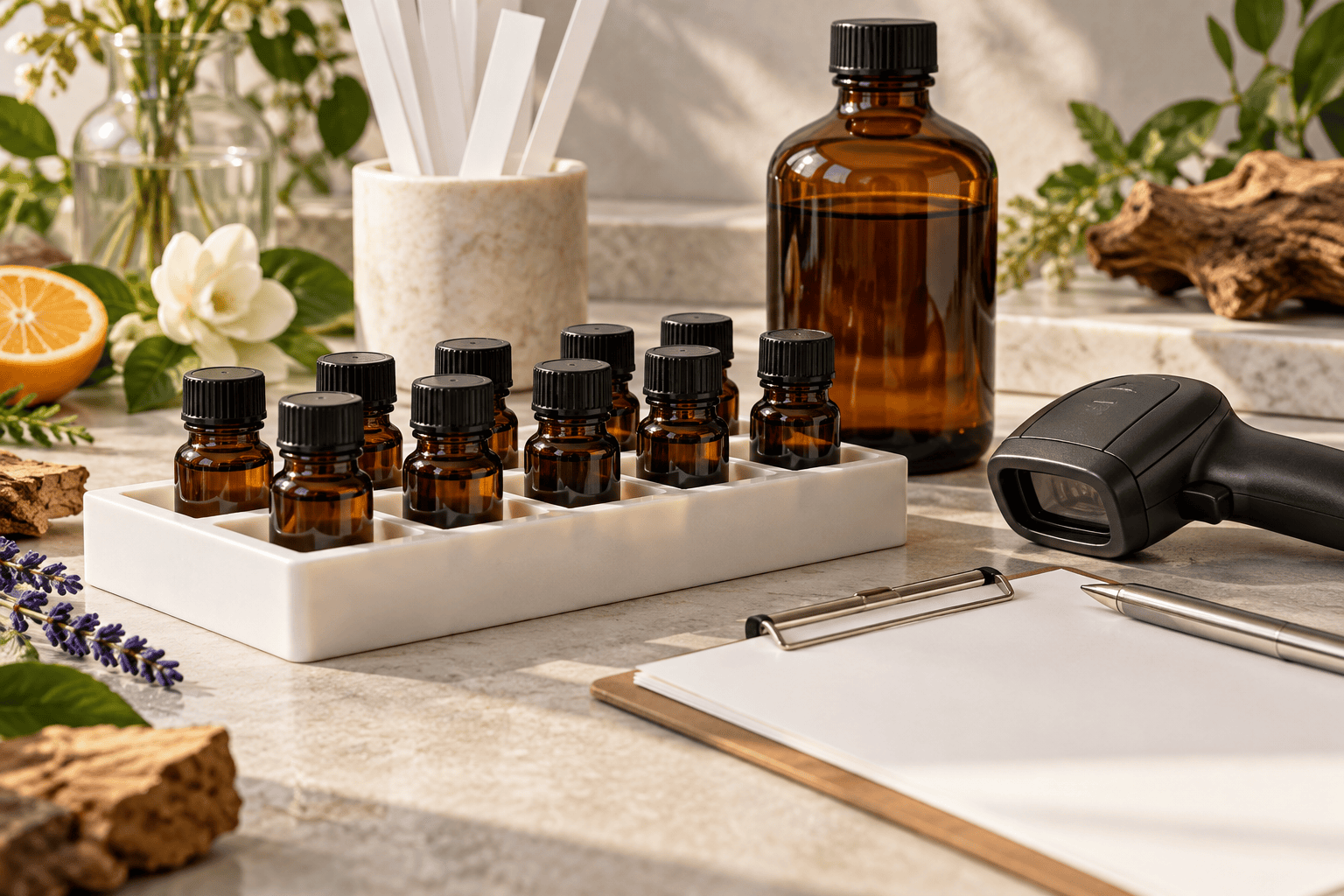
Keep container information and sample history connected
Record the receiving container type and closure where required by your procedure, and confirm their suitability for the actual concentrate. Label the smaller containers with the information needed to avoid mix-ups and meet applicable requirements. A retained sample is useful only when its identity, sampling time and storage history are known. Do not assign a new shelf life simply because the fragrance was transferred. Ask the supplier and responsible quality team how storage and repackaging affect the material’s existing qualification and retest arrangements.
Track destinations and test whether the record can be followed
For each child container, record the receiving department, customer or production batch as appropriate. Run a practical trace exercise: select one container and identify its source, then select the source lot and identify all linked outputs. Record gaps before an actual quality issue makes the search urgent. The table is an illustrative record structure, not a certification claim. Control access and corrections so a spreadsheet or database remains reliable; a technically complete form is not useful if entries are missing or overwritten without explanation.
| Record group | Example fields | Purpose |
|---|---|---|
| Source | Supplier code, revision and lot | Preserve original identity |
| Repack event | Date, operator and quantities | Explain the controlled handling step |
| Child containers | Internal IDs and parent link | Connect every smaller unit |
| Destinations and samples | Recipients, production links and retention IDs | Trace forward and back |
Keep purchasing and production responsibilities clear
SHEAIN’s fragrance-concentrate documents should remain associated with the original material, while the buyer’s repackaging record explains what happened afterward. Do not present an internal repack label as a new supplier certificate or assume the original document covers an altered blend. If identity, contamination or unexplained quantity issues arise, follow the organization’s hold-and-review procedure. A clear record protects continuity: the team can locate the affected material without unnecessarily treating every container with the same fragrance name as the same lot.
Frequently Asked Questions
Is the repack date enough to identify a batch?
No. Keep the original supplier lot and connect it to the repack event and each child container.
Can I combine two lots of the same fragrance?
Do not treat that as routine relabeling. It needs the appropriate authorization, evaluation and records of all contributing lots.
Does repackaging restart shelf life?
No automatic restart should be assumed. Follow the supplier’s information and your responsible quality team’s assessment for the actual handling and storage conditions.
Related Guides and Application Support
- Fragrance Oil Batch Consistency: Specifications, Golden Samples and Quality Control
- Fragrance Oil Shelf Life: Storage, Packaging and Temperature Control
Contact SHEAIN with your end-use application, target market and scent brief to discuss fragrance oil concentrate samples.


