

Watermelon vs cucumber fragrance oil is a choice between two possible ways of expressing freshness, not simply a strong scent and a weak one. A watermelon direction may prioritize juicy fruit; a cucumber direction may prioritize green, watery character. Actual blends vary. Evaluate sweetness, rind-like greenness and overall identity separately before deciding which suits your product.
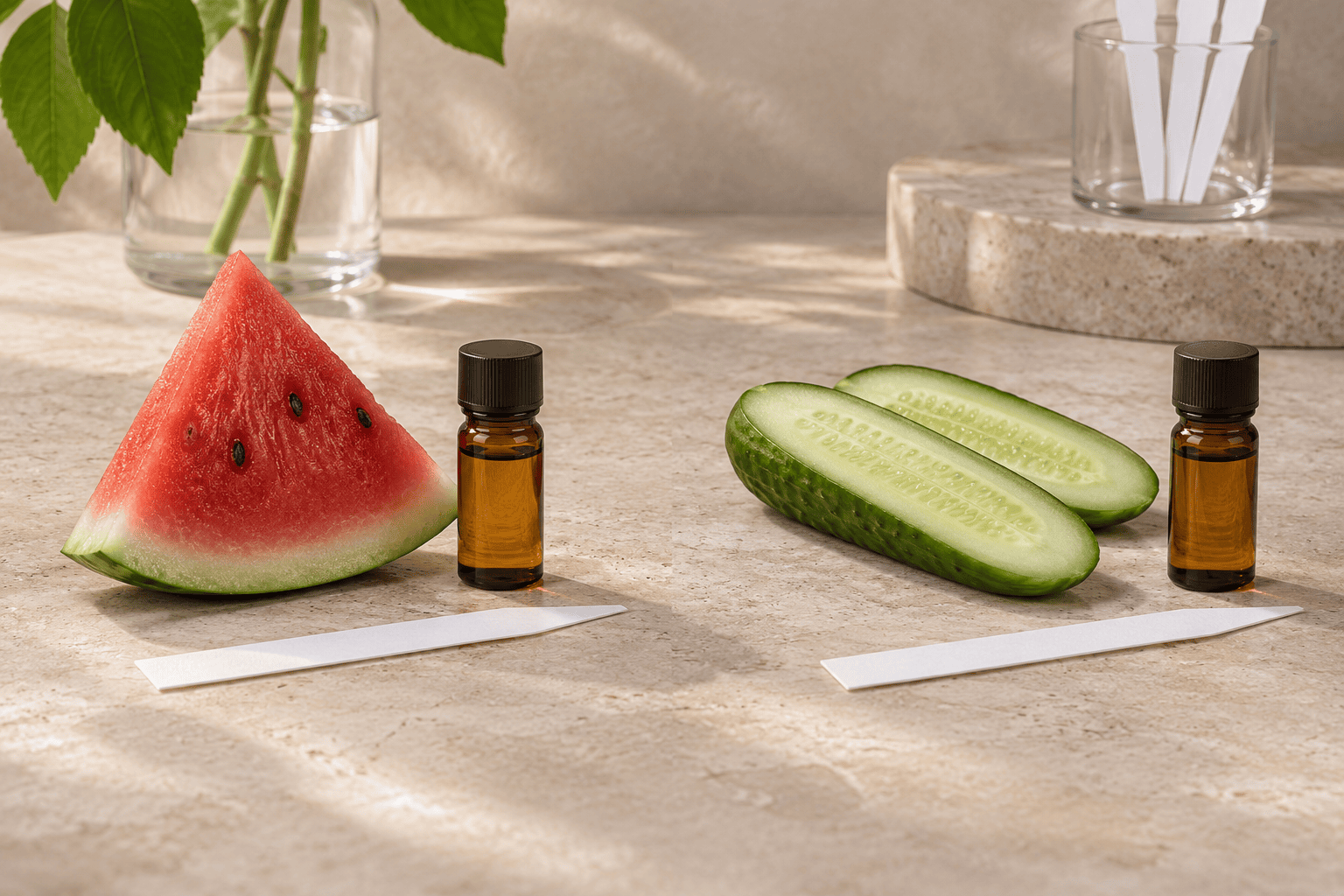
Define what watery should mean in this brief
Watery may describe a light impression, fresh-cut flesh or an abstract airy background. Ask your team which meaning they intend. It does not mean the fragrance contains water or dissolves in a water-based formula. Bedoukian publishes a composed watermelon accord example. Source: Bedoukian: a watermelon accord example A fragrance impression can therefore be discussed separately from a fruit ingredient claim. This guide compares creative scent directions; it is not a formula for making a concentrate.
Separate watermelon flesh from candy associations
Compare whether the watermelon candidate suggests juicy fruit, green rind or a sweet confection. All can be intentional, but they should not be approved under one vague fresh label. If the sample seems too candy-like, identify the unwanted sugary association while retaining the recognizable fruit feature. Do not assume that lowering the total fragrance amount will correct the balance; it may reduce the desired watery impression as well.
Give cucumber a positive identity, not just less sweetness
A cucumber brief should describe what the fragrance should express, rather than listing everything it should avoid. Ask whether the candidate suggests fresh-cut green flesh, peel or a broader cosmetic freshness. If the sample feels too vegetable-like for the product, specify that limit without replacing the entire concept with a sweet fruit accord. Compare the candidate without a picture or name so visual expectations do not determine the whole result.
Watch the point where fresh becomes a different scent family
A blend may move toward marine, floral, soapy or sweet tropical territory during evaluation. That transition may be attractive but can obscure the intended distinction between watermelon and cucumber. Record the dominant impression at the same observation points for both samples. Keep this comparison separate from the existing marine-versus-aquatic guide: the question here is whether a recognizable fruit or green-cucumber identity remains, not how to classify every fresh fragrance.
Test the choice in the intended base rather than a mood board
Use actual application trials with controlled preparation and a technically reviewed loading. Ask evaluators to record identity, perceived sweetness and fit with the product separately. A watery-smelling concentrate is not automatically compatible with a clear spray, gel or cleanser. The table is a practical selection aid, not a compatibility certificate or reported experiment. Physical checks and the applicable safety review should proceed independently of the preferred sensory direction.
| Dimension | Watermelon question | Cucumber question |
|---|---|---|
| Identity | Fruit flesh or candy? | Fresh cut flesh or generic clean? |
| Green facet | Does rind add useful contrast? | Is peel too dominant? |
| Sweetness | Does it fit the intended concept? | Does sweetness obscure the green identity? |
| Product fit | Does fruit remain recognizable? | Does green freshness remain recognizable? |
Request only the changes that matter to the product
A focused brief might ask for cucumber-led green freshness with less vegetable association, or watermelon fruit with lower candy sweetness and a visible rind-like contrast in the scent description. Avoid combining both requests into an undefined super-fresh sample. Share the reference codes, base, market and desired use-stage impression with SHEAIN. Final approval should identify the chosen concentrate and application conditions, not just a fruit photograph or an appealing marketing name.
Frequently Asked Questions
Does watery fragrance mean water-soluble fragrance?
No. Watery describes a perceived smell here, not solubility. Confirm base compatibility separately.
Is cucumber fragrance always weaker than watermelon?
No. Intensity depends on the actual composition and evaluation conditions, not the fruit name.
Can I blend the two concentrates myself?
Do not assume two individually suitable products remain qualified when mixed. Discuss the combined brief and necessary review with the supplier.
Related Guides and Application Support
- Marine vs Aquatic Fragrance: Scent Differences & Uses
- Fragrance Oil Solubility: Why Cloudiness, Separation and Sediment Occur
Contact SHEAIN. Share your end-use application, target market and scent brief to discuss fragrance oil concentrate samples.


