

A carnation fragrance oil scent profile should explain how the flower and its spicy impression work together. A buyer asking only for a warm floral may receive a sample that is too spice-led, too powdery or simply indistinct. Choose the intended hierarchy first, then compare actual candidates. A carnation name describes a creative theme; it does not establish a botanical extract or a particular ingredient in the mixture.
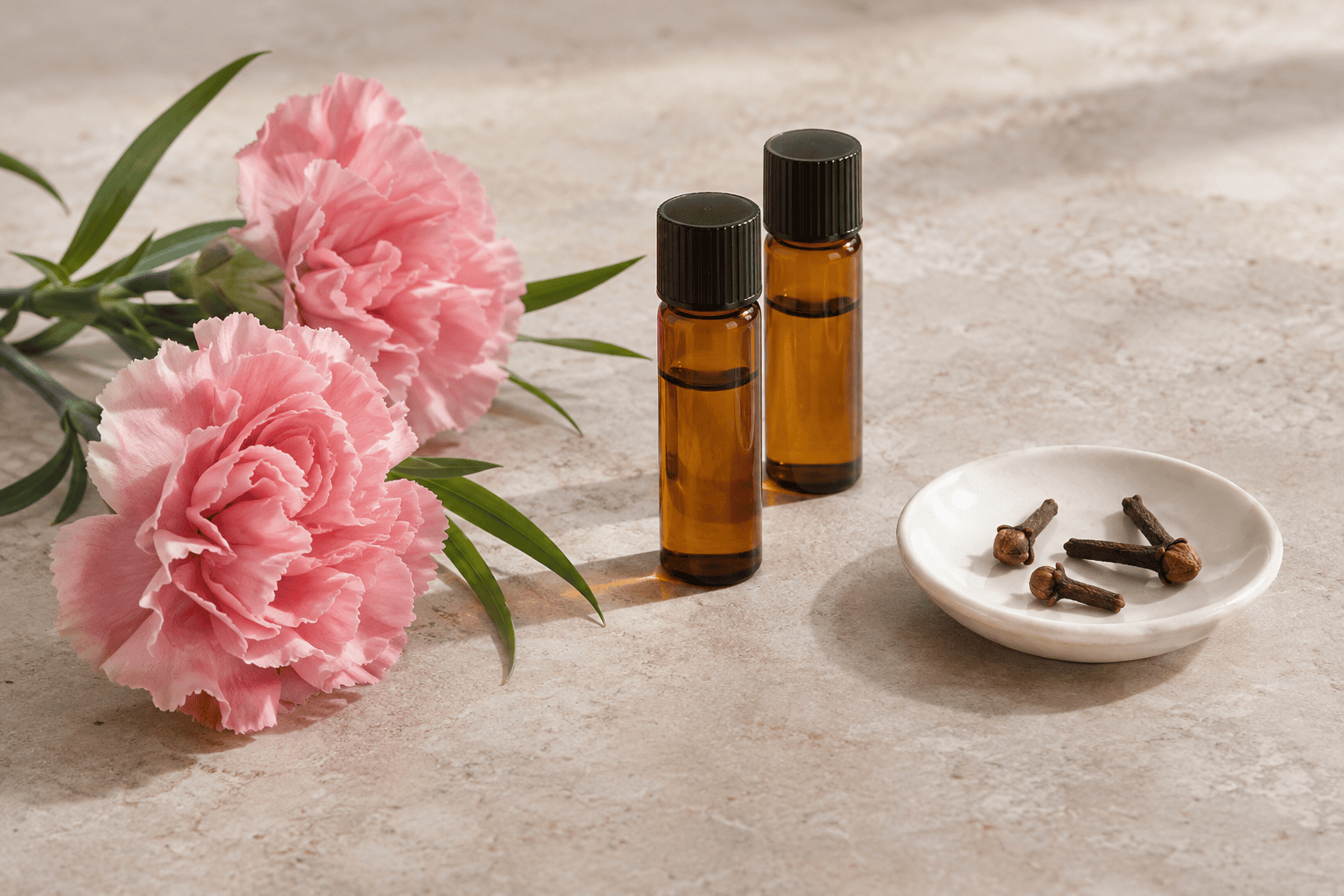
Set a floral reference before discussing spice
Write down what should make the fragrance recognizably floral. IFF describes a carnation absolute using floral and clove-like spicy language.Source: IFF: Carnation Absolute olfactive description It is one ingredient reference, not a recipe for every carnation fragrance. The source does not mean SHEAIN uses that extract. Ask assessors whether the flower remains the main subject before asking how strongly its spicy support should appear.
Distinguish a spicy flower from a spice fragrance
A clove-associated impression may support the floral concept or take over the entire sample. Decide which relationship the project needs and compare coded candidates at matched times. Do not reject all spice if the concern is only a sharp opening or an overly dominant background. Record the unwanted association precisely, while protecting the floral feature that the team has already accepted.
Evaluate powder and sweetness independently
Softness, powder and sweetness can be described together in casual feedback even when they point to different revision needs. Give each its own observation line. A sample can be moderately sweet yet feel too cosmetic, or feel rounded without being the sweetest candidate. Do not infer ingredient content from those associations. The purpose is a reproducible creative instruction, not chemical identification through a scent description.
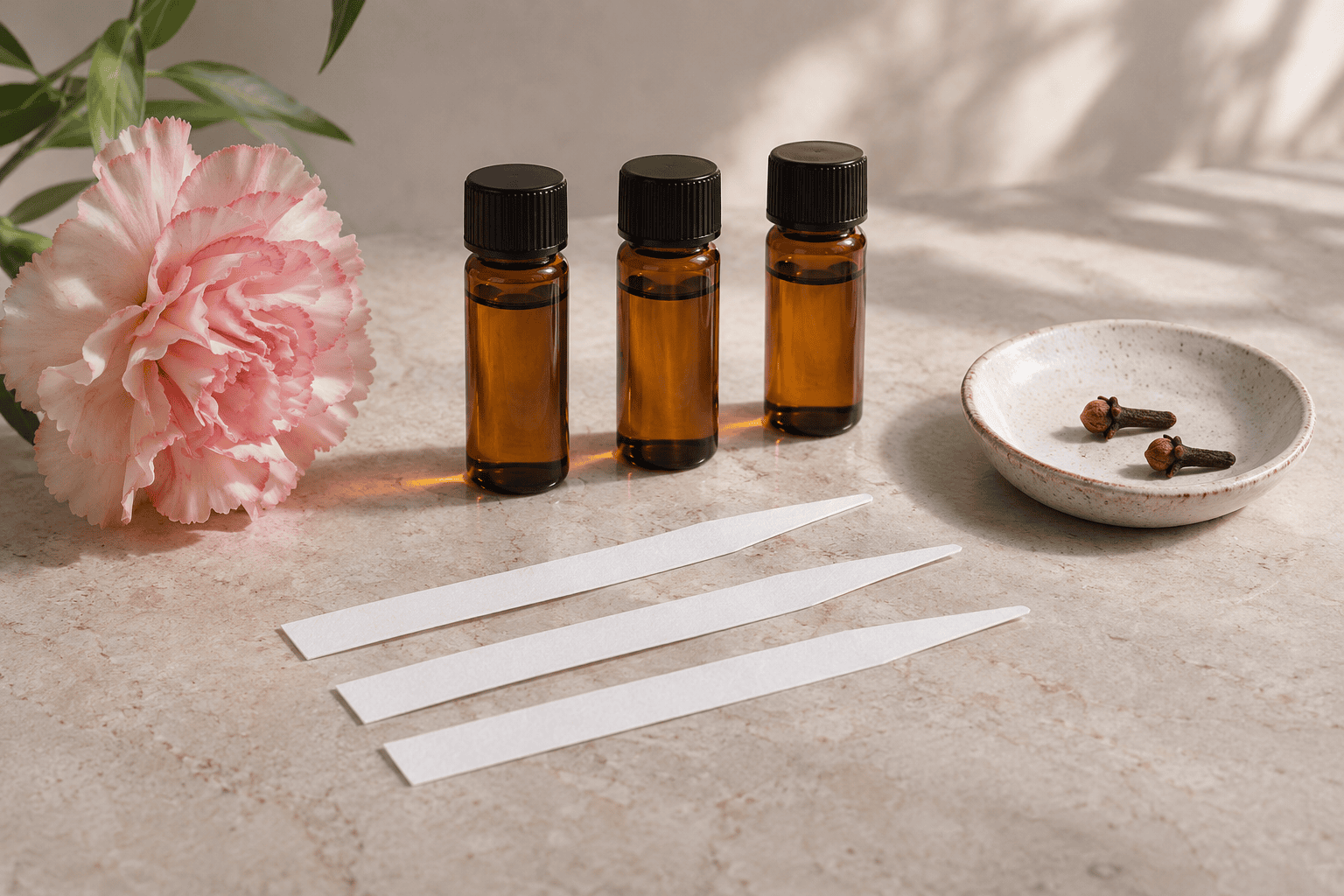
Compare the product role with nearby floral concepts
Place the candidate beside the closest accepted flower or spicy product in the current range without revealing names. Ask what distinct role carnation adds. If it mainly repeats a sweet background already present elsewhere, reconsider the brief before changing the packaging story. This comparison concerns the specific carnation concept; it is not a reason to make every floral product progressively stronger or more complicated.
Confirm the hierarchy in the finished formulation
Prepare samples in the real base with technically reviewed use conditions, matched sample age and agreed observation points. Record flower recognition, spice prominence and unwanted associations separately from liking. A spicy impression does not establish irritation potential or a permitted dosage. The table is a discussion aid, not measured testing. Physical compatibility, safety and the relevant formula-specific documents must be reviewed for the intended product.
| Facet | Observation | Briefing action |
|---|---|---|
| Flower | Recognizable center or indistinct floral? | Protect the main identity |
| Spice | Supportive or dominant? | Set its role and prominence |
| Softness | Rounded, powdery or too cosmetic? | Describe the specific effect |
| Application | Same hierarchy in the product? | Confirm the tested revision |
Approve a precise flower-and-spice balance
A useful request could preserve a clear floral center, reduce dominant clove-like character and keep softness without a heavy cosmetic association. Send SHEAIN the reference code, application, market and important use stage for feasibility discussion. Approve a particular concentrate revision, not only the carnation label. Keep composition, origin and ingredient-exclusion requirements separate and supported by appropriate documentation when they are commercially necessary.
Frequently Asked Questions
Does a clove-like smell prove clove oil is present?
No. An odor association cannot establish the ingredients of a compounded fragrance.
Must carnation fragrance always smell strongly spicy?
No universal intensity applies. Specify the floral-to-spice balance required by the project.
Can I judge safety from how mild the sample smells?
No. Mildness is a sensory description, not a safety assessment or dosage authorization.
Related Guides and Application Support
- Cardamom vs Clove Fragrance: Compare Cool Lift and Warm Spice
- Peony vs Magnolia Fragrance: Airy Petals or Rounded Floral Body?
Contact SHEAIN. Share your end-use application, target market and scent brief to discuss fragrance oil concentrate samples.


