

A basil fragrance oil scent profile should say which part of the herb-inspired impression belongs in the product and which associations should stay out. Aromatic freshness may be welcome while a strong cooking-related impression is not. Those preferences are different from simply asking for less intensity. Compare the actual samples, then qualify the selected character in the intended formulation rather than purchasing by a herb name alone.
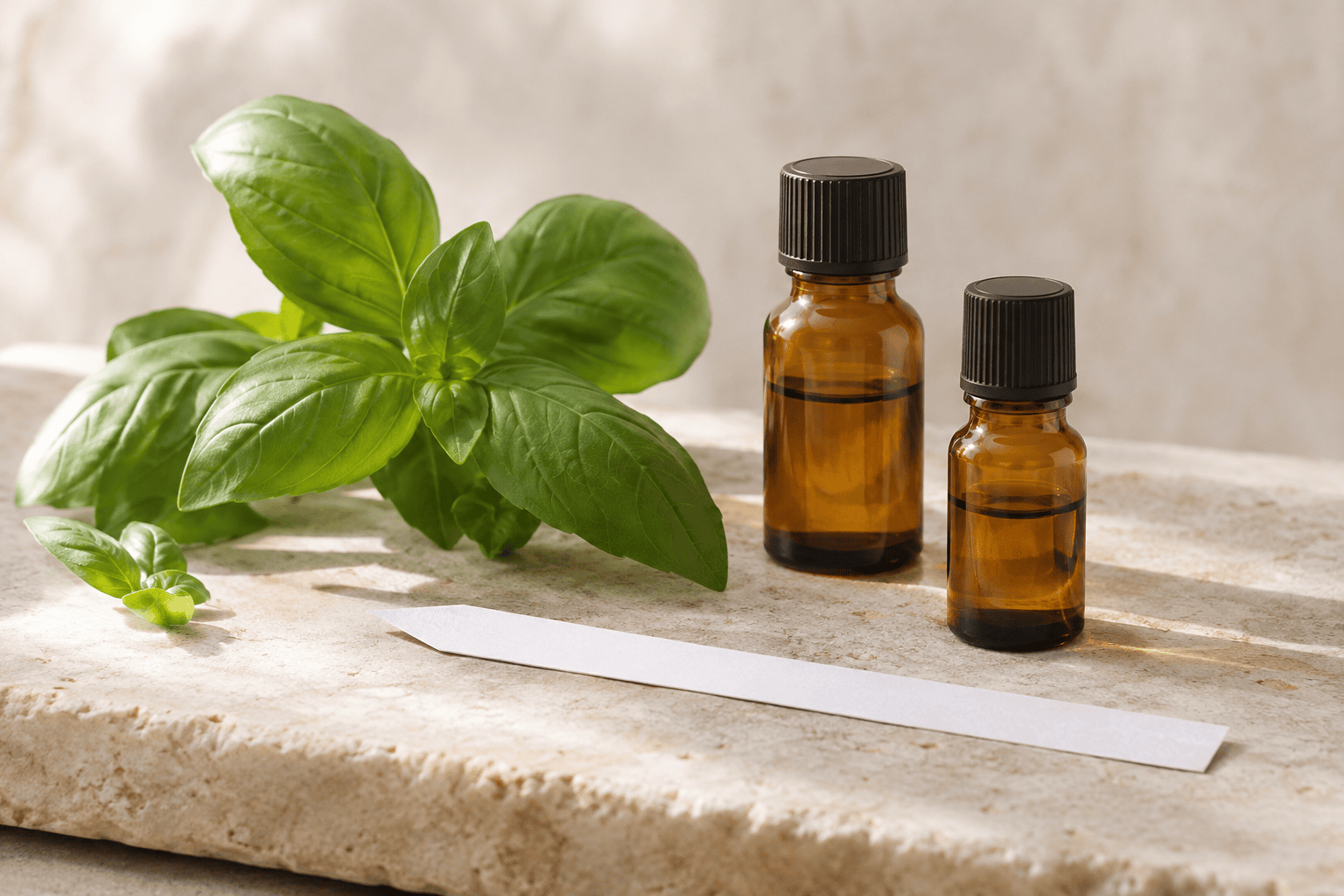
Use a specific basil reference rather than a generic herb label
Basil descriptions can include several facets. IFF describes one basil oil through green, anisic and aromatic language.Source: IFF: Basil Oil Vietnam olfactive description This is a vocabulary reference for one ingredient, not a definition of every basil-inspired concentrate. Do not assume botanical composition or copy the ingredient’s application information onto a finished fragrance. State which impression should lead and give an accepted reference sample when available.
Separate leafy freshness from culinary familiarity
Ask evaluators whether they perceive green leaves, an aromatic herb or a prepared-food association. None is an automatic quality grade, but they may serve very different products. If the sample feels too kitchen-like, identify the specific association instead of deleting all herbal character. Describe the desired non-culinary direction in positive terms so the supplier knows what should remain recognizable after a revision.
Set a boundary for anisic or sweet accents
A sweeter or anisic-associated facet may be welcome as a small part of the profile and distracting when dominant. Evaluate it separately from overall intensity. Asking for weaker basil may lower the wanted green character without correcting the balance. Keep the accepted reference, rejected reference and observation timing together. An aroma description cannot verify the presence of anise, licorice or another named ingredient.
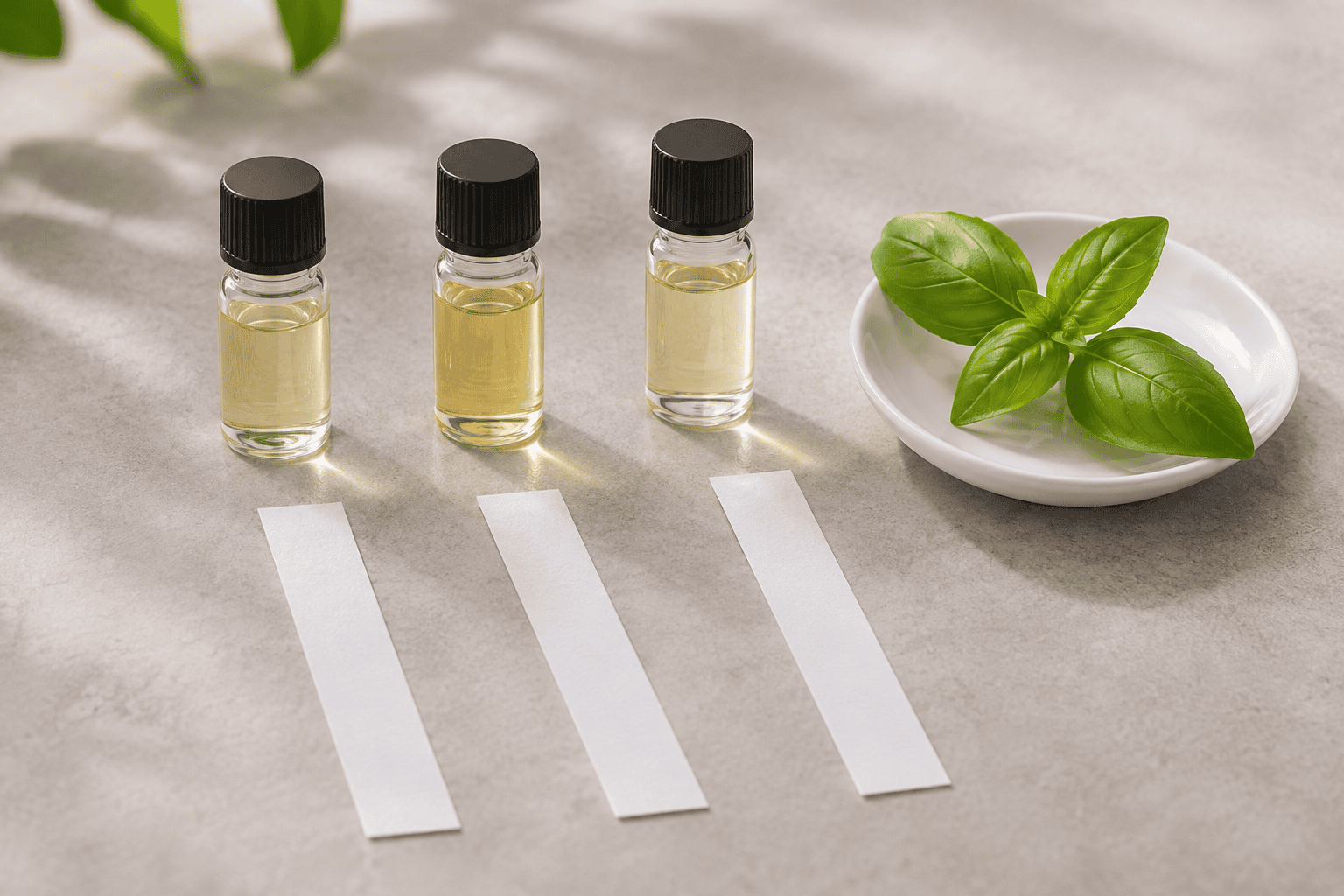
Decide what the supporting background should do
Citrus, flowers or woods may support a basil-inspired concept or redirect it into another theme. Ask assessors to identify the leading impression without seeing the label. If the main identity repeatedly changes, decide whether to revise the scent or the brief. Do not add unrelated notes only to make the formula sound sophisticated. A narrow, agreed contrast is easier to evaluate than a long list of imagined ingredients.
Test freshness at the relevant use stage
Prepare the candidates in the actual product base under technically reviewed, documented conditions. Match sample age and observation timing, and assess herb identity separately from physical compatibility. A fresh-smelling concentrate does not demonstrate antimicrobial action, therapeutic benefit or universal product suitability. The matrix is a briefing tool, not a trial report. Complete the applicable safety, stability and documentation checks before approving commercial use.
| Dimension | Question | Keep separate |
|---|---|---|
| Identity | Basil-led or generic herbs? | Name versus actual recognition |
| Association | Fresh leaves or prepared food? | Preference versus quality grade |
| Accent | Restrained or dominant anisic effect? | Profile balance versus dosage |
| Use | Freshness survives the real application? | Pleasant odor versus functional claims |
Request a revision that retains a recognizable herb
An illustrative brief is green aromatic basil with restrained sweet or anisic associations and no dominant cooking effect. Include sample codes, the product base, destination market and the use stage that matters. SHEAIN can discuss concentrate feasibility against these requirements. Retain the approved revision and records. If a natural-origin or botanical-content claim is required, state it separately and obtain evidence rather than inferring it from the herb-led scent.
Frequently Asked Questions
Is basil fragrance oil necessarily basil essential oil?
No. Confirm the supplied product type and composition rather than relying on the name.
Can a basil fragrance be fresh without smelling culinary?
That can be a creative objective. Use references to define the boundary and confirm feasibility through samples.
Does basil scent mean the finished product disinfects?
No. Fragrance character does not establish antimicrobial efficacy or another functional benefit.
Related Guides and Application Support
- Rosemary Fragrance Oil Scent Profile: Herbal, Woody or Camphoraceous?
- Lavender Fragrance Oil Scent Profiles: Herbal, Floral or Camphoraceous?
Contact SHEAIN. Share your end-use application, target market and scent brief to discuss fragrance oil concentrate samples.


