

A rosemary fragrance oil scent profile should state how herbal, woody and camphoraceous the intended impression should be. Simply requesting rosemary can produce samples with very different emphasis. For a B2B project, name the facet that should lead and the association you want to avoid. Then evaluate the concentrate in the actual product instead of treating the botanical name as a complete specification.
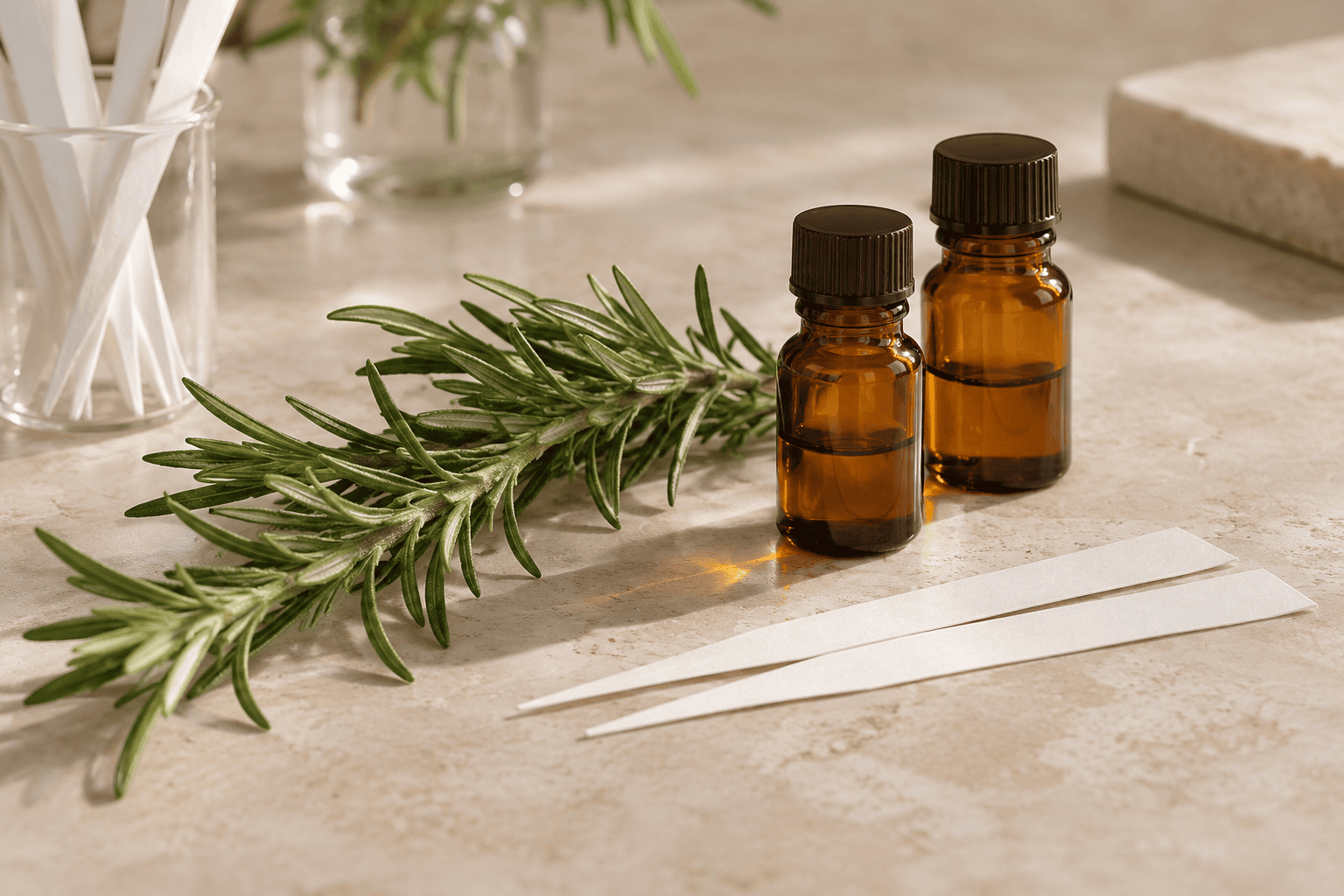
Start with the herbal identity you want to preserve
Ask evaluators what makes the candidate read as rosemary rather than general fresh greenery. Their answer may involve a dry herbal impression, woody support or another recognizable association. Use a specific reference instead of assuming everyone shares the same memory. dsm-firmenich describes Rosemary SFE through herbal, woody and balsamic facets. Source: dsm-firmenich: Rosemary SFE description This is one ingredient example; it neither defines every rosemary-inspired fragrance nor establishes the ingredient content of your sample.
Describe camphoraceous character without making health claims
Camphoraceous is a sensory descriptor in this discussion, not a statement about a specific chemical or a medical effect. Ask whether that character supports the brief or creates an unwanted medicinal association. Keep perceived freshness separate from claims about breathing, focus or scalp treatment. If a sample feels too penetrating, describe the experience and desired limit. Avoid making an unsupported ingredient diagnosis from the smell alone.
Use wood to support rather than replace the herb
A woody background may be welcome if the brief calls for a drier, more structured rosemary direction. But if wood becomes the only clear impression later in evaluation, the intended herbal identity may have disappeared. Record the main impression at consistent observation points. The useful feedback is which facet should stay recognizable and which should recede, rather than an abstract request to make the fragrance more sophisticated.
Decide which familiar associations are acceptable
Rosemary can remind different assessors of cooking, gardens, personal care or household products. Those associations should be documented, not dismissed as incorrect. Ask whether they fit the customer-facing concept. A cosmetic brief may need a different balance from a herb-garden air-care brief, but that is a project choice rather than a universal ranking. Do not imply that a rosemary fragrance is edible because an evaluator describes a culinary memory.
Compare a short list under controlled product conditions
Use the relevant base and technically reviewed fragrance loading, keeping sample preparation and evaluation timing consistent. Record herbal recognition, woody prominence, unwanted associations and overall fit separately. The comparison table is a suggested briefing structure, not a validated performance test. A preferred scent still needs the application’s physical checks and safety review. Do not transfer approval from an air-care trial to a leave-on cosmetic without the appropriate assessment.
| Facet | Selection question | Possible feedback |
|---|---|---|
| Herbal | Is rosemary recognizable? | Preserve the dry herbal center |
| Camphoraceous | Supportive or unwanted association? | Reduce the medicinal impression |
| Woody | Useful structure or dominant theme? | Keep wood secondary |
| Context | Garden, cosmetic or culinary memory? | Specify the intended product association |
Send an actionable rosemary brief to the supplier
An example request is: recognizable dry rosemary, modest woody support, lower medicinal association and no dominant mint impression. Include the reference sample, product format, target market and important stage of use. SHEAIN can discuss the feasibility of a fragrance concentrate against these requirements. Confirm the accepted revision and documentation before purchasing. Keep fragrance selection separate from botanical-origin, therapeutic or ingredient-free claims that require their own supporting evidence.
Frequently Asked Questions
Is rosemary fragrance oil rosemary essential oil?
Not necessarily. Confirm the supplied product type and documentation instead of relying on the name.
Does a rosemary scent prove a scalp or focus benefit?
No. A sensory impression alone does not substantiate a functional or therapeutic claim.
How do I ask for a softer rosemary fragrance?
Name the facet to reduce and the identity to preserve. Softness alone can mean lower intensity, less sharpness or a different background.
Related Guides and Application Support
- Lavender Fragrance Oil Scent Profiles: Herbal, Floral or Camphoraceous?
- Fragrance Sensory Evaluation: How to Build a Reliable Sample-Scoring Process
Contact SHEAIN. Share your end-use application, target market and scent brief to discuss fragrance oil concentrate samples.


