

Pine vs fir fragrance oil should be compared through actual samples, not a rule that one is always sharper, sweeter or more natural. Decide whether the project should suggest fresh needles, a resinous forest or dry wood. Then describe how each candidate balances those impressions. Conifer names are useful starting points but incomplete purchasing specifications.
Agree on the intended conifer reference
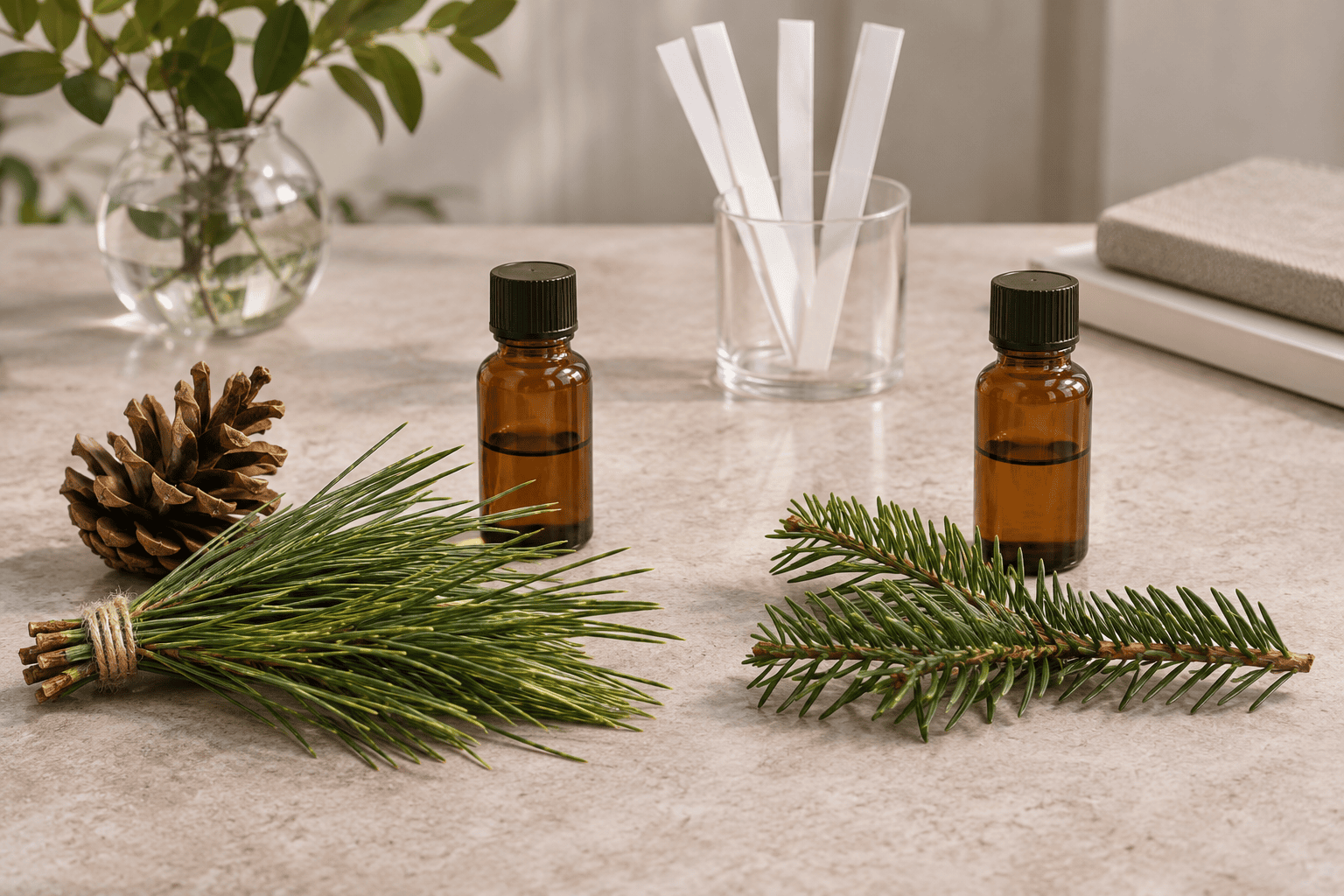
The word pine may evoke a forest for one evaluator and a familiar household product for another. Fir may evoke crushed needles or seasonal decoration. Bring those associations into the brief before scoring samples. Eden Botanicals describes its balsam-fir oil with green coniferous and balsamic facets. Source: Eden Botanicals: balsam fir aroma description This ingredient example supports a vocabulary choice, not a claim about every fir fragrance or about the materials used in a SHEAIN blend.
Compare needle freshness without ranking it automatically
Ask how recognizable the needle-like impression is and whether it fits the product. A pronounced opening can be useful, excessive or simply different from the intended reference. Keep sharpness, intensity and preference as separate observations. If a candidate feels cleaner-like, record that association explicitly rather than assuming the supplier has used the wrong botanical ingredient. Smell alone cannot establish composition or the cause of an unwanted impression.
Choose the role of resinous depth
A resin-associated background may create the forest depth a buyer wants, but another brief may require lighter greenery. Decide which direction belongs in this project. Do not assume a denser sample is more concentrated or higher quality. Compare a small set of deliberately distinct candidates, and ask which facet should remain after the initial needle impression. The answer should guide the revision rather than a general request for more strength.
Keep wood and seasonal accents from changing the brief
Wood, spices or sweet accents can turn a simple conifer theme into a broader seasonal composition. That may be commercially useful, but it is a separate creative choice. If year-round positioning matters, test whether assessors identify a holiday association without seeing packaging. Avoid promising that pine or fir is inherently seasonal. Evaluate the actual blend and relevant audience, and make the desired presence or absence of decorative accents part of the supplier request.
Use the same application setup for both candidates
Compare pine and fir candidates in the actual base with consistent loading, preparation, sample age and observation timing. Keep the level technically reviewed and do not treat an essential-oil recommendation as a dosage instruction for a fragrance mixture. The matrix below organizes sensory questions only. Stability, compatibility and any required safety assessment must be completed separately; bottle odor or a forest-themed photograph cannot establish those properties.
| Facet | Question for both samples | Keep separate |
|---|---|---|
| Needles | Is the fresh conifer identity clear? | Intensity and liking |
| Resin | Useful depth or too much weight? | Price and perceived density |
| Wood | Support or competing main theme? | Botanical-name assumptions |
| Accents | Year-round or deliberately seasonal? | Packaging-led expectations |
Record the selected contrast for the next sample round
An illustrative brief might ask for a needle-led fir direction with moderate resinous depth, low sweetness and no dominant spice, or a pine direction that avoids a particular household-cleaner association. Attach the accepted and rejected sample codes. SHEAIN can discuss concentrate options and feasibility for the intended application. Confirm the approved revision and documentation before ordering, and retain the actual reference rather than relying on the broad name conifer.
Frequently Asked Questions
Is fir fragrance always softer than pine fragrance?
No. Compounded fragrances vary, so compare the actual versions under matched conditions.
Does a pine scent prove pine essential oil content?
No. A fragrance name is not an ingredient declaration. Verify any botanical-content requirement separately.
Should both samples use the same test conditions?
Yes, where technically appropriate. Changing the base or preparation at the same time makes the comparison difficult to interpret.
Related Guides and Application Support
- Sandalwood vs Cedarwood Fragrance Oil: Creamy or Dry Woods?
- Custom Fragrance Development: From Creative Brief to Approved Formula
Contact SHEAIN. Share your end-use application, target market and scent brief to discuss fragrance oil concentrate samples.


