

Sandalwood vs cedarwood fragrance oil is a useful starting point when a brief says only “woody.” Sandalwood-style compositions may emphasize a smooth, rounded impression; cedarwood-style compositions may emphasize a dry, structured wood impression. These are directions, not rules. Choose the actual blend by its texture, supporting notes and behavior in your finished product.
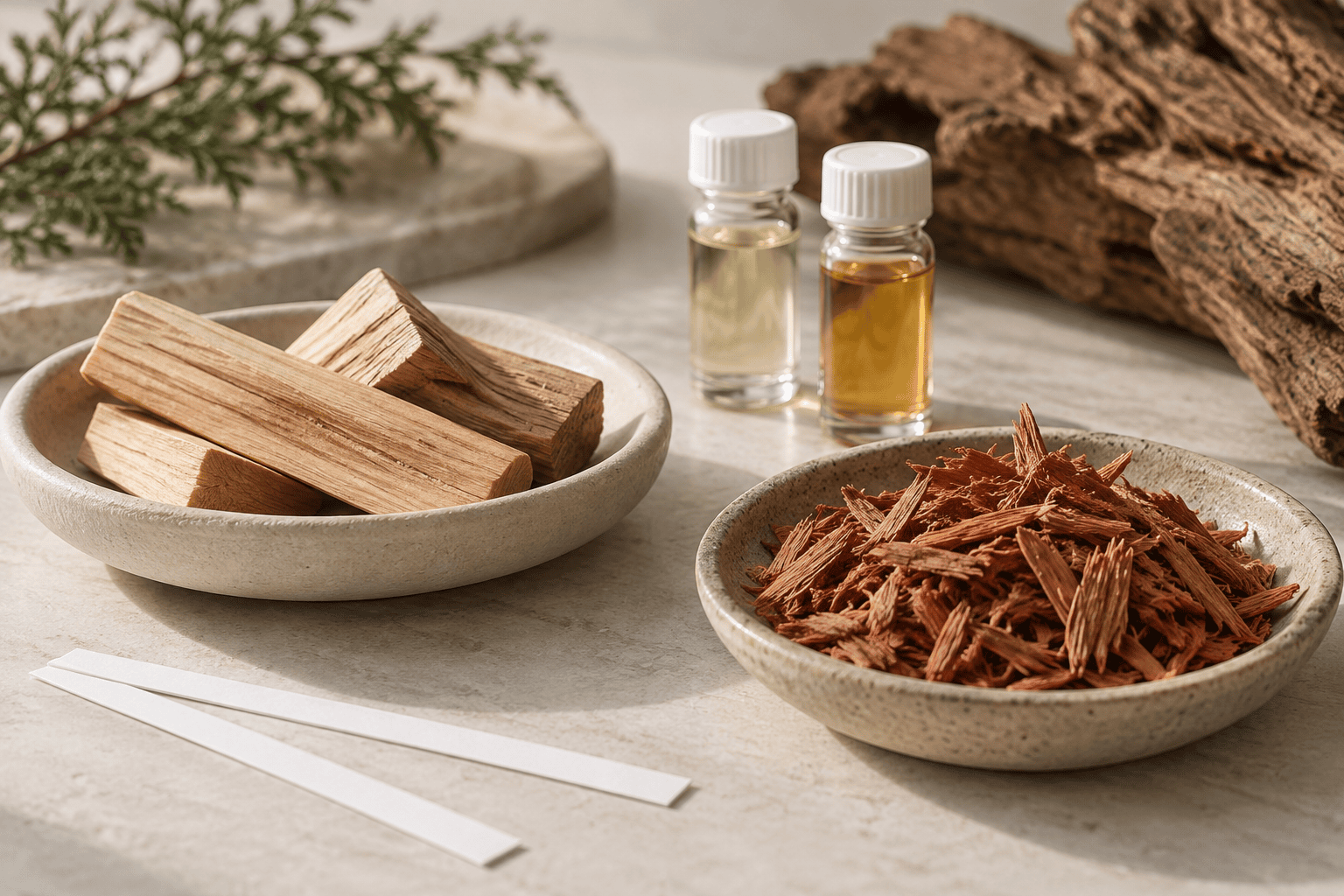
Use natural materials as references, not formula disclosures
Givaudan describes Australian sandalwood with creamy, balsamic and woody facets, while its Virginia cedarwood description develops toward a drier wood impression. Givaudan: sandalwood olfactory description Givaudan: Virginia cedarwood olfactory description These examples help explain the vocabulary. They do not establish the composition of a fragrance oil sold under either name. A concentrate may reconstruct a woody effect from multiple ingredients, and two sandalwood-named blends can differ substantially.
Separate creamy texture from sweetness
Buyers sometimes use creamy to mean sweet, but that can send a revision in the wrong direction. If you want smooth wood without a vanilla-dessert association, say so. Likewise, dry does not have to mean harsh, smoky or dusty. Compare roundness, sweetness, dryness and smoke as separate attributes. A supplier can then adjust the requested effect without assuming that every smooth wood needs more sweetness or every cedar direction needs a sharper opening.
| Brief dimension | Sandalwood-style direction | Cedarwood-style direction |
|---|---|---|
| Texture to explore | Rounded and smooth | Dry and structured |
| Useful clarification | Creamy but not necessarily sweet | Dry but not necessarily smoky |
| Separate requirement | Document any natural-origin claim | Document any species or origin claim |
Choose the role of the wood in the fragrance
A woody note can be the main identity or a background supporting tea, floral, citrus or clean effects. Decide which role you need. For a wood-led candle, you might prioritize a recognizable woody body throughout use. For a floral personal-care product, the wood may be wanted only as a subtle finishing impression. Asking for the strongest sandalwood is unhelpful when the real goal is to support a rose without overwhelming it.
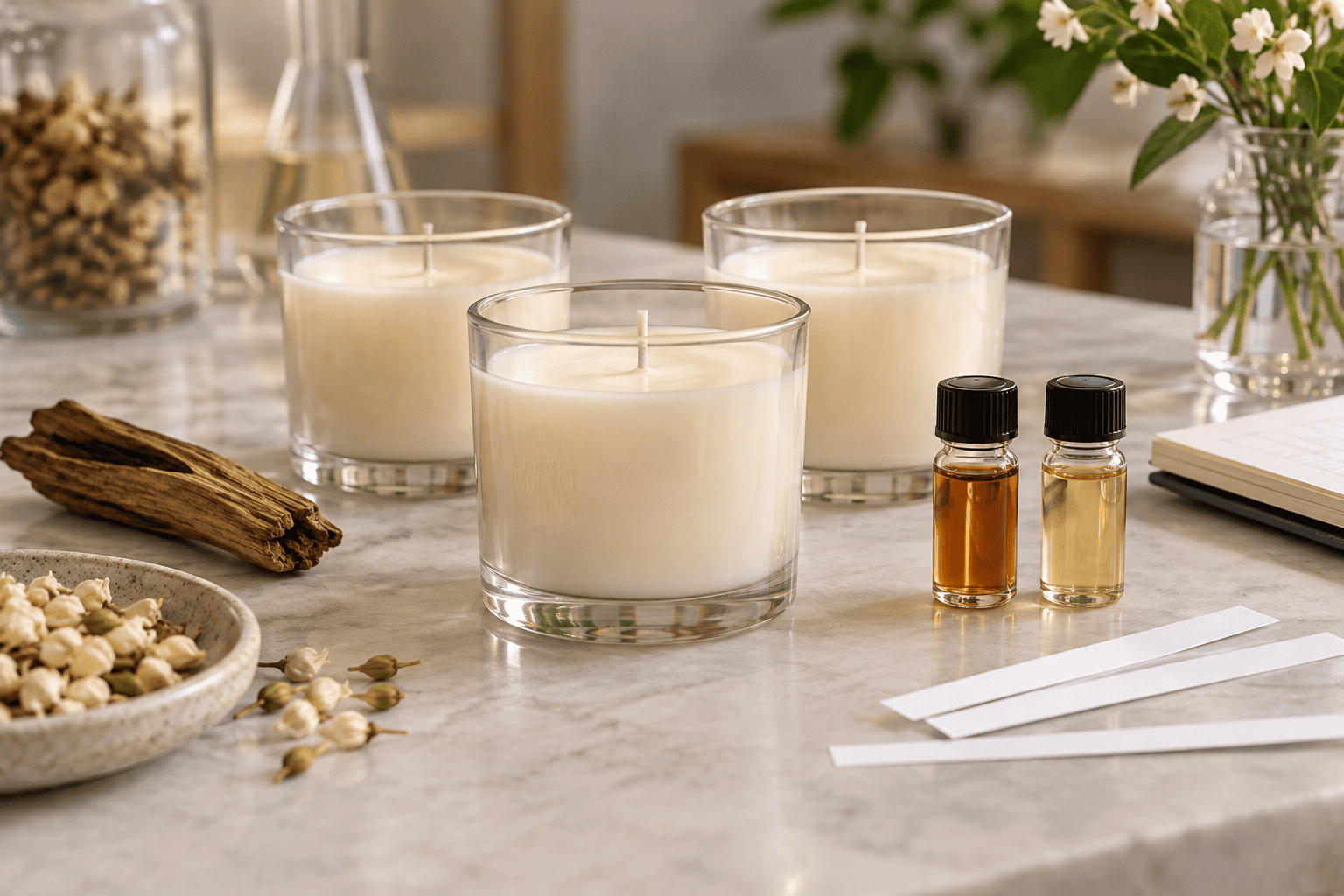
Compare the candidates in the intended base
Use the same application formula and the supplier-approved conditions for each candidate. Record whether the wood remains legible or becomes a generic sweet, smoky or perfumey background. Include the unscented base so its own odor is not mistaken for a woody nuance. If evaluating candles, keep the wax, vessel and burn procedure consistent. This article compares scent direction; it does not replace the separate compatibility and candle performance checks needed before production.
Use exclusions to make a woody brief precise
An illustrative brief is: “A dry cedar-led concentrate for a home-fragrance range, with low sweetness and no dominant pencil-shaving, smoke or medicinal impression.” Another might request “smooth sandalwood-style warmth without a heavy gourmand finish.” References are useful when accompanied by these boundaries. If you need a particular natural ingredient or origin, state that as a documented sourcing requirement rather than assuming the scent description already guarantees it.
Approve the balance rather than the name
Retain the approved revision with notes about the wood’s role, the permitted sweetness and the unwanted edges. When requesting samples from SHEAIN, include the end-use base and target scent balance. Confirm stock options and customization feasibility for that project. This keeps the discussion centered on fragrance oil supply and avoids confusing a sandalwood-style concentrate with the purchase of pure sandalwood essential oil.
Frequently Asked Questions
Is sandalwood fragrance oil pure sandalwood oil?
Not necessarily. A scent direction and a botanical raw material are different purchasing specifications.
Is cedarwood always stronger?
No. Perceived strength depends on the actual composition, dosage and application.
Can the two directions be combined?
A perfumer can develop a blended woody direction. Approve the resulting formula for the intended application rather than assuming compatibility.
Related Guides and Application Support
- Fragrance Oil vs Essential Oil: Which Is Better for Commercial Product Manufacturing?
- Custom Fragrance Development: From Creative Brief to Approved Formula
Contact SHEAIN with your end-use application, target market and scent brief to discuss fragrance oil concentrate samples.


