

Fragrance oil vs essential oil: neither is universally better for commercial manufacturing. Fragrance oils usually offer broader scent design, better consistency, and more predictable cost, while essential oils provide a plant-derived story and characteristic natural profiles. The right choice depends on the product application, target claim, safety limits, performance requirements, and budget.

Fragrance Oil vs Essential Oil: Quick Comparison
| Factor | Fragrance oil | Essential oil |
|---|---|---|
| Composition | A formulated fragrance mixture using selected natural and/or synthetic materials | A volatile aromatic material obtained from a botanical source |
| Scent range | Very broad, including concepts not available from one plant | Limited to the profile of the botanical material |
| Consistency | Designed against a controlled specification | Can vary with origin, harvest, climate, and processing |
| Performance | Can be engineered for a specific base and use condition | Performance depends strongly on natural composition and volatility |
| Cost and supply | Often more predictable at scale | May fluctuate with crop yield and supply |
| Marketing value | Creative flexibility and recognizable scent direction | Botanical origin and natural-positioning potential |
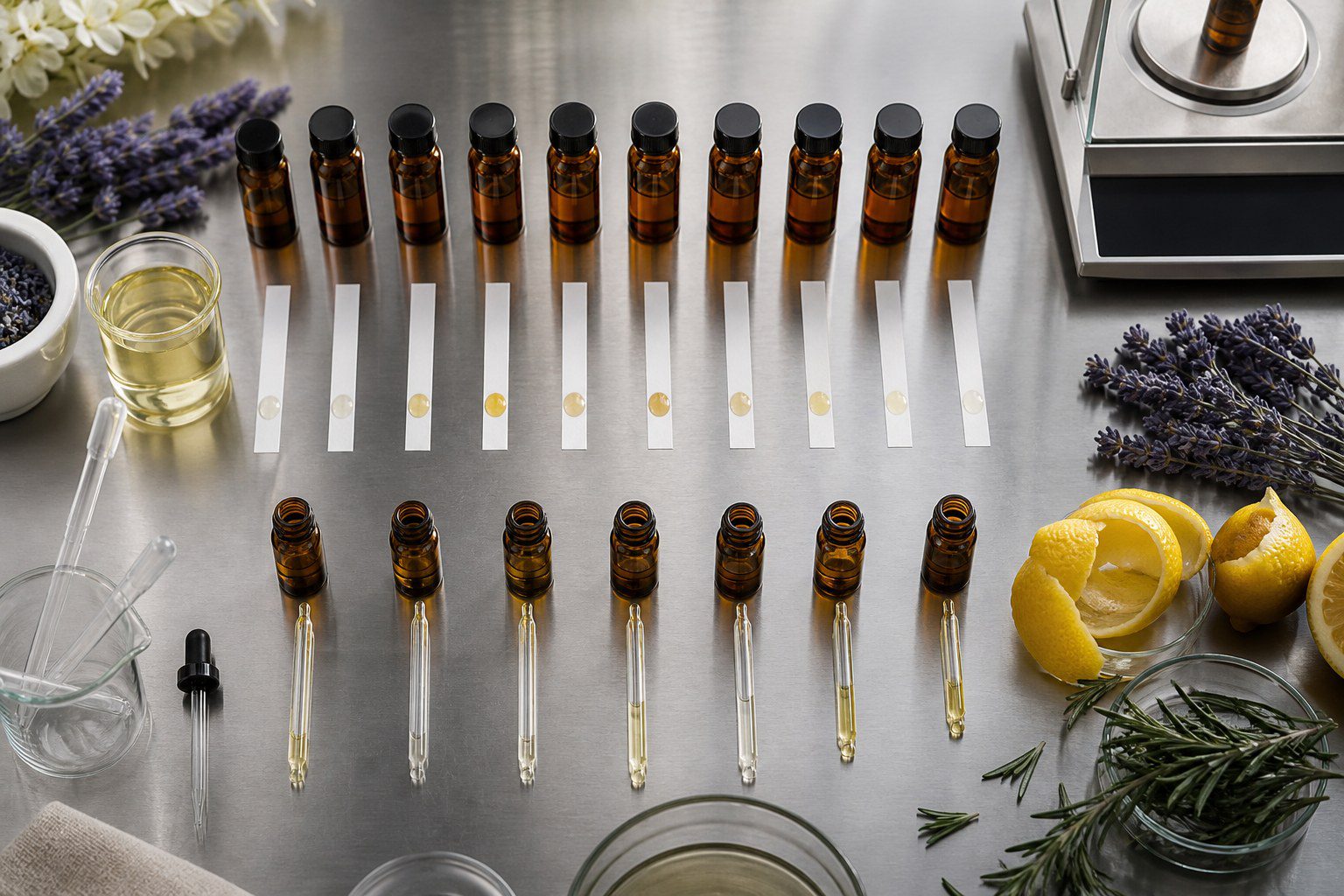
What Is Fragrance Oil?
Fragrance oil is a concentrated aromatic mixture created to deliver a defined odor profile in a finished product. A professional formula can combine aroma chemicals, natural extracts, essential oils, solvents, and functional ingredients. “Fragrance oil” does not automatically mean synthetic, and the exact composition varies by formula.
Its main commercial advantage is design control. A perfumer can balance top, middle, and base notes, improve stability in a difficult base, reduce dependence on a scarce natural material, and reproduce an approved standard from batch to batch.
What Is Essential Oil?
Essential oil is commonly used for a concentrated aromatic material obtained from a plant through processes such as steam distillation or expression. Its composition is naturally complex. Lavender, lemon, eucalyptus, and peppermint oils are examples, but quality and odor can differ by botanical variety, geography, harvest, storage, and extraction.
Plant origin does not guarantee universal safety. The U.S. FDA notes that ingredients from plants are treated like ingredients from other sources, and intended use and marketing claims determine how a product is regulated. Some natural materials also contain constituents restricted for particular applications.
Seven Differences That Matter in Manufacturing
1. Creative Range
Fragrance oils can create fantasy accords, branded signatures, gourmand profiles, and stable interpretations of delicate natural notes. Essential oils remain tied to the odor profile available from the plant.
2. Batch Consistency
A controlled fragrance formula can compensate for raw-material variation. Essential oil composition can shift between crops, so incoming inspection and approved specifications are especially important.
3. Product Performance
Detergent, candle, diffuser, shampoo, and fine-fragrance bases expose aromatic materials to different temperatures, pH values, surfactants, oxidation, and packaging. A fragrance designed for the application generally gives the formulator more options.
4. Safety and Compliance
Both categories require safety review. IFRA Standards can restrict natural constituents as well as synthetic ingredients and set acceptable use levels by finished-product category. An IFRA Certificate for a fragrance mixture is application-specific; it does not replace finished-product assessment.
5. Price and Supply
Crop failure, growing region, yield, and extraction efficiency can affect essential-oil availability. Fragrance formulas can sometimes use alternative materials to stabilize supply and cost, subject to sensory and compliance approval.
6. Label and Claim Strategy
A natural-origin story may support a brand position, but claims such as “therapeutic,” “organic,” or “hypoallergenic” require careful market-specific review. The formula, finished product, label, and advertising must tell the same defensible story.
7. Sustainability Decisions
Natural is not automatically lower impact, and synthetic is not automatically higher impact. Consider land use, yield, energy, solvent, traceability, biodegradability, transport, and the amount needed to achieve performance.
Which Option Fits Each Product?
- Candles and home fragrance: fragrance oil often gives broader scent choice and performance control; essential oils require burn and stability testing.
- Detergent and fabric care: an application-designed fragrance is normally more practical for alkaline bases, wash loss, and fabric deposition.
- Shampoo and body wash: either can work, but compatibility, color, odor stability, allergens, and the intended market must be assessed.
- Fine fragrance: modern formulas commonly combine natural and synthetic materials to balance creativity, diffusion, stability, and cost.
- Botanical positioning: essential oils or a natural-focused fragrance may fit the concept if documentation and claims support it.
How to Choose for Your Product
- Define the finished product, target market, and consumer.
- Write the scent brief before deciding on an ingredient story.
- Confirm prohibited materials, allergen needs, and applicable IFRA category.
- Test candidates at the intended dosage in the real product base.
- Evaluate stability, performance, packaging interaction, and aging.
- Compare total delivered cost, not price per kilogram alone.
- Approve a sample and specification before bulk production.

Can Fragrance Oil and Essential Oil Be Combined?
Yes. Many successful commercial fragrances use both. Essential oils can provide botanical character and complexity, while other fragrance materials improve diffusion, stability, continuity, or cost. The final mixture must still be evaluated as one formula for its intended application.
Questions to Ask a Supplier
- Is the recommendation designed and tested for my application?
- Which documents are available, including IFRA, SDS, COA, and allergen information?
- How is batch consistency controlled?
- Can the supplier support natural-origin or restricted-material requirements?
- What dosage range should be tested?
- How are substitutions and formula changes communicated?
How SHEAIN Supports Product Manufacturers
SHEAIN develops and supplies fragrance solutions for home care, personal care, candles, diffusers, and fine fragrance. Buyers can compare catalog options, custom formulas, and application-specific recommendations. Learn more about our wholesale fragrance services and manufacturer evaluation guide.
Frequently Asked Questions
Is fragrance oil synthetic?
Not necessarily. A fragrance oil may contain synthetic materials, natural materials, essential oils, or a combination.
Are essential oils always safer?
No. Safety depends on composition, concentration, exposure, application, and user population—not simply botanical origin.
Which lasts longer?
An application-designed fragrance oil often provides more tools for longevity, but actual performance must be tested in the finished product.
Can essential oils be used in candles?
They can be evaluated, but compatibility, scent throw, thermal behavior, and safe use require testing.
Which is more cost-effective for bulk production?
Fragrance oil is often more predictable, but the answer depends on concentration, performance, dosage, natural-material pricing, and order volume.
Authoritative References
- IFRA Standards for the safe use of fragrance ingredients
- FDA: Fragrances in Cosmetics
- FDA: Aromatherapy and intended-use claims
Request an Application-Specific Recommendation
Contact SHEAIN with your product type, target scent, market, dosage, quantity, and claim requirements.


