

A mimosa fragrance oil scent profile is easier to specify when powdery softness, greenery and floral identity are evaluated separately. The aim is not to find the most powdery sample, but the balance that fits your product. A floral name alone does not tell a buyer how a concentrate will read in a finished base or whether it contains a botanical extract.
Start with a floral reference, not the color yellow
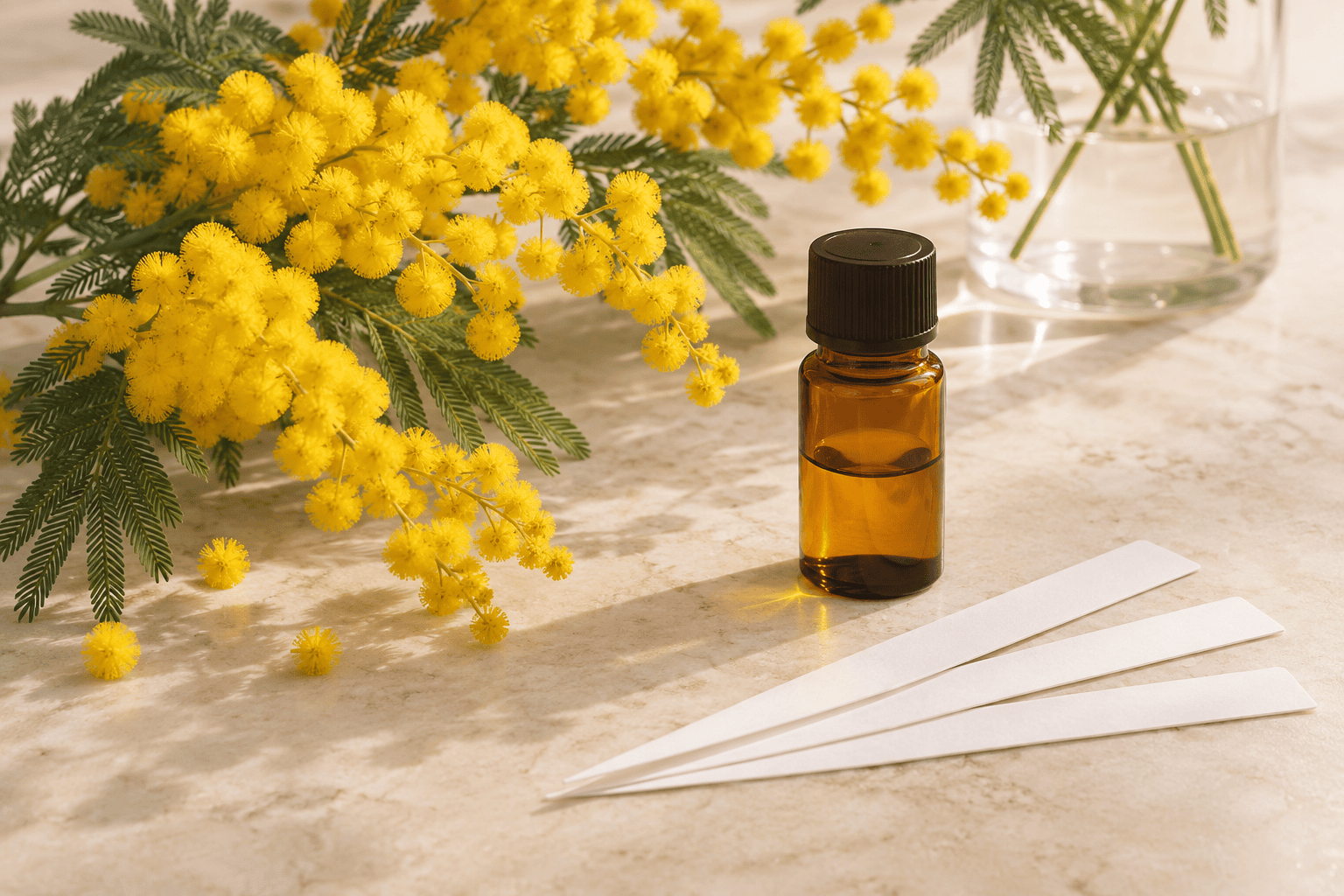
Yellow flowers can be a useful visual inspiration, but color does not define an odor. dsm-firmenich describes its Mimosa Absolute through green, floral, powdery and lightly fruity facets. Source: dsm-firmenich: Mimosa Absolute description Use this as one vocabulary reference, not a universal specification for mimosa fragrance oil. Ask assessors what makes the sample recognizable as the intended floral concept before discussing packaging, color or an ingredient-origin claim.
Describe the kind of powdery effect you want
Powdery may suggest a soft cosmetic association to one person and a dry, dusty impression to another. Ask which meaning the evaluator intends. A useful revision request identifies the unwanted association while preserving the central flower. Simply asking for less powder can remove the feature that made the sample interesting. Keep softness, sweetness and intensity on separate lines in the evaluation sheet so they do not become interchangeable explanations.
Set a clear role for greenery
A green accent can be specified as part of the brief without assuming it proves natural composition. Decide whether the project should suggest surrounding foliage or keep the floral impression dominant. Compare candidates without their descriptive names and ask which impression arrives first. If greenery takes over, describe that imbalance precisely. If the flower feels indistinct, determine whether more green contrast would actually solve the problem before requesting another revision.

Check supporting sweetness and fruit associations
Some interpretations may have a fruity or sweeter background, but that is not permission to treat every mimosa concept as a fruit fragrance. Ask whether the support clarifies the flower or changes the product into a different scent family. For a multi-product collection, compare the nearest existing floral reference as well. The new fragrance should have a specific identity rather than repeating the same sweet background with a new botanical name.
Move the decision into the intended application
Prepare samples in the actual base at a technically reviewed loading and record the preparation method, sample age and observation point. Judge floral recognition, powdery character and unwanted associations separately. This article offers a briefing framework, not measured stability or performance results. A successful scent evaluation does not establish physical compatibility or safety. Keep the application checks and required documentation as separate approval gates before commercial use.
| Dimension | Question to record | Useful direction |
|---|---|---|
| Floral identity | Is the intended flower clear? | Preserve the central theme |
| Powder | Soft cosmetic or unwanted dusty effect? | Describe the specific association |
| Greenery | Accent or dominant impression? | Set its role in the brief |
| Background | Floral support or fruit-led character? | Keep the desired family clear |
Approve an actionable mimosa brief
A practical request might be: floral-led mimosa, moderate cosmetic softness, a secondary green accent and no dominant candy effect. Include accepted and rejected reference codes, product format and target market. SHEAIN can discuss sample feasibility against those requirements. Confirm the actual approved concentrate and revision rather than purchasing only by scent name. Botanical-content, natural-origin and ingredient-free requirements should be stated separately and supported by the appropriate supplier documents.
Frequently Asked Questions
Does mimosa fragrance oil contain mimosa absolute?
Not necessarily. Verify the supplied product and any botanical-content requirement through documentation.
Is powdery the same as sweet?
No. Ask evaluators to describe each separately so the revision addresses the actual concern.
Can a mimosa candle sample approve a cosmetic use?
No. Each intended application needs its own technical and safety review, even when the scent concept is shared.
Related Guides and Application Support
- Fragrance Sensory Evaluation: How to Build a Reliable Sample-Scoring Process
- Custom Fragrance Development: From Creative Brief to Approved Formula
Contact SHEAIN. Share your end-use application, target market and scent brief to discuss fragrance oil concentrate samples.


