

Fragrance oil for solid perfume should be approved in the finished wax-and-oil system, not selected from bottle odor alone. The product must deliver the intended scent while remaining suitable for its leave-on use, process and packaging. Begin with a reviewed base and a clear product brief; there is no universal fragrance percentage that makes every solid perfume suitable.
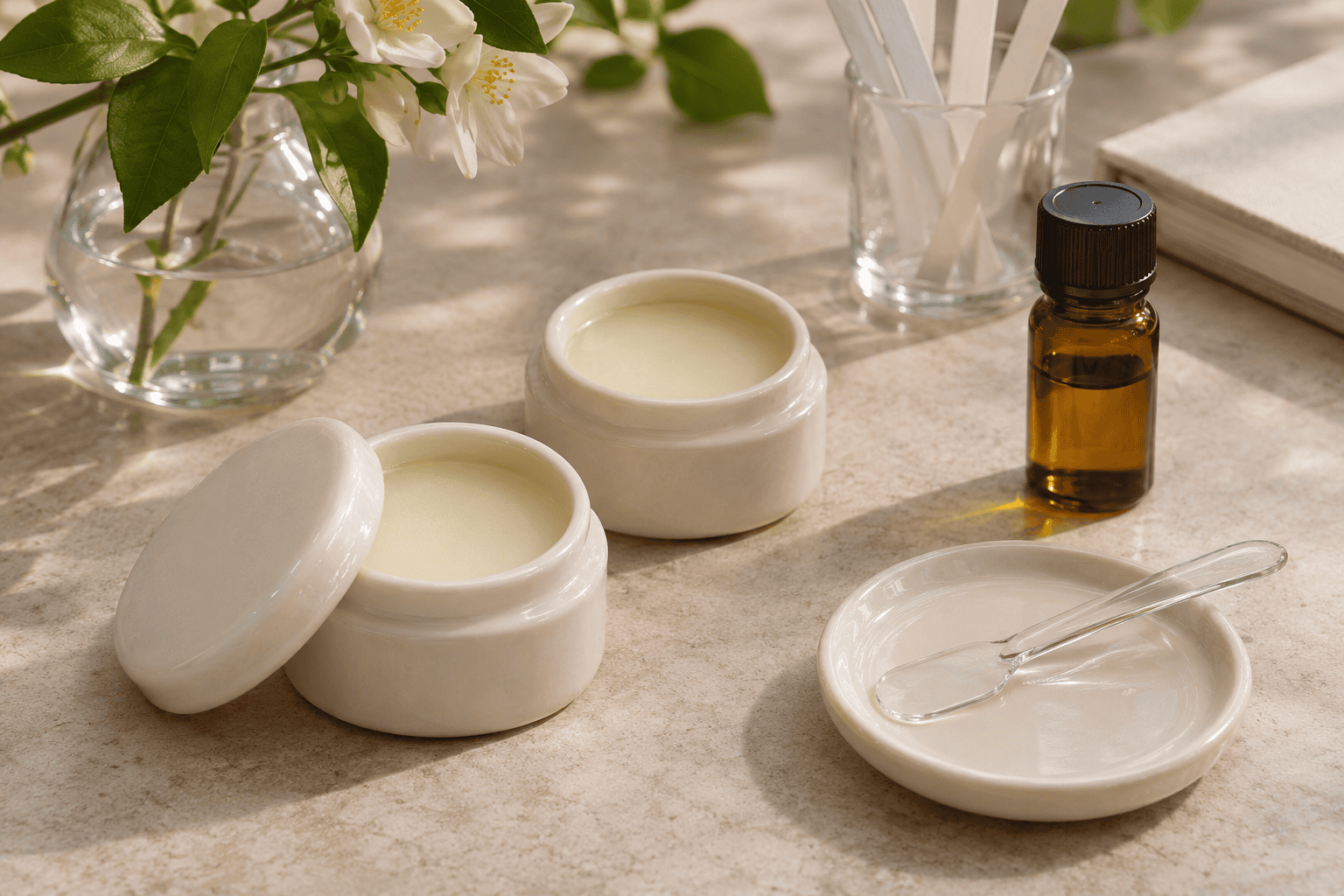
Share the base structure before choosing the concentrate
Tell the fragrance supplier whether the product is a pot, compact or stick, and provide the relevant wax, emollient and process information to the formulator. Koster Keunen publishes a solid-perfume example combining waxes with emollient ingredients. Source: Koster Keunen: solid perfume formulation example That example illustrates a complete system, not a formula to copy without assessment. SHEAIN’s role here is discussing fragrance concentrate options, not claiming to manufacture your finished cosmetic.
Keep dosage approval separate from scent preference
A stronger-smelling sample is not automatically an acceptable leave-on formulation. Obtain the documentation for the exact concentrate and intended use, and have the finished formula reviewed appropriately. IFRA explains that a conformity certificate does not replace a safety assessment. Source: IFRA: certificate scope and limitations Do not use a candle recommendation or an unrelated perfume formula as your dosage authority. A published supplier example also cannot establish the suitable level for a different mixture.
Record the process instead of choosing a universal temperature
Document the base preparation, fragrance addition stage, mixing, filling and cooling conditions established by the formulator. If odor or texture changes between trials, compare those records before blaming the concentrate. Avoid transferring a temperature from another wax system without checking its suitability. A small controlled trial is useful only when its conditions can be repeated; an attractive photograph of a smooth balm is not evidence of process compatibility.
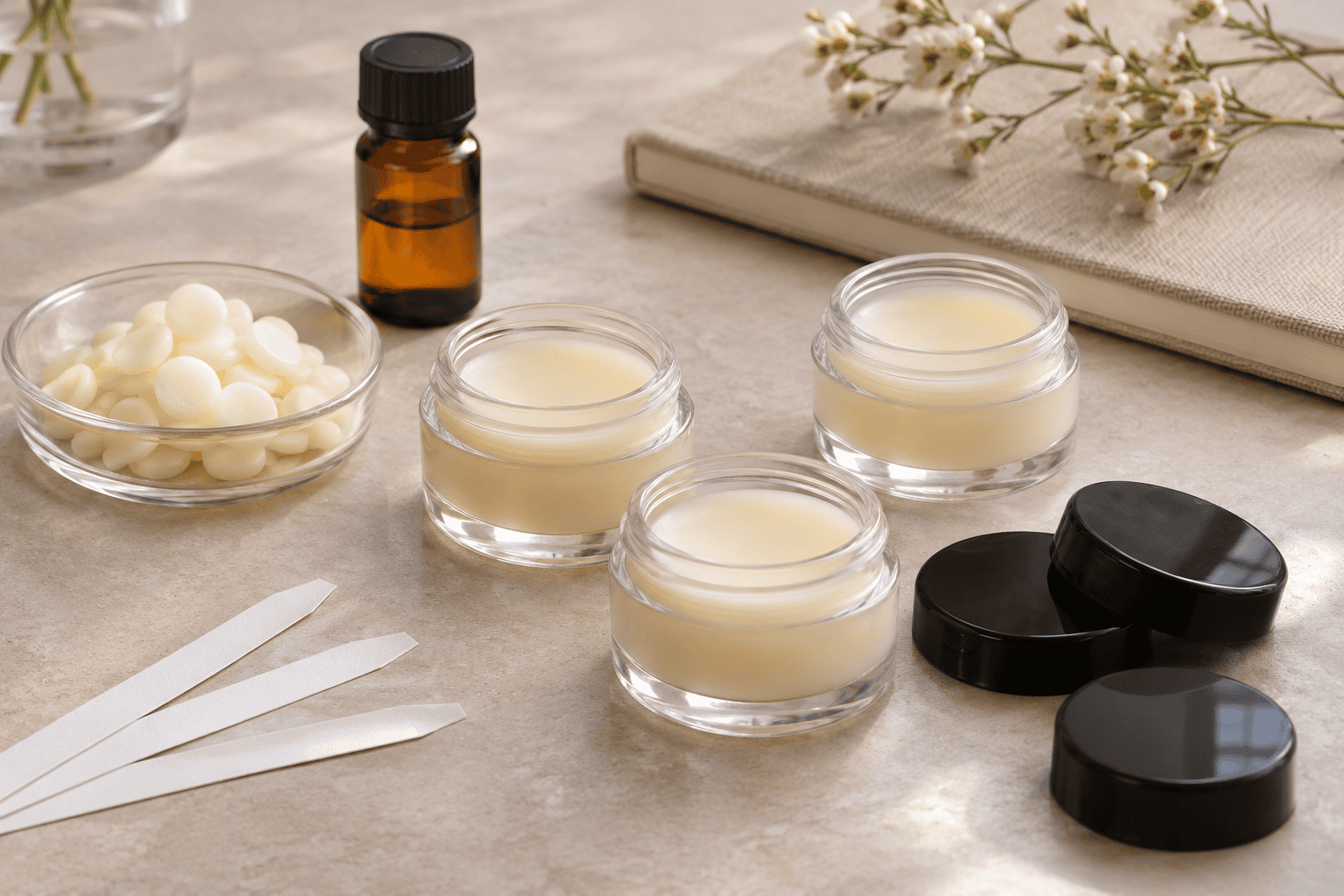
Assess texture and appearance alongside the fragrance
Keep an unfragranced control and compare the candidate formulations for agreed appearance and handling characteristics. Record observations such as surface changes, separation, graininess or differences in pickup without assuming one cause. Evaluate the package as part of the system, including the closure and contact materials. The checklist below is a starting point for discussion with a qualified formulator, not a substitute for a stability program or a safety assessment.
| Area | What to record | Approval boundary |
|---|---|---|
| Base | Wax and emollient system | The tested formula only |
| Process | Addition, mixing, filling and cooling | Documented conditions |
| Appearance | Surface, uniformity and handling | Agreed observations and criteria |
| Scent | Character at the relevant use stage | Not bottle odor alone |
| Documentation | Exact mixture and intended use | Finished-product review still required |
Evaluate scent at the relevant stage of use
Bottle odor, the surface of the balm and a finished-product use evaluation answer different questions. Define which stage matters commercially and compare candidates using a documented method. Any human-use evaluation should involve an appropriately assessed finished product and suitable oversight; do not apply an unreviewed fragrance concentrate directly to skin. Record character and intensity separately from texture preference so a pleasant feel does not hide an unwanted scent shift.
Release a documented fragrance-and-base combination
Approve a specific concentrate revision in a specific base, process and package. Keep the reference sample, agreed evaluation criteria and relevant documents together. If the wax blend, carrier or fragrance changes later, assess what must be retested instead of assuming the earlier approval transfers. For a SHEAIN enquiry, include the product format, market and desired scent direction so feasibility can be discussed without promising an unverified finished-product outcome.
Frequently Asked Questions
Can any candle fragrance be used in solid perfume?
No. Suitability and documentation for the intended leave-on use must be established for the exact concentrate.
What fragrance percentage should I use?
There is no universal answer. The specific mixture, intended use, finished formula and applicable review determine the acceptable level.
Does a smooth first batch prove stability?
No. Initial appearance is only one observation. Use an appropriate stability and packaging evaluation plan.
Related Guides and Application Support
- What Documents Should a Fragrance Oil Supplier Provide? IFRA, SDS, COA and Allergen Declarations Explained
- Fragrance Oil Stability Testing: How to Check Compatibility Before Mass Production
Contact SHEAIN. Share your end-use application, target market and scent brief to discuss fragrance oil concentrate samples.


