

A reed diffuser low fill level scent test asks whether a finished diffuser still gives an acceptable scent when little liquid remains. Filling a new bottle only one-quarter full is not the same as letting a full unit reach that level naturally. The reeds and remaining liquid in the used bottle have a different history. Treat these as two different samples, then test what each one can tell you.
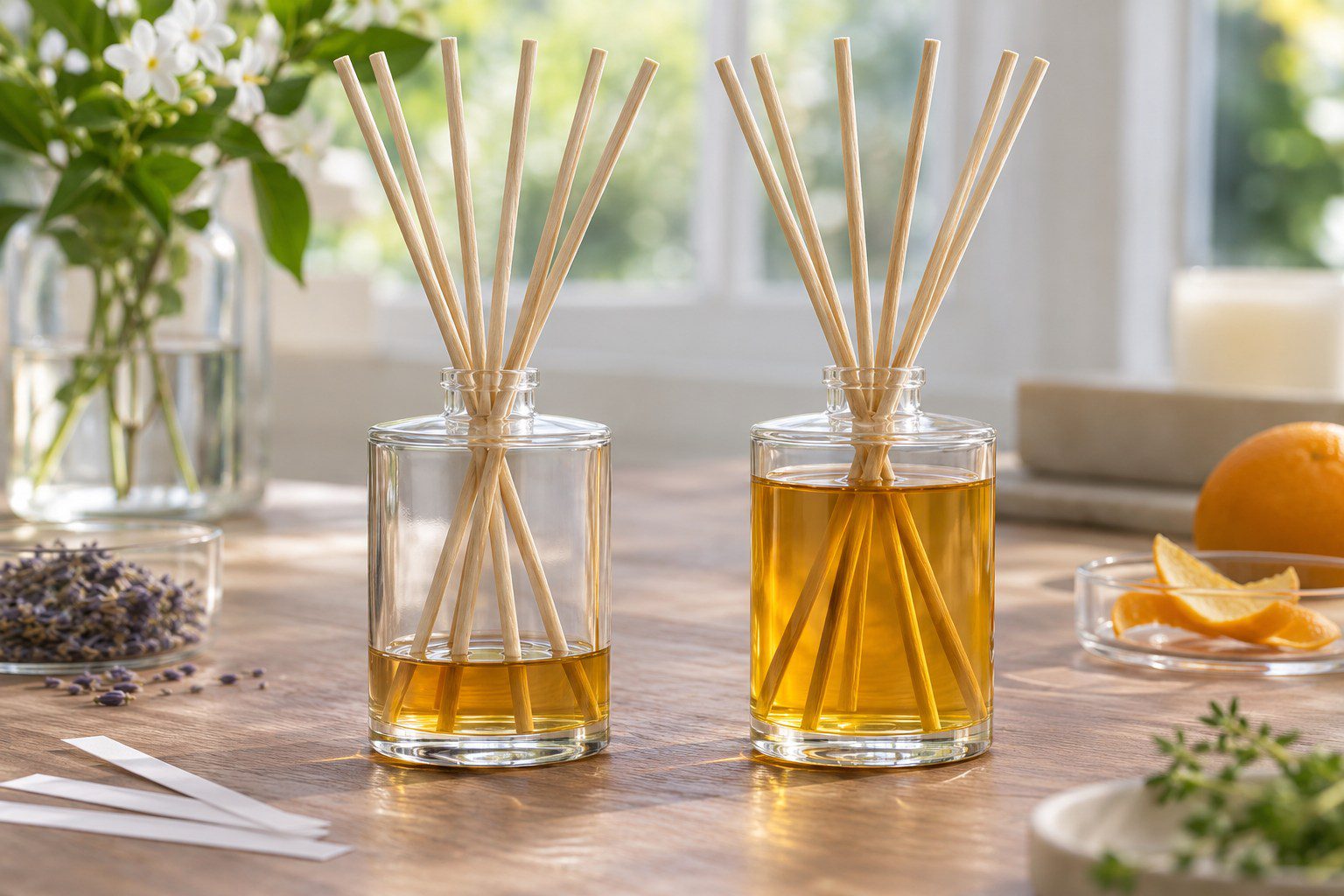
Define what counts as the last quarter
Use the product team’s documented way of estimating remaining liquid. Do not assume that a quarter of the visible height equals a quarter of the liquid in a bottle with shoulders or a tapered shape. Mark the agreed threshold in the record, including the starting fill and the method. Decide when to start the late-stage check before the samples reach it.
Keep an aged unit and a fresh comparison
Let the reference units reach the low-fill point during the normal evaluation. Keep the reeds and packaging that were used with them. A newly assembled low-fill unit can make a useful comparison, but it is not a substitute for an aged unit. Use a fresh reference with the same formulation and configuration where available, and record what is new versus aged.
| Sample | What it tells you | What it cannot prove |
|---|---|---|
| Naturally aged low-fill unit | Late-use behavior of one evaluated configuration | A universal lifetime or the cause of a change |
| Fresh low-fill unit | How the fresh combination behaves at low fill | Performance of aged liquid and reeds |
| Fresh reference fill | An initial baseline for the matched configuration | Whether the same impression remains at the last quarter |
Separate what you see from what you smell
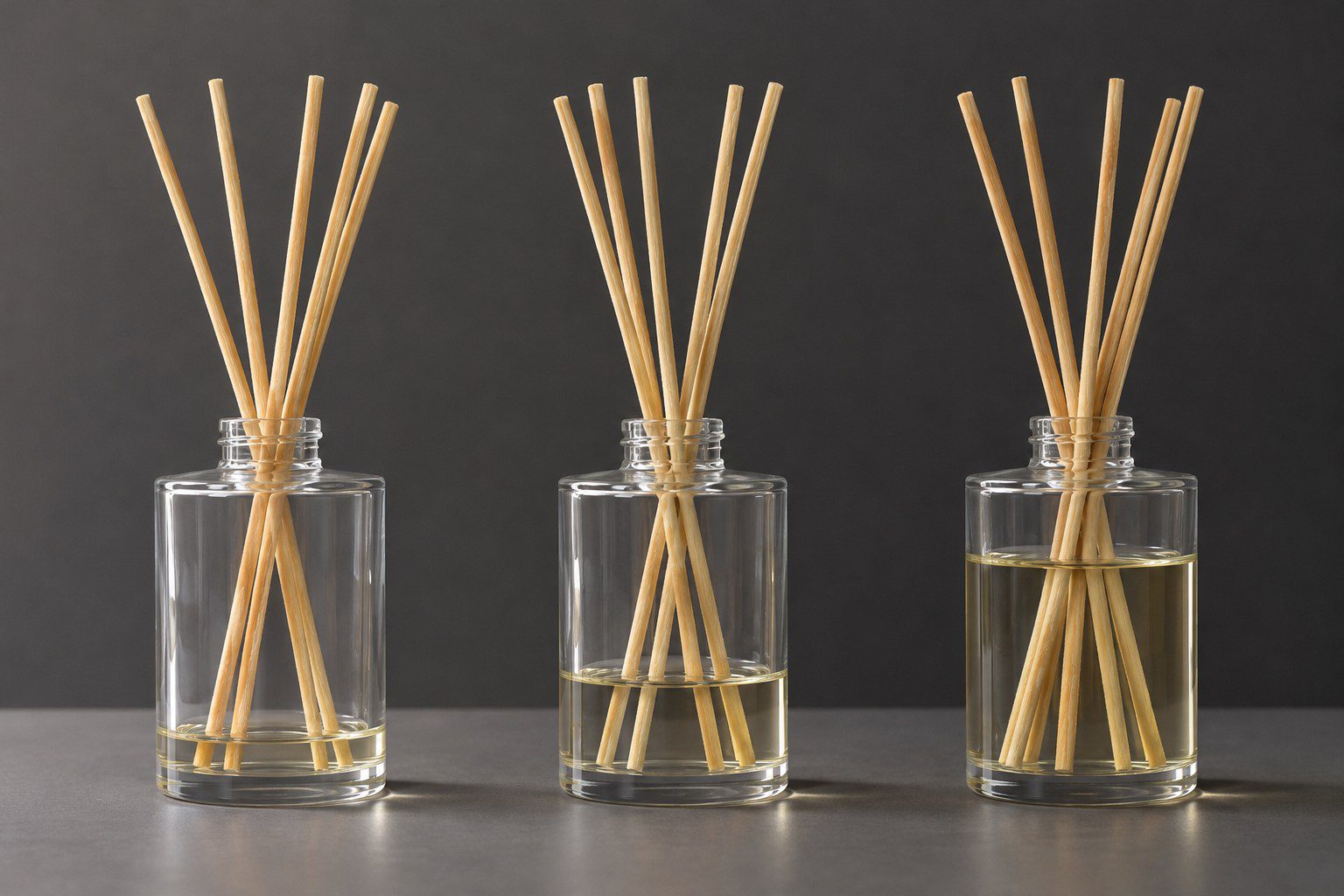
Record visible remaining liquid, clarity, surface or reed appearance, scent intensity and whether the intended character remains. Give each its own field. A visible level does not tell you whether the scent is acceptable, and an odor change does not identify its cause. Note any unexplained change rather than attributing it to fragrance, base or reeds before a controlled comparison.
Make the evaluation point repeatable
Use the same bottle format, number and type of reeds, locations and observation procedure for comparable units. Record the evaluation environment and any changes. Avoid leaning over one bottle if the product goal is a scent detectable at a normal distance. Use the product team’s predefined location and review stage for all units. Do not flip or replace reeds during a comparison unless that is the defined condition being evaluated.
Isolate the next variable only after finding a repeatable gap
If the naturally aged units fall short, confirm that the gap repeats. A comparison between an aged combination and a fresh unit cannot by itself identify whether fragrance, reeds, liquid history or packaging contributed. Decide one next comparison with your supplier, keeping the other conditions constant. Ask for a fragrance revision only if the results give a reason to do so.
Document the condition, not a universal lifetime claim
Record the sample version, finished base, packaging, reed specification, remaining-fill method and acceptability stage. For example: ‘At the agreed low-fill point in this format, the scent remains recognizable but intensity falls below the late-use target.’ Use a qualified result to guide the next product decision. A single trial is not a guarantee of a fixed calendar lifetime.
Frequently Asked Questions
Is a quarter-height mark sufficient?
Not in every shape. Use a consistent fill estimate that accounts for the bottle geometry.
Can I test a fresh bottle at low fill instead of aging it?
You can use that as a comparison. It does not reproduce the history of the liquid, reeds and bottle in a naturally aged unit.
Which findings should the fragrance supplier get?
Send sample version, base and reed configuration, observations at the late-fill point, and a matched reference so the result can inform the next trial.
Related Guides and Application Support
- Reed Diffuser Bottle Neck Size and Fragrance: Plan a Controlled Comparison
- Reed Diffuser Base Compatibility: Solvents, Wicks and Evaporation Rate
Contact SHEAIN. Share your end-use application, target market and scent brief to discuss fragrance oil concentrate samples.


