

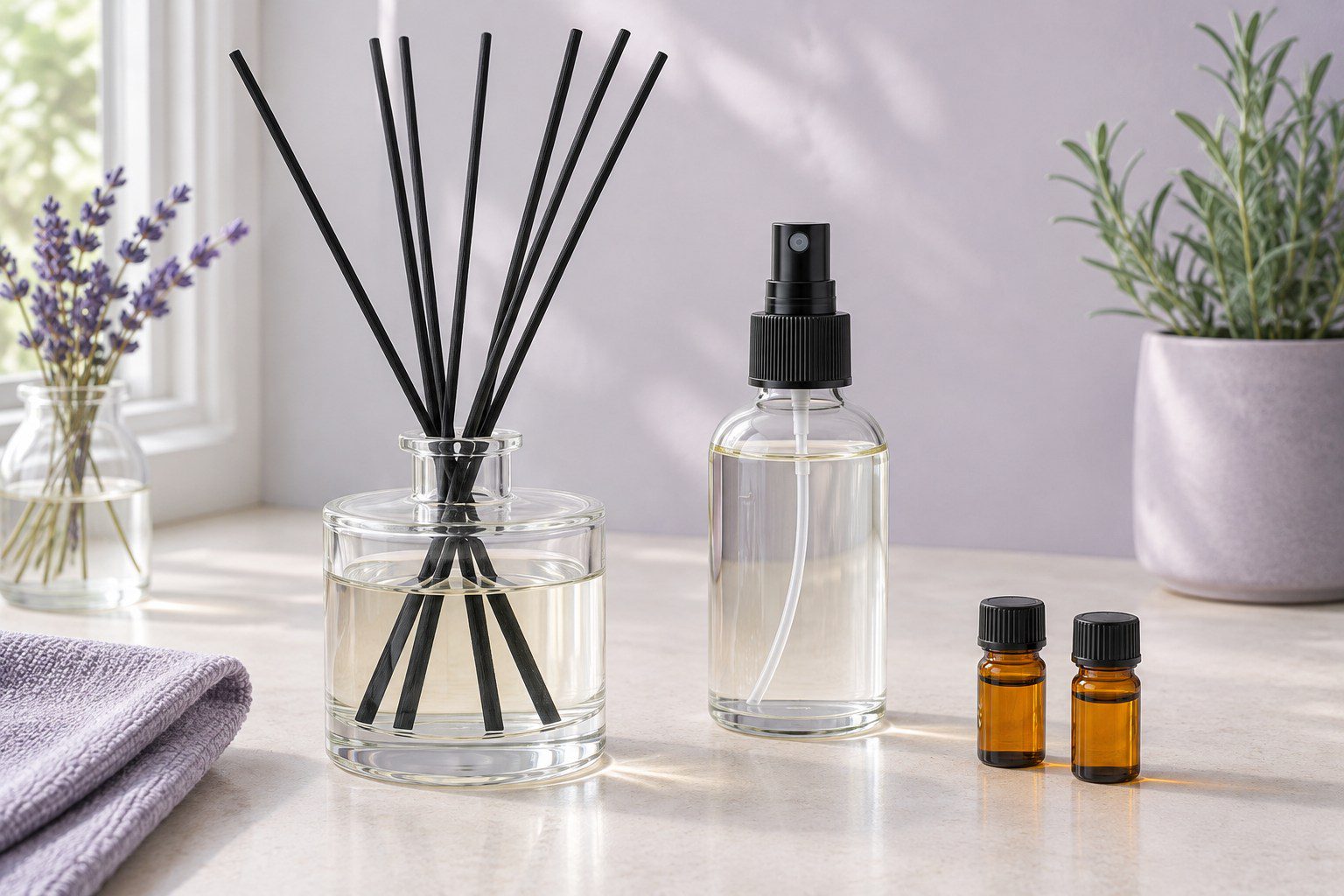
Matching reed diffuser and room spray fragrance is a brief for two finished formats, not an instruction to use one approval twice. A reed diffuser gives an ambient impression as the product sits in use. A room spray is experienced around an application event and afterward. The shared target is a recognizable scent identity; each format needs its own evaluation point and a separate compatibility and performance decision.
Write the shared identity before comparing formats
Choose the scent cue customers should recognize in both products, plus one note that should not dominate. For example, the shared cue might be crisp citrus peel with a quiet wood background, without a cleaner-like edge. Use one reference version when possible so teams compare with the same target rather than two differently remembered scents.
Define independent approval points
For the reed format, document the bottle, reed configuration, base and the stage of use when the scent is assessed. For the spray, document the intended base, pack and review points after application using the approved procedure. Do not compare a reed diffuser only at setup with a spray immediately after use and treat the intensity readings as equivalent. Those are different experiences even when the scent character matches.
| Approval field | Reed diffuser | Room spray |
|---|---|---|
| Shared identity | Same scent cue and excluded note | Same cue, judged at a format-specific moment |
| Conditions | Bottle and reeds, base and stage of use | Pack and base, application and check point |
| Decision | Approve only tested reed configuration | Approve only tested spray configuration |
Use a neutral reference for both base systems
Evaluate each candidate against the unscented base that belongs to that format. If the spray base has a noticeable odor before fragrance, identify it separately. If the reed format has a base odor at a later stage, record it at that stage. Keep preparation, sample version and observation conditions comparable within each format. The assessments are complementary rather than interchangeable.

Separate scent match from product qualification
Ask the team whether the scent identity is recognizable, whether the strength suits that format, and what finished-product checks were completed. Good sensory matching does not establish stability, packaging compatibility or suitable use. The same concentrate version may be convenient if it qualifies in each format; two separately approved versions are an option if the bases express the character differently.
Document a revision for the format that failed
If the spray reads like the reference but the reed version loses the wood note, note the reed stage and configuration rather than asking for a global change. Give the supplier the shared target, the reference ID and the difference observed. Check whether a revision can preserve the already-approved format without treating a revision in one product as approved in both.
Keep two approval records under one scent family
Record the fragrance sample and revision, format, base, package, check points, and permitted range of scent character. A reed sign-off might require recognizable citrus peel during normal use; the spray might require the same peel after the first burst settles. Keep separate release records and have the supplier confirm the intended end uses when reviewing project documentation.
Frequently Asked Questions
Should both versions smell equally strong?
Not necessarily. Compare recognizable character and define strength separately for each format.
Do we need two different fragrance oil formulas?
Only if required by the project. Confirm the sample against both formats and their applicable requirements before deciding.
Does a scent match qualify stability and packaging?
No. Record those checks separately for each finished product.
Related Guides and Application Support
- Reed Diffuser Base Compatibility: Solvents, Wicks and Evaporation Rate
- Fragrance Oil Stability Testing: How to Check Compatibility Before Mass Production
Contact SHEAIN. Share your end-use application, target market and scent brief to discuss fragrance oil concentrate samples.


