

An aromatherapy diffuser disperses fragrance into the air in a controlled manner, allowing scent molecules to permeate the entire space evenly. Different diffusion technologies operate in distinct ways—some utilize water vapor, others employ heat energy, while some rely on Fragrance oils.
In commercial or large-scale fragrance applications, pure essential oil diffusers(dithiol-based atomization diffusers) are widely adopted for their efficiency, stability, and potent fragrance performance.
Common Fragrance Diffusion Technologies Explained
Multiple fragrance diffusion technologies exist on the market. Understanding each technology’s operating principles helps brands and businesses select the appropriate diffusion system.
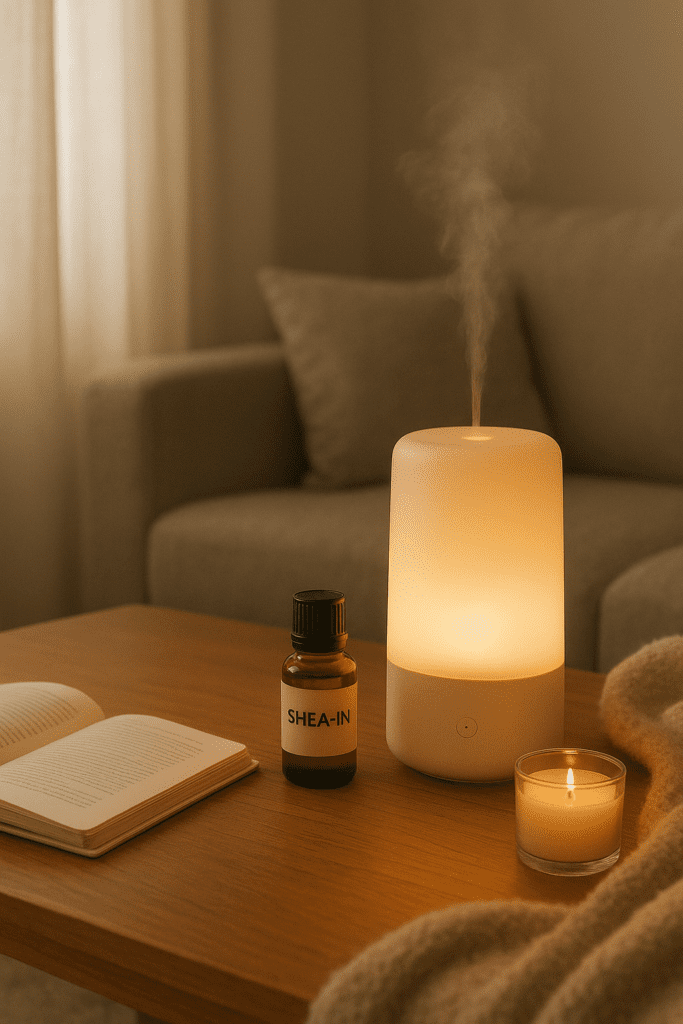
- Ultrasonic Diffusion (Water-Based Atomization)
Ultrasonic diffusers use high-frequency vibrations to mix water with Fragrance oils, creating a fine mist released into the air.
Core Characteristics: Requires water to produce visible mist; suitable for small spaces; relatively weak fragrance intensity.
This technology is common in personal and home diffusers but has limited effectiveness in large, open commercial spaces.
- Heat-Assisted Diffusion
Heat-assisted diffusers gently warm fragrance oils to evaporate them, releasing scent into the air.
Core characteristics: Simple construction; limited scent control; high temperatures may alter fragrance properties.
This method is rarely used in professional fragrance systems due to the potential for high temperatures to change the original scent profile.


- Natural Diffusion (Passive Diffusion)
Natural diffusion relies on evaporation without mechanical assistance, such as reed diffusers or scented stones.
Core characteristics: No electricity required, extremely limited scent dispersion range, low diffusion efficiency.
This method is best suited for decorative settings or small enclosed spaces.
Diatomic Diffusion (Pure Oil) Principle
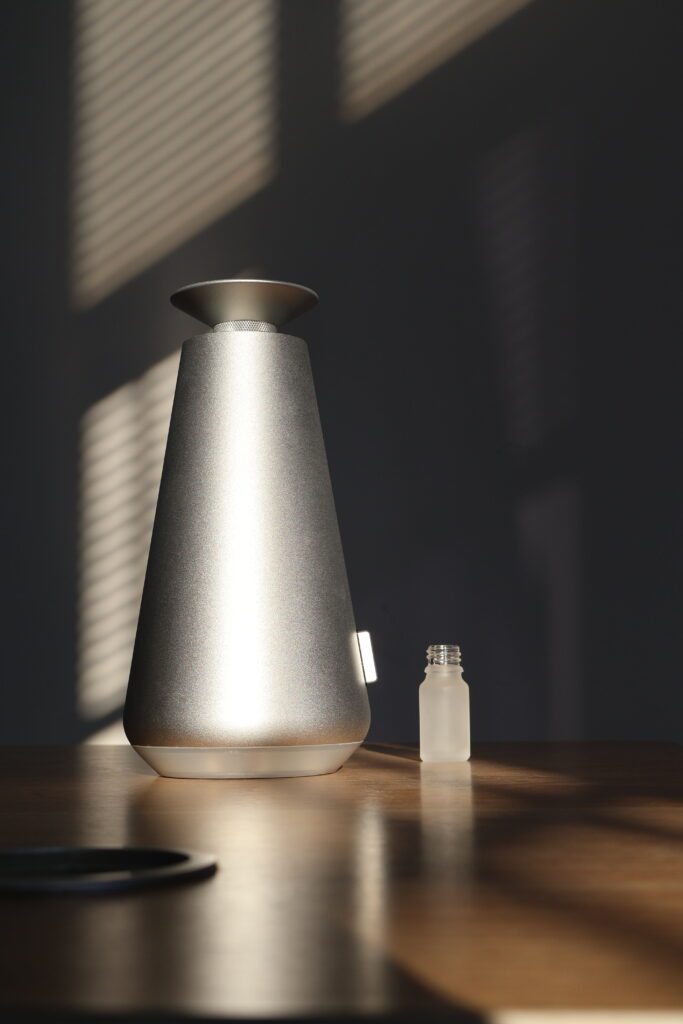
Diatomic diffusion (also known as pure oil atomization) is a professional-grade fragrance dispersion technology designed for sustained, efficient aroma release.
Unlike water-based systems, diatomic diffusers employ a waterless, heat-free process to break down Fragrance oils into ultrafine particles, which are then uniformly dispersed into the air via controlled airflow.
Working Principle: Pure Fragrance oil is drawn directly from the bottle → The diffuser atomizes the oil into particles → Air pressure disperses the fragrance throughout the space. Fragrance suspension time is extended, and coverage is broader. This process fully preserves the original structure of the fragrance, delivering a more potent and stable olfactory experience.
Application Scenarios for Disulfide Fragrance Diffusers in Commercial Spaces
Dithiol diffusion systems are widely deployed in: hotels and resorts, shopping malls and retail stores, office and business centers, spas and wellness centers, large residences, or public spaces.
Core advantages include: no water dilution required, precise fragrance concentration control, extensive coverage, stable fragrance performance, and suitability for continuous operation.
These characteristics make dithiol fragrance diffusers an ideal choice for commercial scent marketing and large-scale diffusion projects.
Dithiol diffusers are compatible with professionally formulated fragrance oils designed specifically for pure essential oil diffusion systems.
Key advantages of these oils include: optimal diffusion volatility, stable atomization, long-lasting fragrance dispersion, and compatibility with diffusion equipment.
Therefore, in commercial dithiol diffusion systems, fragrance oils typically outperform pure essential oils.
When purchasing a scent diffuser (especially for commercial spaces), key considerations include:
- Space volume and airflow conditions
- Target scent concentration
- Compatibility with diffusion technology
- Stability of Fragrance oil formulations
- Long-term operational maintenance requirements
Professional-grade sulfur-based scent diffusion systems deliver consistent, long-lasting fragrance performance for branded environments.


