

A hotel signature scent is a proprietary fragrance identity designed for a hospitality brand and deployed through a controlled scent system. Success requires both a distinctive scent concept and an operational plan covering zones, intensity, equipment, maintenance, safety, guest feedback and batch consistency.
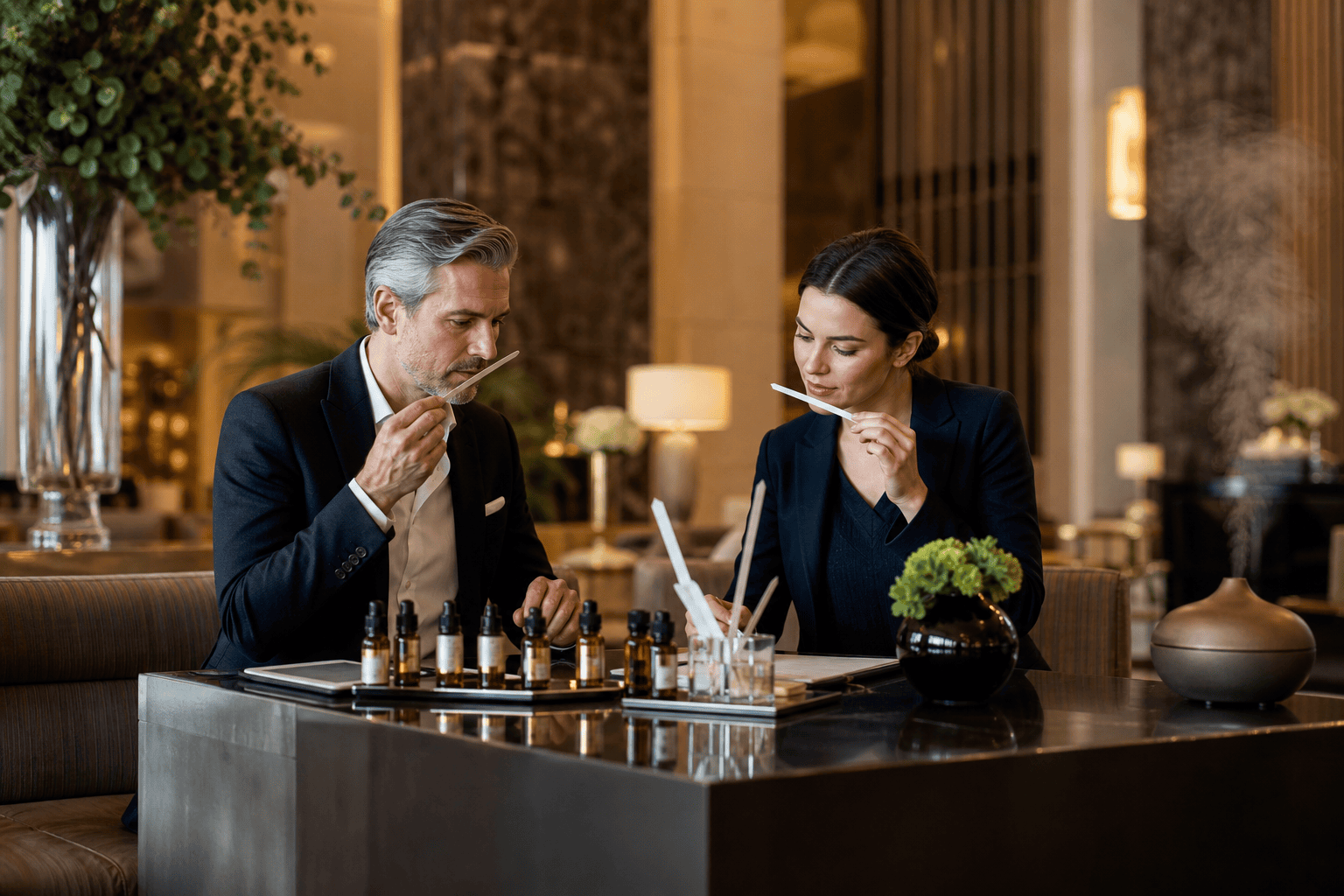
What Is a Hotel Signature Scent?
It translates brand character into an olfactory experience that can connect arrival, guest rooms, corridors, spa or retail touchpoints. The formula alone is not the complete solution. Architecture, ventilation, occupancy, climate, cleaning products and diffuser technology all change how guests perceive it.

| Zone | Typical objective | Control point |
|---|---|---|
| Entrance/lobby | Create a recognizable arrival impression | Airflow and peak occupancy |
| Corridor | Maintain continuity without buildup | Diffuser spacing and ventilation |
| Guest room | Support optional, localized experience | Guest choice and housekeeping protocol |
| Spa/retail | Coordinate with service or products | Compatibility with existing aromas |
Start with the Brand and Guest Journey
The brief should identify brand personality, architecture, materials, destination, guest profile and moments where scent should—or should not—appear. Define disliked notes and competitor references. Avoid asking only for “luxury”: a coastal resort, business hotel and heritage property need different sensory cues.
From Brief to Multi-Zone Deployment
- Audit spaces, airflow, operating hours and existing odors.
- Create scent directions from the brand brief.
- Evaluate blind samples and select a development route.
- Test the fragrance in the intended diffuser system.
- Pilot in one representative zone at several intensity settings.
- Collect structured staff and guest feedback.
- Document zone settings, refill frequency and maintenance.
- Approve a golden sample and scale with batch controls.
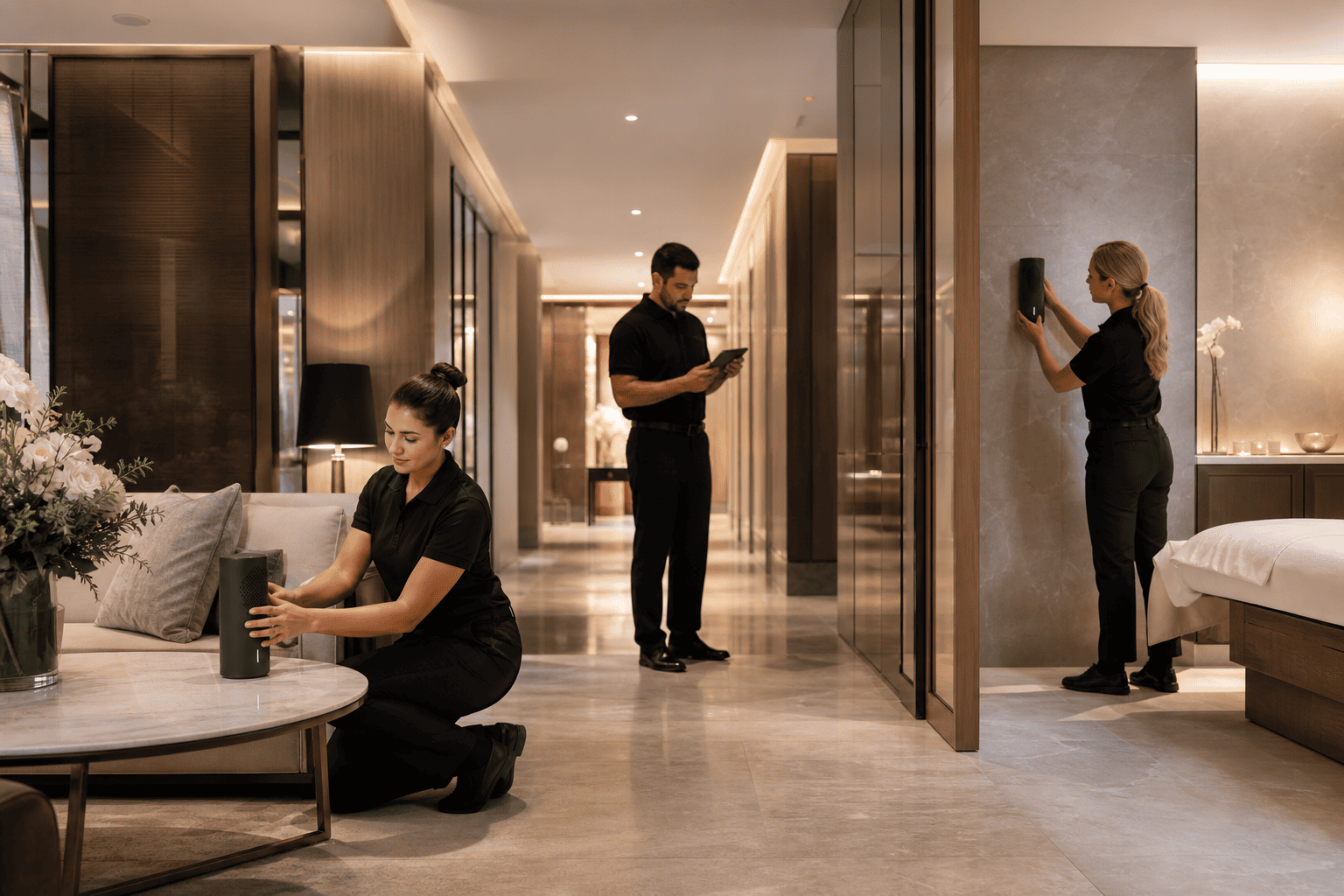
Control Intensity, Not Just Scent Character
Over-scenting can undermine the guest experience. Start low, evaluate at different occupancy levels and measure consistency across the zone. Consider scent-free areas and a response protocol for sensitive guests. Do not use fragrance to conceal hygiene, moisture or ventilation problems; correct the source first.
Equipment and Operational Planning
Choose equipment based on zone volume, airflow, installation constraints, local rules and service access. HVAC-connected and stand-alone systems have different control and maintenance needs. Keep records for placement, settings, refill lots, cleaning and incidents. Train staff not to improvise dosage.
Safety, Documentation and Claims
Request relevant IFRA documentation, SDS and product specifications, and review local workplace, building and consumer requirements. A pleasant ambient scent should not be marketed with medical, therapeutic or air-purification claims unless those claims are separately substantiated. The hotel operator remains responsible for its deployment environment.
Extend the Scent Carefully
After the ambient program is stable, the brand may consider candles, room sprays, diffusers or amenities. Each format needs its own formula validation, packaging, labeling and compliance review; do not assume the ambient-oil formula transfers unchanged.
How SHEAIN Supports Hotel Scent Development
SHEAIN can support brand-brief translation, fragrance sampling, diffuser-oil development, revisions and supply planning. We recommend piloting in the real property before rollout. Explore our air and home-care fragrance capabilities or send us your hotel concept and zone plan.
Frequently Asked Questions
How long does hotel signature scent development take?
Timing depends on brief clarity, revision rounds, property testing, equipment selection and approval. Plan for a pilot rather than approving from blotters alone.
Can one setting work throughout a hotel?
Usually not. Zone volume, airflow, occupancy and background odors require separate settings.
Should a hotel scent be very strong?
No. A recognizable but restrained level generally supports consistency and reduces guest complaints.
Can the same scent be sold as a candle or diffuser?
The identity can be extended, but each product format requires application-specific formulation and testing.
What should be included in the quality agreement?
Define the approved reference, specification, batch controls, change notification, documentation, packaging, storage and complaint process.


