

HVAC scenting oil is developed for cold-air or ventilation-connected diffusion systems used in hotels, offices, retail spaces and other commercial interiors. Selection is not only about aroma. The oil, diffuser, air volume, zoning, operating schedule and maintenance plan must work as one controlled system.
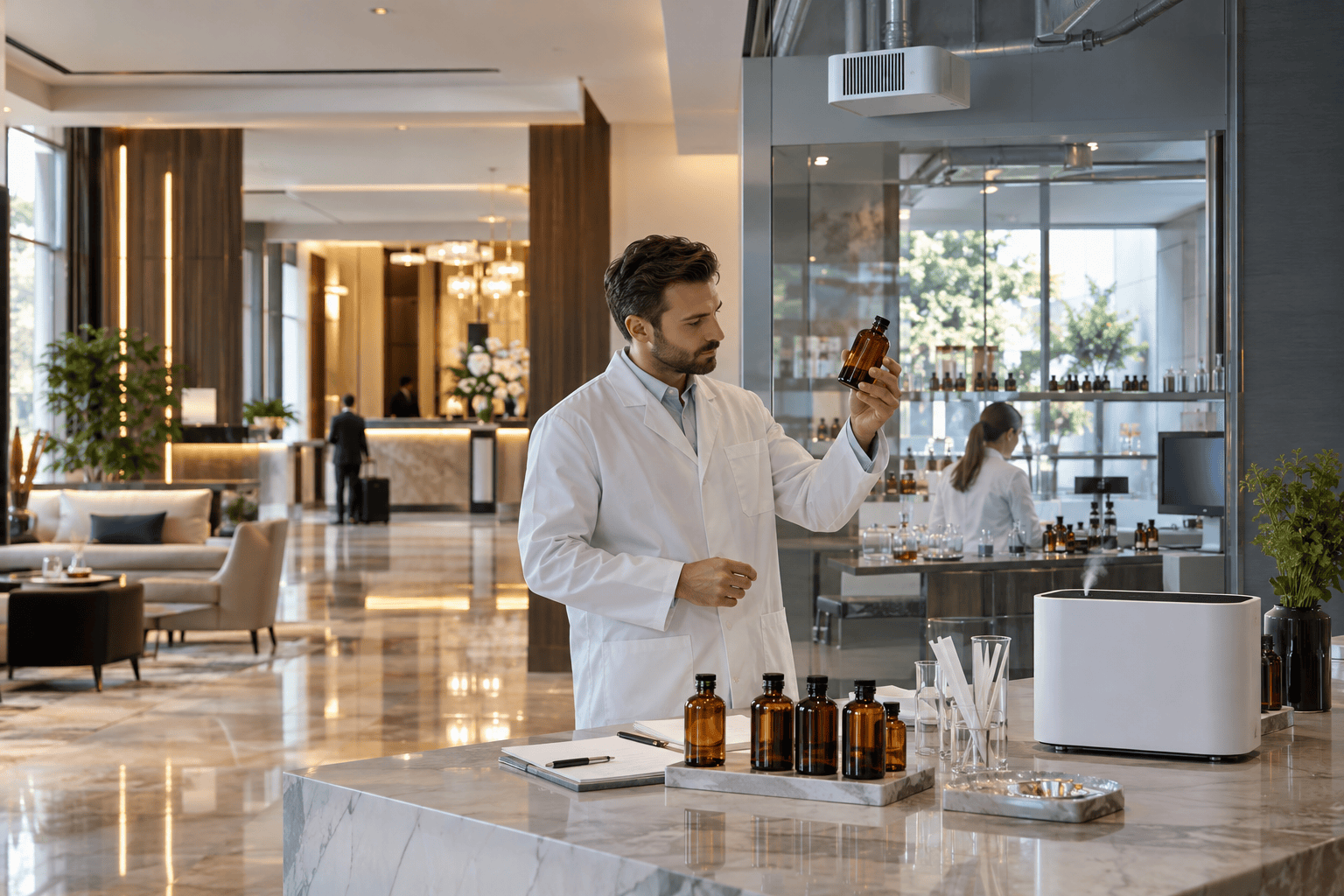
What Makes HVAC Scenting Different?
Commercial systems disperse very small droplets into moving air. Oil viscosity, volatility and formula balance influence atomization, perceived intensity and residue. A formula designed for reed diffusion or ultrasonic water devices should not be assumed suitable for an HVAC-connected nebulizer.

| Factor | Question to answer | Risk if ignored |
|---|---|---|
| Coverage | What air volume and zones are served? | Uneven or excessive scent |
| Diffuser | Which nozzle and operating range are used? | Poor atomization or residue |
| Ventilation | How often is outside air exchanged? | Rapid scent loss |
| Schedule | When are people present? | Waste and complaints |
A Commercial Scent Zoning Process
- Map lobby, corridor, room and high-traffic zones separately.
- Record HVAC layout, airflow, occupancy and opening hours.
- Select equipment designed for the intended oil and coverage.
- Begin with conservative output and short operating intervals.
- Measure perception at several locations and times.
- Adjust by zone instead of forcing one setting across the building.
- Document refill, cleaning and nozzle inspection intervals.
- Recheck after seasonal ventilation changes.

Intensity, Safety and Guest Comfort
The target is a recognizable background identity, not maximum strength. Evaluate the occupied environment, provide appropriate ventilation and follow the diffuser manufacturer’s instructions. Review fragrance documentation for the intended application and destination market. Building operators remain responsible for the installed system and indoor environment.
Oil Quality and Equipment Maintenance
Use consistent batches and retain a golden sample. Sediment, contamination or unsuitable viscosity can affect nozzles. Maintenance records help separate fragrance issues from equipment, filter or airflow problems.
How SHEAIN Supports Commercial Scenting
SHEAIN can develop and supply fragrance oil concentrates for compatible commercial diffusion systems. Provide the diffuser type, coverage, operating schedule, climate, scent direction and destination market. Discuss a commercial scenting project.
Frequently Asked Questions
Can reed diffuser oil be used in an HVAC scent machine?
Do not assume so. Solvent system, viscosity and equipment requirements can differ.
How is the correct output level selected?
Start low, evaluate multiple zones under normal occupancy and increase gradually.
Why is scent stronger near one vent?
Airflow balance, duct layout, diffuser position and room geometry can create uneven distribution.
Does a larger space always need a stronger formula?
No. Equipment capacity, airflow, zoning and duty cycle may matter more than formula strength.
How often should performance be reviewed?
Review after installation, seasonal HVAC changes, maintenance and any formula or equipment change.


