
Fragrance oil MOQ, sampling time, and production lead time are among the first questions B2B buyers ask. The answer is rarely one universal number. Requirements vary with the formula, application, customization level, packaging, raw materials, documentation, and order scope.
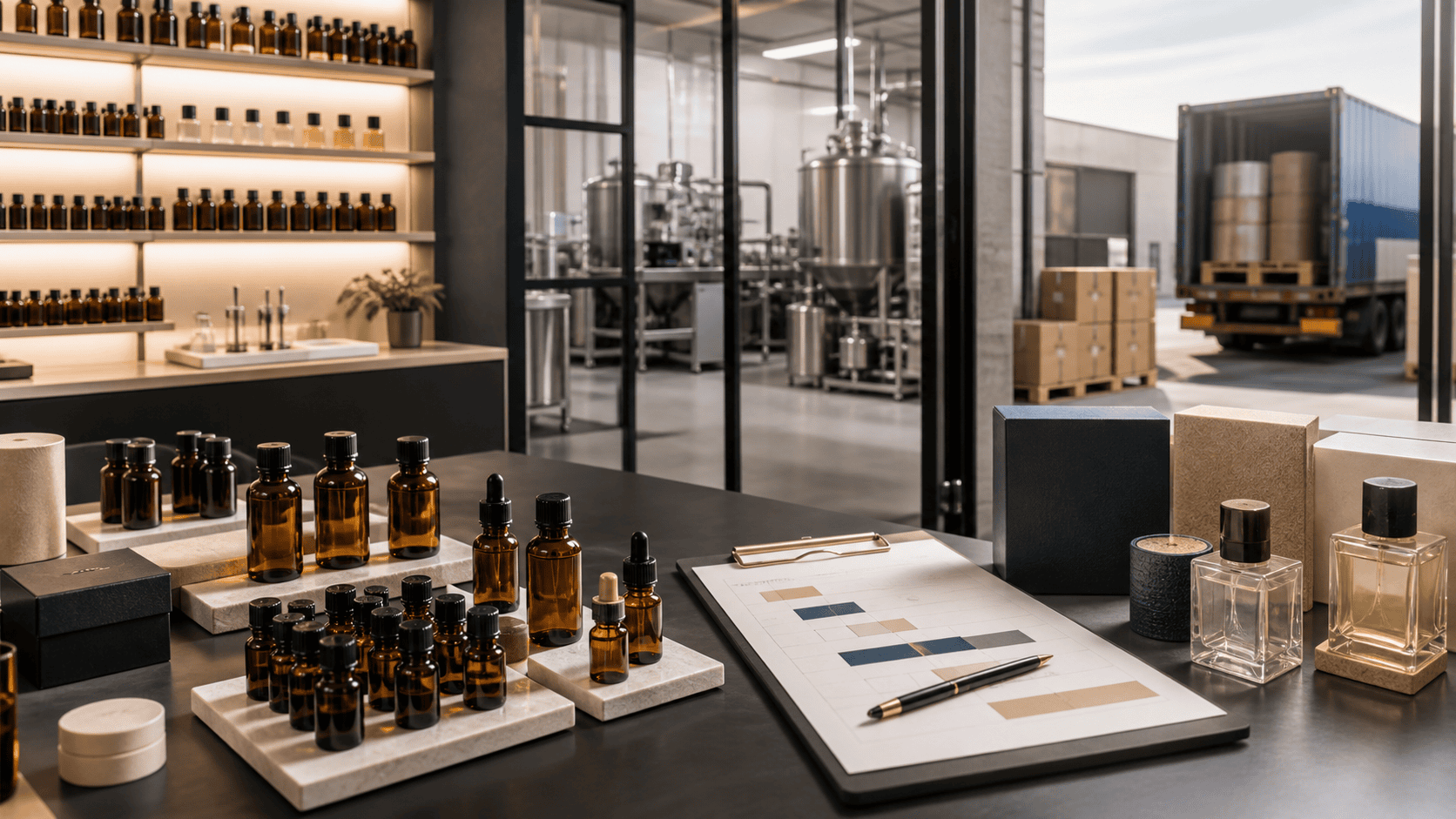
Why MOQ Varies Between Projects
MOQ means minimum order quantity. It helps cover raw-material preparation, weighing, mixing, quality control, packaging, and production changeover. A stock fragrance sold in bulk can have a different MOQ from a custom formula or finished private-label product.
1. Stock Formula vs Custom Formula
A catalog formula may be sampled and produced faster because its materials and specifications are established. Custom development requires briefing, formulation, trials, feedback, compliance review, and approval. Development quantity and commercial MOQ should be discussed separately.
2. Bulk Oil vs Finished Private Label
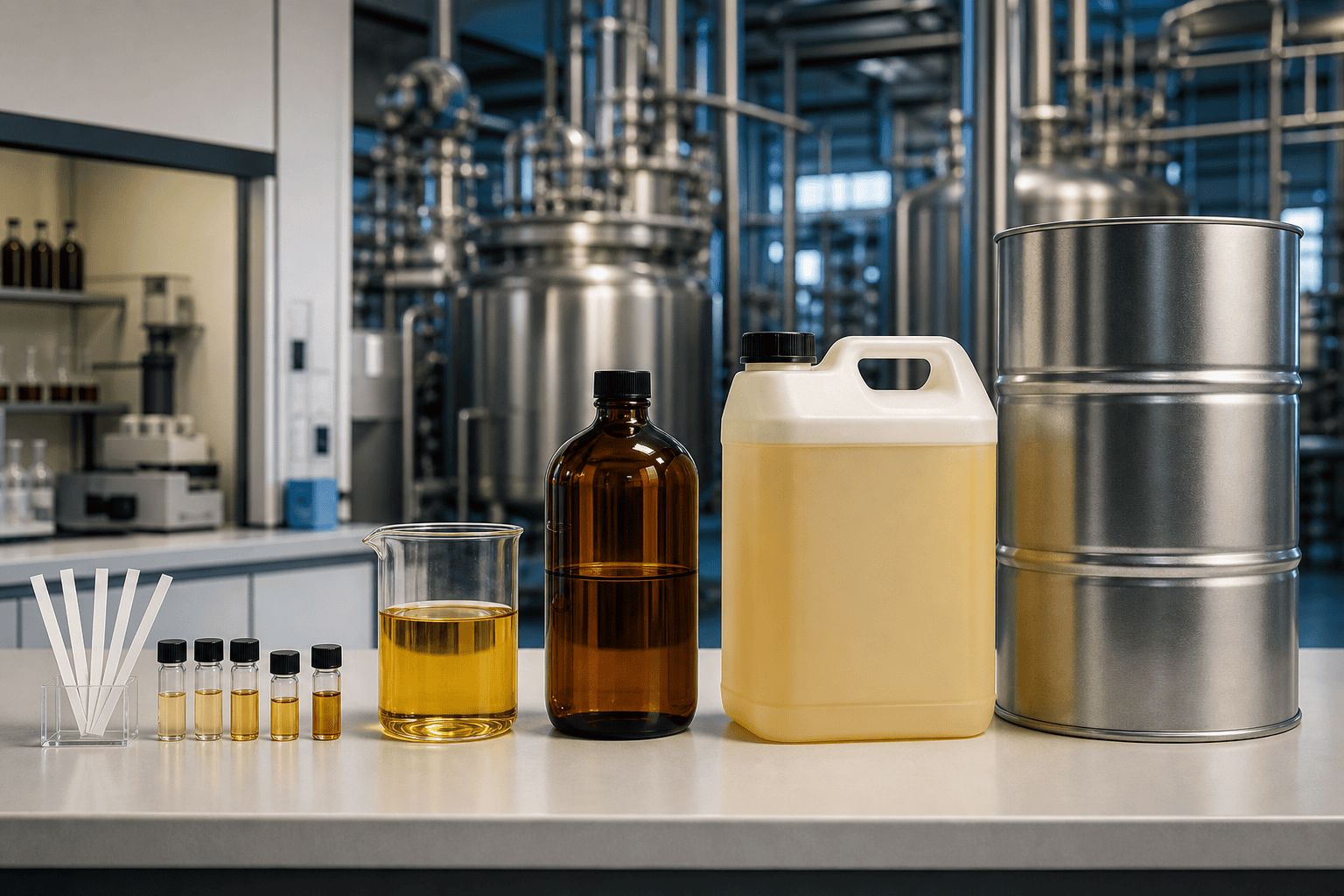
Bulk oil generally includes fragrance and its transport container. Private-label projects can also include bottles, caps, labels, boxes, filling, coding, and assembly. Packaging suppliers may impose separate MOQs, so the finished-product minimum depends on more than fragrance.
3. Raw-Material Availability
Specialty ingredients, natural materials, or long procurement cycles affect quantity and timing. Any proposed material change should be sampled and approved before production.
4. Application and Testing
Candle, diffuser, detergent, shampoo, and body-wash projects require different evaluations. Stability, compatibility, burning, deposition, or packaging tests add time but reduce launch risk.
How the Sampling Process Works
- Brief: application, market, scent direction, dosage, benchmark, quantity, and price.
- Selection or creation: catalog options, custom concept, or reference-based development.
- Sample preparation: laboratory batches are prepared and checked.
- Customer testing: evaluate scent and performance in the actual base.
- Revision: structured feedback guides adjustments.
- Approval: the accepted formula becomes the production standard.
What Buyers Should Include
- Finished-product type and base information
- Target market and consumer position
- Preferred scent family or reference
- Expected fragrance dosage
- Required documents and restrictions
- Estimated order and annual demand
- Desired launch date
How Long Does Sampling Take?
Existing fragrances are generally faster than custom development. SHEAIN’s typical sampling process may take approximately 3–7 days depending on complexity and material availability. Shipping, customer evaluation, and revisions are additional.
Are Samples Free?
Sample policies vary with supplier, quantity, customization, and shipping destination. A supplier may provide selected stock samples at no charge while asking the buyer to cover courier costs. Custom development, repeated revisions, large sample quantities, or special testing may involve fees.
Buyers should confirm what the sample offer includes: number of fragrances, sample size, development rounds, documents, application support, and freight. A paid custom sample can be a worthwhile risk-reduction step when it prevents an unsuitable bulk order.
From Approval to Bulk Production
After approval, the manufacturer confirms specification, quotation, MOQ, payment, packaging, production plan, and documents. SHEAIN’s bulk production commonly takes approximately 2–4 weeks depending on formula, quantity, materials, packaging, and capacity. Every project needs a confirmed schedule.
What Affects Fragrance Oil Pricing?
Price depends on raw-material composition, concentration, formula complexity, order quantity, testing, documentation, and packaging. Natural or specialty materials can cost more and may have greater supply variation. A highly concentrated formula should not be compared directly with a diluted product using only price per kilogram.
Ask the supplier to state the product format, net weight, packaging, currency, Incoterm, validity period, taxes, and freight assumptions. This makes quotations comparable and prevents unexpected costs after approval.
How Packaging Changes MOQ
Bulk fragrance oil can be supplied in standard industrial containers, while private-label products require consumer bottles, closures, labels, cartons, and filling. A custom bottle mold or printed box may have a much higher MOQ than the fragrance itself. Choosing stock packaging with customized labels can reduce the first-order threshold and shorten the launch schedule.
Planning Timeline for a New Product
- Week 1: submit the brief and select initial directions.
- Weeks 1–3: receive samples and begin application testing.
- Weeks 3–6: provide feedback, revise, and approve the formula.
- Before production: confirm documents, packaging, artwork, payment, and shipping.
- Production stage: manufacture, inspect, pack, and release the order.
- Logistics stage: allow separate time for international transport and customs.
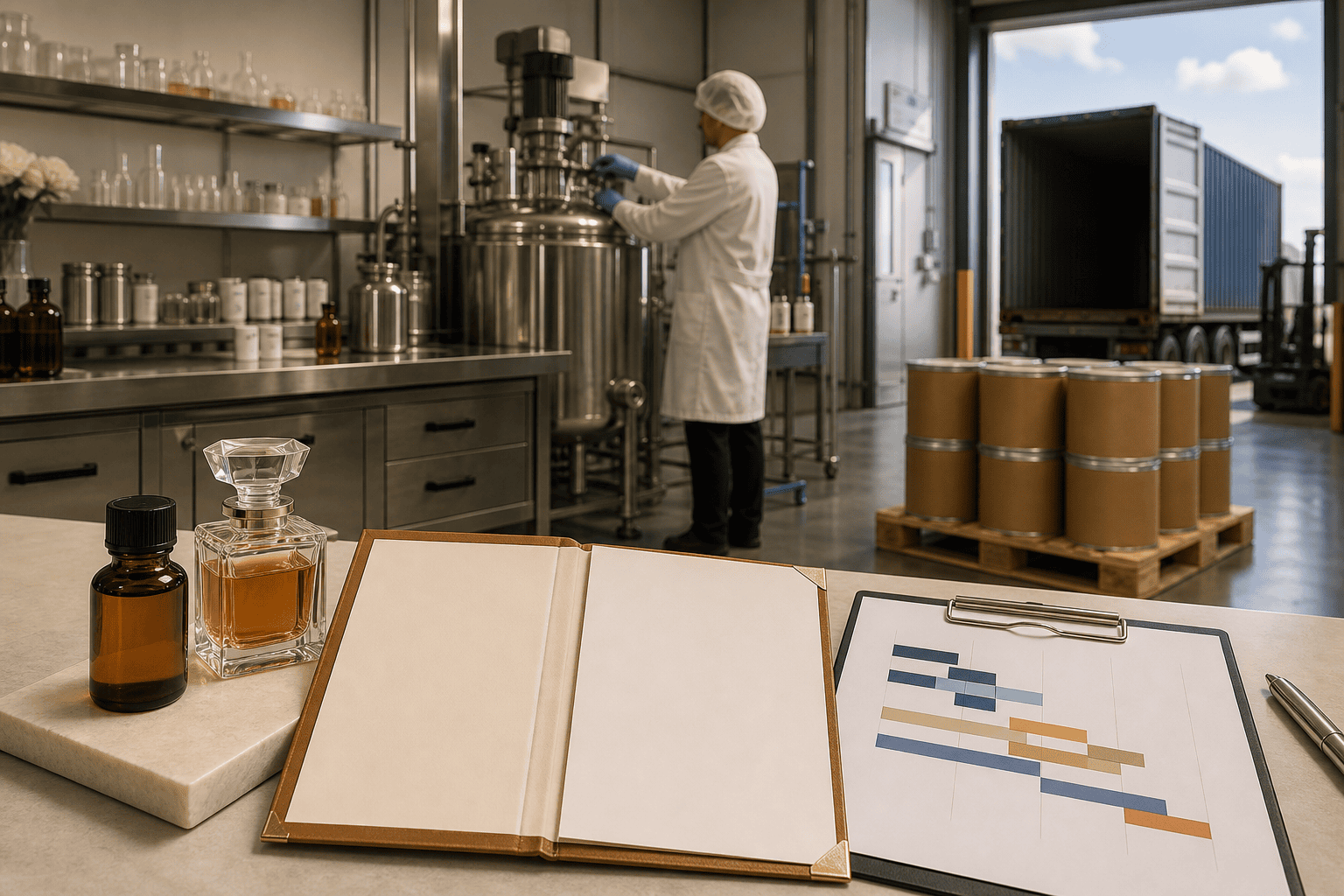
This is a planning example rather than a guaranteed schedule. Complex testing, custom packaging, holidays, and customer approval cycles can extend the project.
Factors That Extend Lead Time
- Incomplete or changing briefs
- Multiple revisions
- Special raw materials
- Custom packaging
- Additional testing
- Peak production periods
- Destination-market documents
- International transport and customs
How to Plan the First Order
Work backward from the delivery date through shipping, production, packaging, approval, and sampling. Confirm who approves scent, formula performance, artwork, and documents. When comparing suppliers, verify that quotations cover the same concentration, packaging, testing, documents, Incoterms, and freight assumptions.
Planning Repeat Orders
After the first production run, record actual sales, usage, safety stock, transit time, and seasonal demand. Place repeat orders before inventory reaches the emergency level. Confirm whether the approved formula, packaging materials, and raw materials remain available, especially if the reorder occurs many months later.
A forecast does not always create a binding purchase commitment, but it helps a manufacturing partner plan capacity and critical materials. Stable communication can reduce urgent freight and avoid preventable stockouts.
Questions Before Confirming
- Is MOQ based on kilograms, containers, or finished units?
- Does it apply per fragrance?
- Are samples, revisions, and shipping separate?
- When does lead time begin?
- Which tests and documents are included?
- Can repeat orders use the approved standard?
How SHEAIN Supports B2B Buyers
SHEAIN offers stock options, custom formulation, fragrance duplication, bulk supply, OEM/ODM, and private label. Review our wholesale service and OEM and private-label process.
Frequently Asked Questions
What is SHEAIN’s exact MOQ?
It depends on formula, customization, packaging, and scope. Request a project-specific quotation.
Can I test before ordering?
Yes. Application testing and approval should precede commercial production.
Does lead time include shipping?
Production and international transit are normally calculated separately unless stated otherwise.
Can several fragrances be combined to meet one MOQ?
Sometimes, but many manufacturers apply the MOQ per formula because every fragrance requires separate preparation, production, and quality control. Confirm this in the quotation.
Can MOQ decrease for repeat orders?
It depends on the formula, packaging, production plan, and supplier policy. Repeat orders may be simpler after specifications are approved, but the commercial minimum still needs confirmation.
Request a Project-Specific Quote
Contact SHEAIN with your application, quantity, packaging, destination, and launch date.


