

Buying Aroma Diffuser Fragrance Oil: A Guide for Brands and Distributors
Direct answer: Source the fragrance against the actual device, liquid format and target market, then approve a sample in that system before ordering in bulk. “Aroma diffuser oil” describes an intended application, not a guarantee that one blend fits every diffuser. This guide focuses on the evidence and brief a buyer needs.
Fragrance oil and essential oil are different terms.
A fragrance oil is a formulated aromatic blend that may contain natural and synthetic ingredients. A plant essential oil is a different material description. Neither label by itself proves suitability for a diffuser, long-lasting scent, safety at any concentration or therapeutic efficacy.
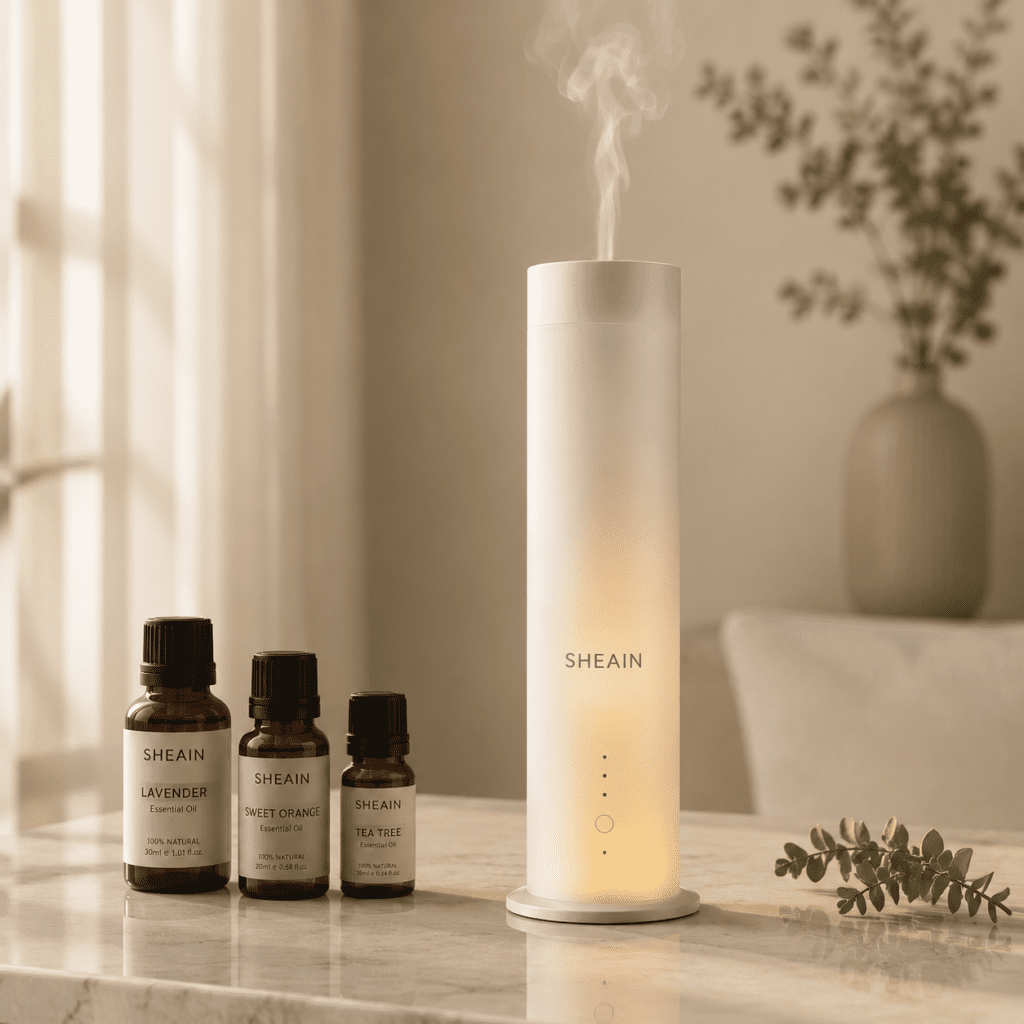
Start With the Device and Liquid Format
Ask whether the device uses waterless cold-air atomization, a water-based ultrasonic system, a passive reed system, or another specified mechanism. Confirm the device maker’s requirements before selecting or diluting a fragrance.
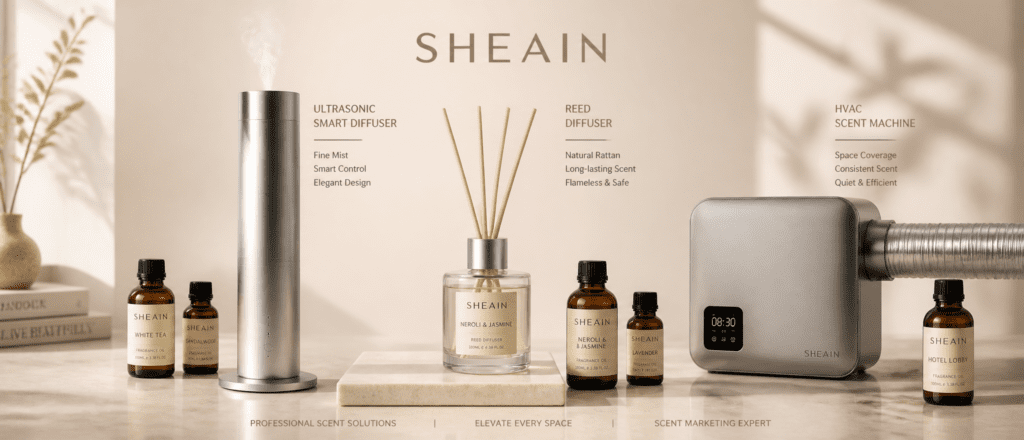
Waterless cold-air units: the equipment discussed by SHEAIN atomizes a compatible liquid without heating. Confirm the required liquid properties and operating settings.
Reed diffusers: evaluate the fragrance with its carrier, reeds, vessel and room conditions.
HVAC-connected scenting: include device configuration, air handling, placement and maintenance requirements. Connection to an HVAC system is not proof of even scent coverage.
There is no universally best choice between a fragrance blend and a botanical essential oil. Compare the specific candidate against scent preference, intended use, documentation, device compatibility and total project cost.
Application Brief: Hotels
Describe the intended brand impression, scenting zones, ventilation, expected occupancy and scent intensity. White-tea, woody, citrus or marine descriptions can guide sample selection, but they are not performance specifications.
Retail Stores
Define the desired scent character and where scenting is permitted. Do not promise increased engagement, sales or dwell time without evidence from a suitable study of the actual setting.
Spas and Wellness Spaces
A soft floral or tea-inspired profile can be a sensory brief. Avoid presenting the fragrance as a treatment for stress or sleep problems. Consider scent-sensitive visitors and site operating policies.
Home Fragrance
State whether the project is for a device refill, reed diffuser or another home-fragrance format. Confirm the base, dosage, packaging and consumer instructions for that particular product.
What Evidence Defines an Acceptable Diffuser Fragrance?
Agree on acceptance criteria before comparing samples. A pleasant blotter evaluation is useful for initial scent choice but does not establish performance in the device.
Application Evaluation
Record the sample/formula reference, device model, liquid base, operating cycle, room conditions and evaluation period. Depending on the system, examine perceived intensity, liquid consumption, odor change, residues and material compatibility. Agree on the method and limits with the responsible technical team. These are suggested checks, not claimed SHEAIN test results.
Documents, Not Blanket Certification
Request an SDS and the relevant formula-specific IFRA information, plus agreed quality and allergen information. An SDS—formerly often called an MSDS—is hazard communication, not an “MSDS certification.” An IFRA Certificate of Conformity is a supplier statement for specified uses and does not replace a finished-product safety assessment. See the supplier-document guide.
Stock Selection, Custom Work and Exclusivity
Ask whether you are selecting an existing formula, commissioning custom development or discussing fragrance duplication. Existing white-label formulas are normally non-exclusive. Any exclusive rights require a separate written agreement. See white-label scope and custom/OEM fragrance supply.
Supplier Qualification
Request a traceable sample reference, change-control process, agreed batch specification, applicable document package and a written quotation. Check what the quote excludes and who handles device testing, final-product assessment, consumer labeling and import arrangements. Do not infer capacity or delivery commitments from a large fragrance catalog.
Approve a specific fragrance version in a defined system. If the formula, carrier, device, dosage or packaging changes, review whether the previous evaluation remains applicable.
For a first order, separate development/sample approval, commercial MOQ, production timing and transport. Prices, sample fees, freight and timelines need project confirmation; none are established by this guide.
Discuss a Diffuser-Fragrance Project With SHEAIN
SHEAIN’s main supply is fragrance oil concentrate. Send your device model, liquid format/base, target market, scent direction, quantity and documentation needs. Selected finished-product projects may be discussed separately, but filling and consumer packaging are not included by default. Our team can confirm the available sample and supply scope for your project.
Primary references and related guidance
IFRA: Understanding the Standards explains the certificate boundary. OSHA: Hazard Communication explains the role of safety data sheets in workplace hazard information. These sources do not certify an individual SHEAIN formula or diffuser.
For the short technical definition, read what fragrance oil for aroma diffusers means.


