

Powder detergent fragrance stability is the ability of a fragrance to retain an acceptable odor profile while surviving dry blending, contact with alkaline ingredients, packaging, transport and storage. Performance must be evaluated in the actual powder because neat fragrance and freshly mixed samples do not predict long-term behavior.
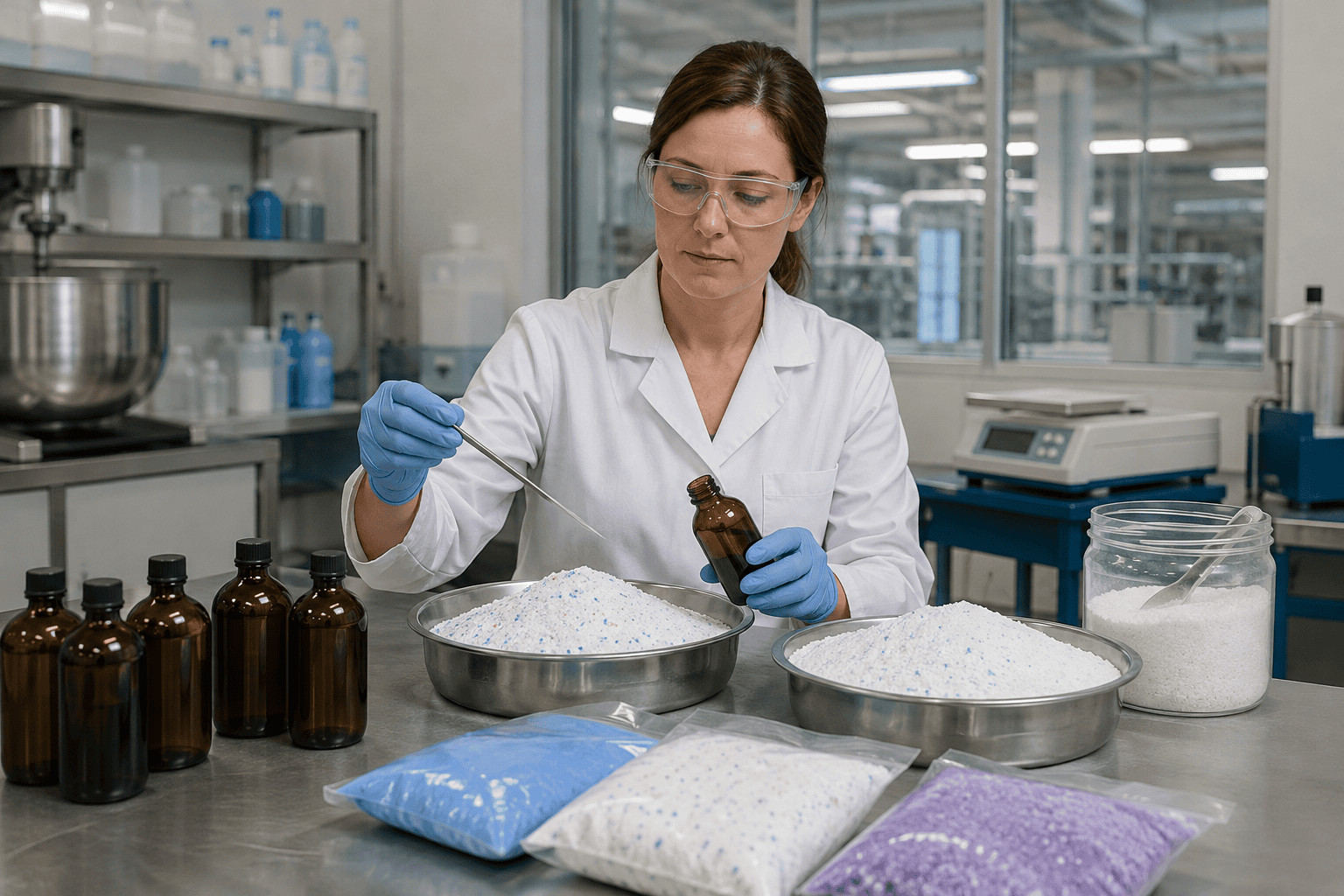
Why Powder Detergent Is a Difficult Fragrance Base
Powder detergents may contain alkaline builders, surfactants, enzymes, oxidizing ingredients, minerals and moisture-sensitive components. Fragrance can adsorb unevenly, react with the base, volatilize during mixing or migrate into packaging. Temperature and humidity amplify many of these effects.
| Risk | Typical observation | Control point |
|---|---|---|
| Volatility loss | Weak powder or wash odor | Addition temperature and packaging barrier |
| Uneven distribution | Batch-to-batch scent variation | Premix, spray pattern and mixing time |
| Chemical degradation | Changed or off odor | Base compatibility and storage |
| Moisture interaction | Clumping or localized staining | Humidity, carrier and sealing |
Fragrance Addition During Manufacturing
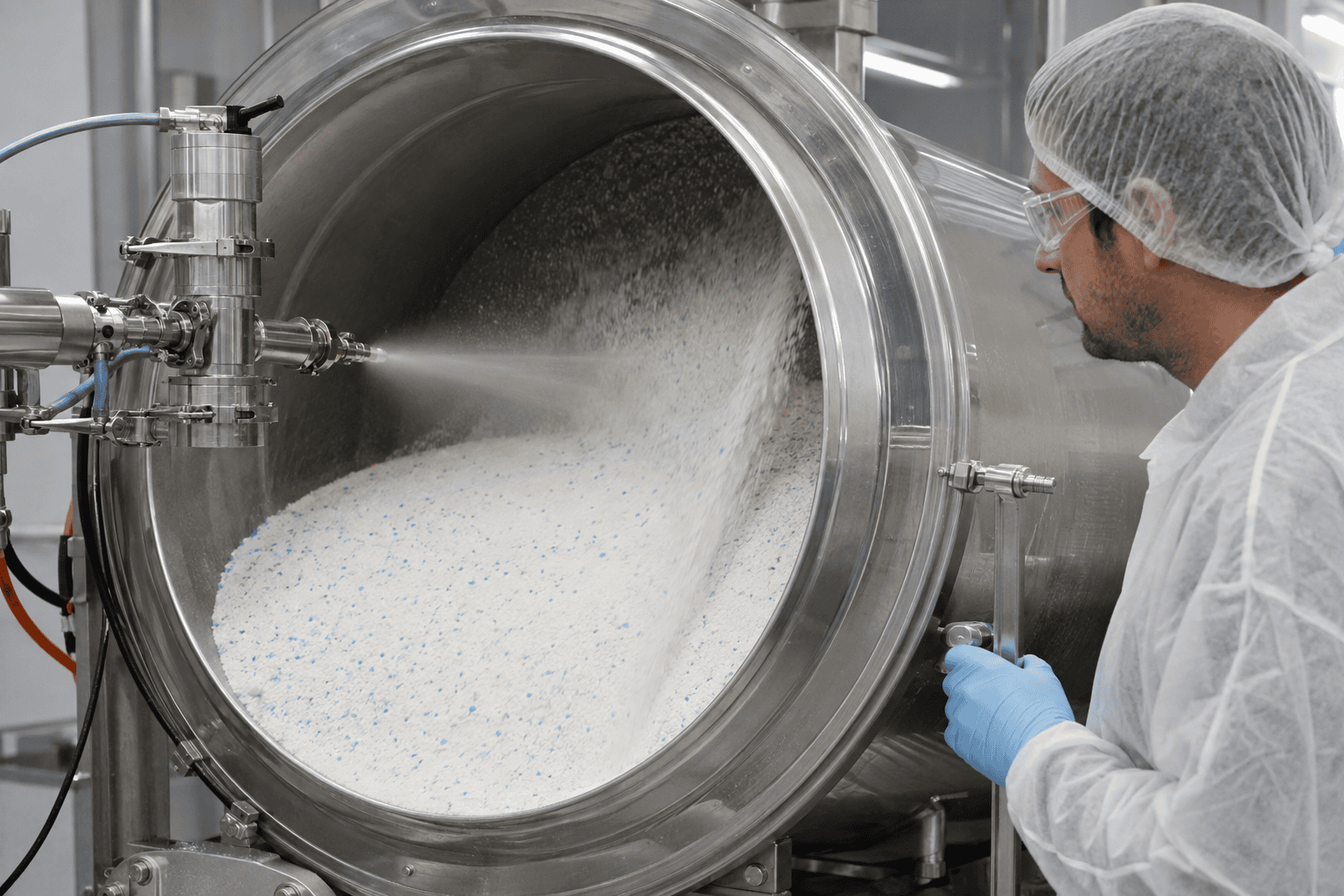
The addition point, spray droplet size, powder movement and mixing time affect distribution. Adding fragrance to hot powder or before aggressive processing can increase loss. A carrier or encapsulated system may improve handling in some formulas, but it requires separate compatibility and wash-performance testing.
A Powder Detergent Stability Protocol
- Prepare an unfragranced control and several fragrance dosages.
- Use the intended production addition method.
- Check distribution using representative samples from the batch.
- Pack samples in the final or equivalent barrier material.
- Store under defined room, heat and humidity conditions.
- Record powder odor, color, flow and clumping.
- Run standardized wash tests at planned intervals.
- Evaluate wet and dry fabric with blind sample codes.

Evaluate Powder, Wash and Dry Fabric Separately
A strong package odor may not create good wash bloom or dry-fabric retention. Conversely, a restrained powder odor may release effectively during use. Score these stages independently so the team knows whether a change is needed in the fragrance, dosage, base or process.
Packaging and Storage
Paperboard, laminate film and plastic containers offer different barriers to moisture and volatile materials. Test commercial packaging at representative fill weight and headspace. Include warehouse and transport temperatures when defining the program. Related guidance is available in our fragrance storage article.
How SHEAIN Supports Powder Detergent Projects
SHEAIN can provide fragrance samples for alkaline powder bases, assess sensory changes and revise the profile using wash-test feedback. The detergent manufacturer remains responsible for finished-product validation. Send us your powder base, process and target wash profile.
Frequently Asked Questions
Why does fragrance disappear from detergent powder?
Volatile loss, adsorption, chemical degradation and inadequate packaging can all contribute.
Can fragrance be added while the powder is hot?
Heat can increase loss or change distribution, so the actual process requires controlled testing.
Does stronger powder odor mean better fabric retention?
No. Package odor, wash bloom and dry-fabric scent are different performance stages.
Can liquid-detergent fragrance be used unchanged?
Not automatically. The dry alkaline environment and manufacturing method require separate validation.
Should humidity testing be included?
Yes when the product may encounter humid production, storage or market conditions.


