

Car perfume operates in a small space exposed to high temperature, direct sunlight, vibration and changing airflow. These conditions can accelerate evaporation, alter the odor and stress bottles, caps and hanging components. This guide helps brands select and validate fragrance oil for car perfume before production.
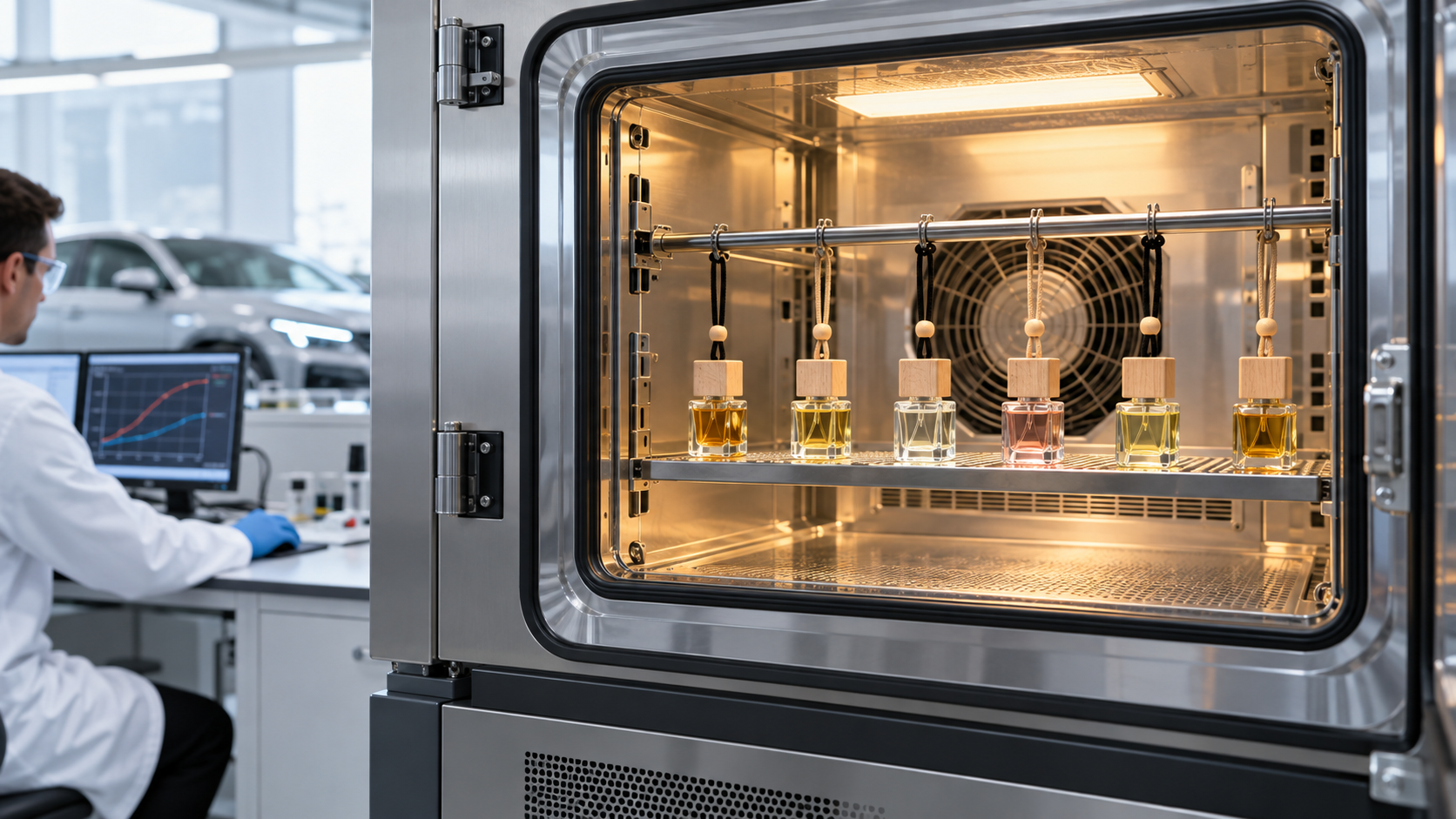
The objective is to make decisions from finished-product evidence, not fragrance-bottle impressions alone.
Choose the Car Fragrance Format
Define whether the product uses a hanging bottle, vent clip, membrane, card, gel or active diffuser. Each format controls release differently and requires a different fragrance-carrier balance. Share the device materials, fill volume, target life and expected climate with the supplier before samples are created.
Test Diffusion Inside a Vehicle
Evaluate prototypes in a controlled cabin or the same vehicle model whenever possible. Record fragrance intensity at startup, after ventilation begins and after the car has warmed. Check front and rear seating positions. A scent that performs in an open room may be overwhelming or uneven in a compact cabin.

Design for High-Temperature Exposure
Parked vehicles can become much warmer than normal indoor storage. Use controlled elevated-temperature tests to screen odor distortion, discoloration, pressure, leakage and excessive evaporation. Accelerated studies support comparison but should be confirmed with realistic vehicle exposure because sunlight and airflow add different stresses.
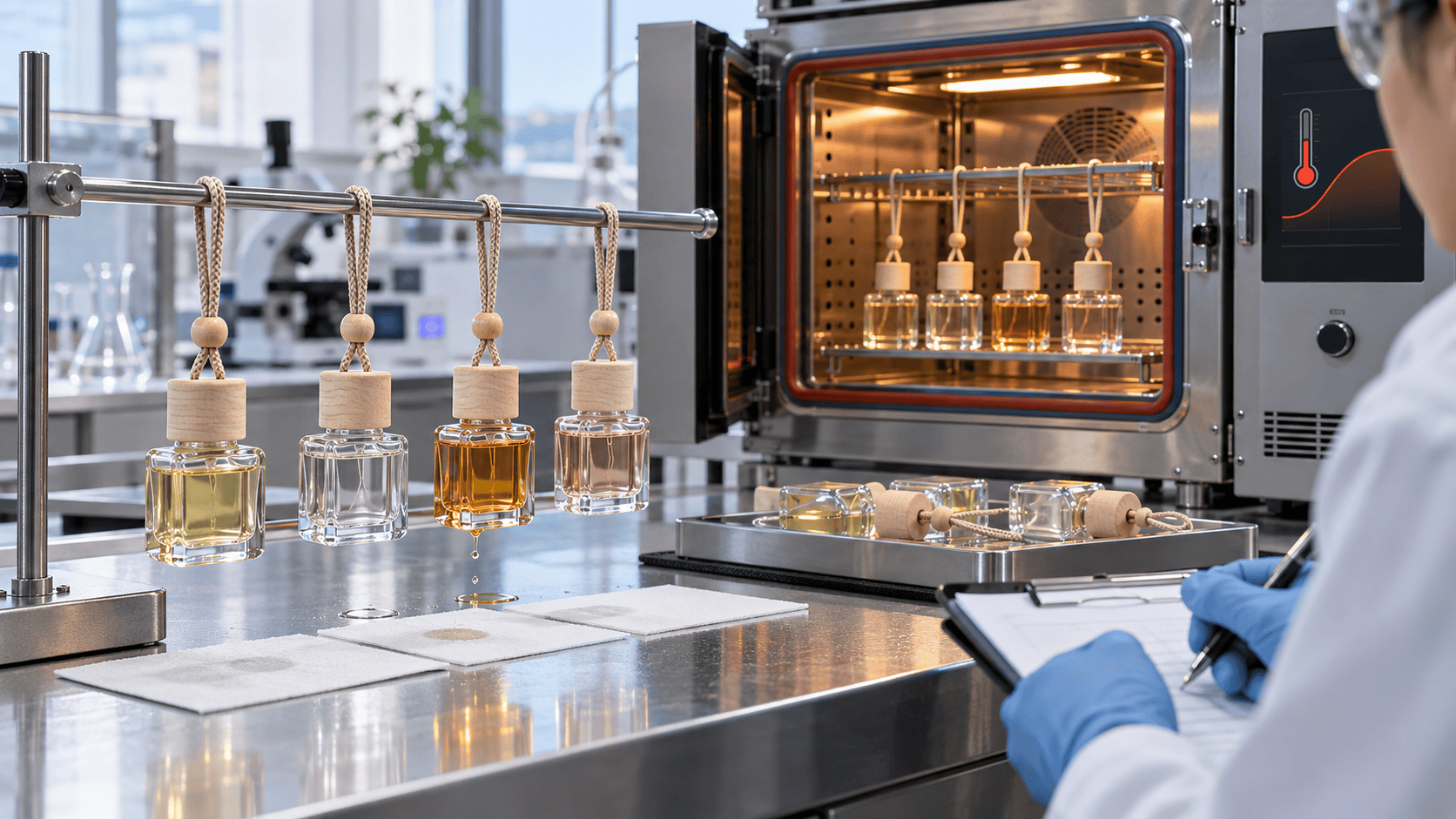
Control Evaporation and Product Life
Measure filled-product weight at regular intervals and compare fragrance intensity with liquid loss. Too rapid a release shortens life and can make the opening harsh; too slow a release creates weak performance. Carrier choice, device opening, wick or membrane area and fragrance composition all contribute.
Verify Packaging Compatibility
Test the fragrance and carrier against glass, plastic, wood, membrane, cord, cap, liner and printed surfaces. Look for swelling, cracking, staining, softening and seal failure. Hanging formats also require vibration and inversion checks so liquid cannot reach dashboards, trim or upholstery during transport and use.
Build a Cabin Sensory Protocol
Use a small trained panel and a consistent vehicle, temperature, ventilation setting and evaluation time. Score identity, intensity, comfort, diffusion and off-notes. Include repeated short exposures because adaptation can make a tester underestimate strength during a long session.
Prepare the Supplier Brief
State the device, carrier, fill weight, target life, climate, odor direction, cost target and destination markets. Ask for options designed for heat and the selected delivery system rather than selecting from bottle odor alone. Require appropriate technical and transport documents before scale-up.
Frequently Asked Questions
What fragrance works best in a car perfume?
Fresh, woody, citrus and clean profiles are common, but the best choice depends on device, climate, target user and cabin intensity.
Why does car perfume change smell in summer?
Heat increases evaporation and can shift the balance toward less volatile materials or reveal interactions with the carrier and packaging.
How long should a car perfume last?
Product life depends on fill volume, device opening, carrier, fragrance, temperature and airflow, so it must be defined and tested for the format.
Can ordinary perfume oil be used?
It should not be assumed suitable. Car formats need specific carrier, heat, material, leakage and diffusion testing.
How is leakage tested?
Use filled final packs in upright, inverted, vibration, warm-storage and transport simulations, followed by inspection of every seal and component.
Work with an Application-Focused Fragrance Supplier
Reliable development combines a precise brief, controlled testing, documentation and retained standards. Contact SHEAIN to discuss fragrance oil for car perfume, request samples or plan application testing for your market.


