

Body lotion fragrance must integrate into an emulsion without causing separation, viscosity drift or an unpleasant change on skin. It also competes with fatty materials, botanical extracts and preservatives that may carry their own odor. This guide provides a controlled method for evaluating fragrance oil for body lotion.
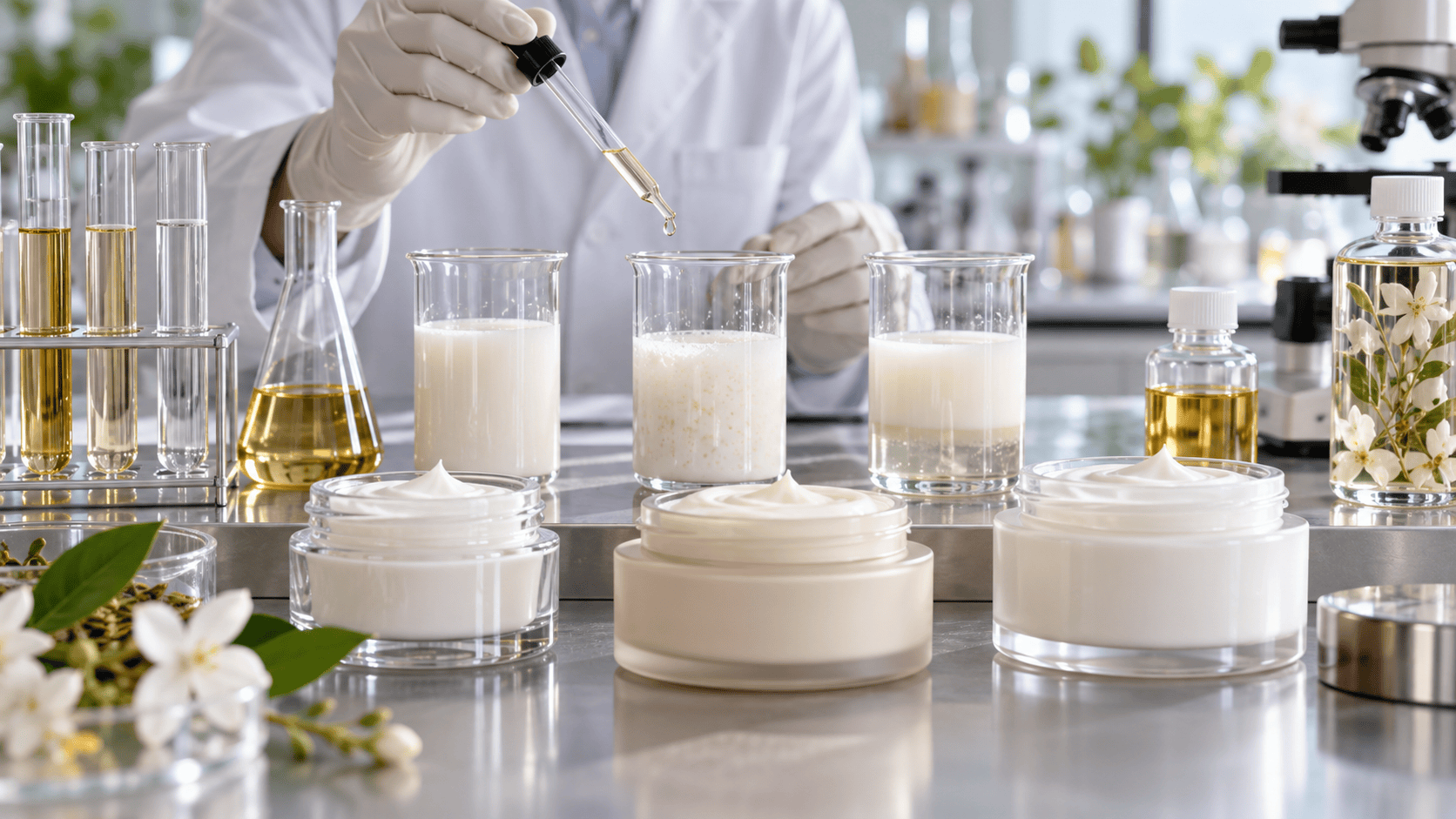
The objective is to make decisions from finished-product evidence, not fragrance-bottle impressions alone.
Understand the Lotion Emulsion
Share the complete base, emulsion type, oil phase, pH, preservative, antioxidants, extracts and process temperatures with the supplier. Fragrance behavior can differ between light lotions, rich creams and anhydrous balms. Test in the final base rather than a simplified emulsion.
Create a Fragrance Dosage Ladder
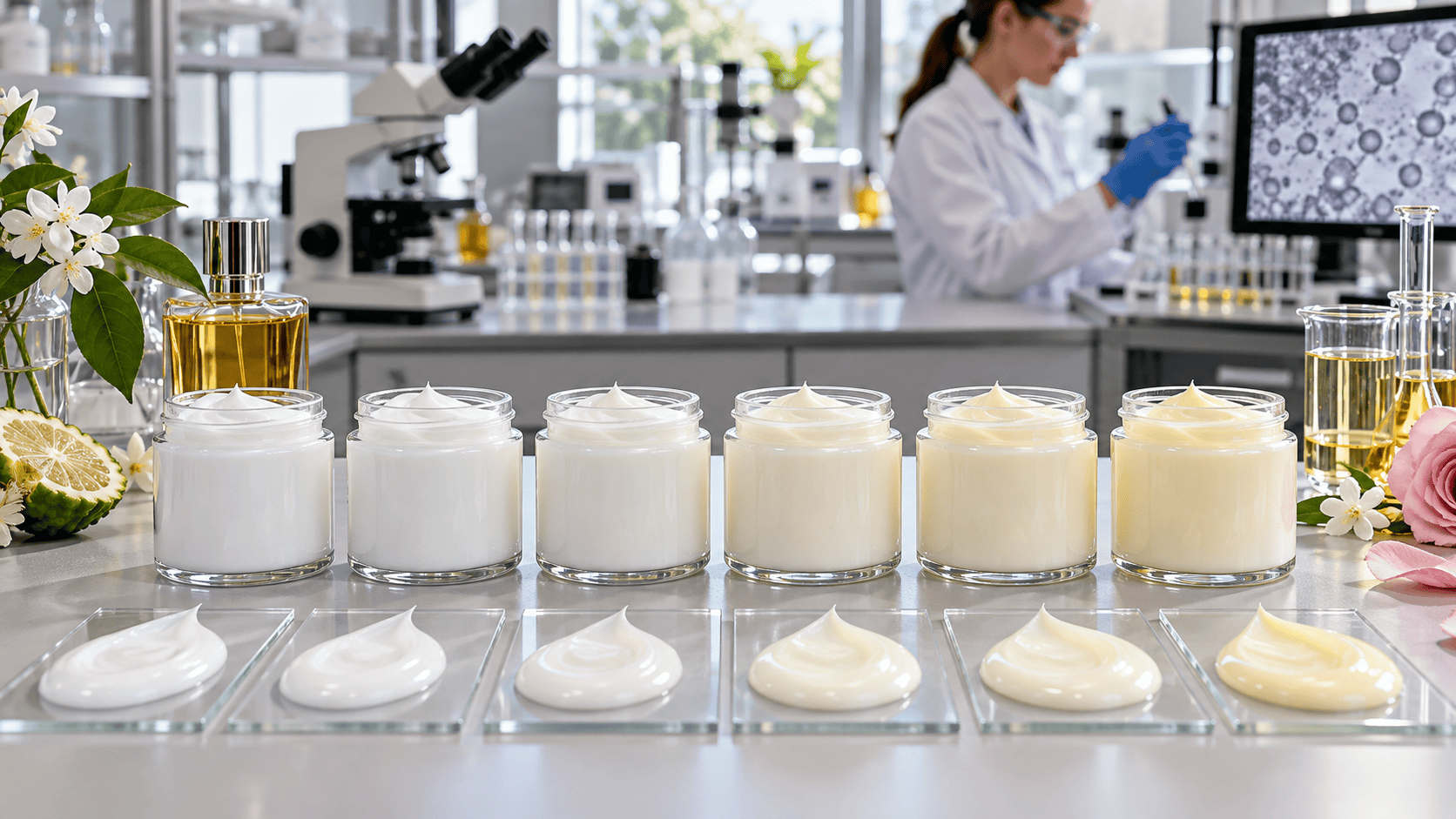
Prepare an unperfumed control and several levels around the recommended starting point. Add fragrance at a consistent cool-down temperature and mixing speed. Evaluate odor, color, viscosity, spread and after-feel after the samples have equilibrated. Higher dosage can increase impact but may weaken the emulsion or irritate the sensory balance.
Check Emulsion and Viscosity Stability
Monitor separation, creaming, droplet growth, oiling out, pH and viscosity during controlled storage. Compare packaging orientation and temperature cycles appropriate to distribution. A sample that looks stable after one day is not evidence of shelf-life performance.
Evaluate Fragrance on Skin
Use coded samples at a controlled application amount and evaluate immediately, after absorption and later in the dry-down. Skin warmth and base materials can change sweetness, freshness and diffusion. Include unscented control and avoid applying too many variants in one session, which can cause sensory fatigue.

Manage Color and Ingredient Interactions
Some fragrance materials can discolor over time or interact with botanical extracts and antioxidants. Track both bulk color and the appearance in the final container. If a white-lotion claim is important, include color tolerance in the brief rather than trying to correct a late-stage change with packaging.
Test the Final Package
Pumps, tubes, jars, liners and labels can absorb fragrance or be affected by the formula. Check output, leakage, clogging, paneling, seal integrity and odor loss. Airless packs may reduce exposure, but they still require filled-product compatibility and transport testing.
Prepare a Commercial Approval Plan
Combine sensory scores with emulsion data, cost in use, documentation and scale-up behavior. Keep a retained approved standard and record the exact process used. This makes future batch comparison more reliable and helps the supplier investigate any change efficiently.
Frequently Asked Questions
How much fragrance oil can be added to lotion?
There is no universal level. Follow supplier guidance, applicable requirements and dosage tests in the finished emulsion.
Can fragrance separate a lotion?
Yes. Composition, dose and addition process may affect emulsion structure and viscosity, so stability testing is essential.
Why does lotion smell different on skin?
Skin temperature, evaporation, base odor and personal skin chemistry change the fragrance dry-down.
When should fragrance be added?
Many emulsions add fragrance during controlled cool-down, but the correct temperature and mixing process depend on the formula.
Does natural color change indicate failure?
Any color movement should be assessed against the product specification, stability trend and customer expectation before approval.
Work with an Application-Focused Fragrance Supplier
Reliable development combines a precise brief, controlled testing, documentation and retained standards. Contact SHEAIN to discuss fragrance oil for body lotion, request samples or plan application testing for your market.


