

Cold process soap exposes fragrance to a reactive alkaline system and an extended cure. The fragrance can accelerate trace, create ricing, change gel behavior, discolor the bar or fade during storage. This guide helps soap brands test fragrance oil for cold process soap before scaling a formula.
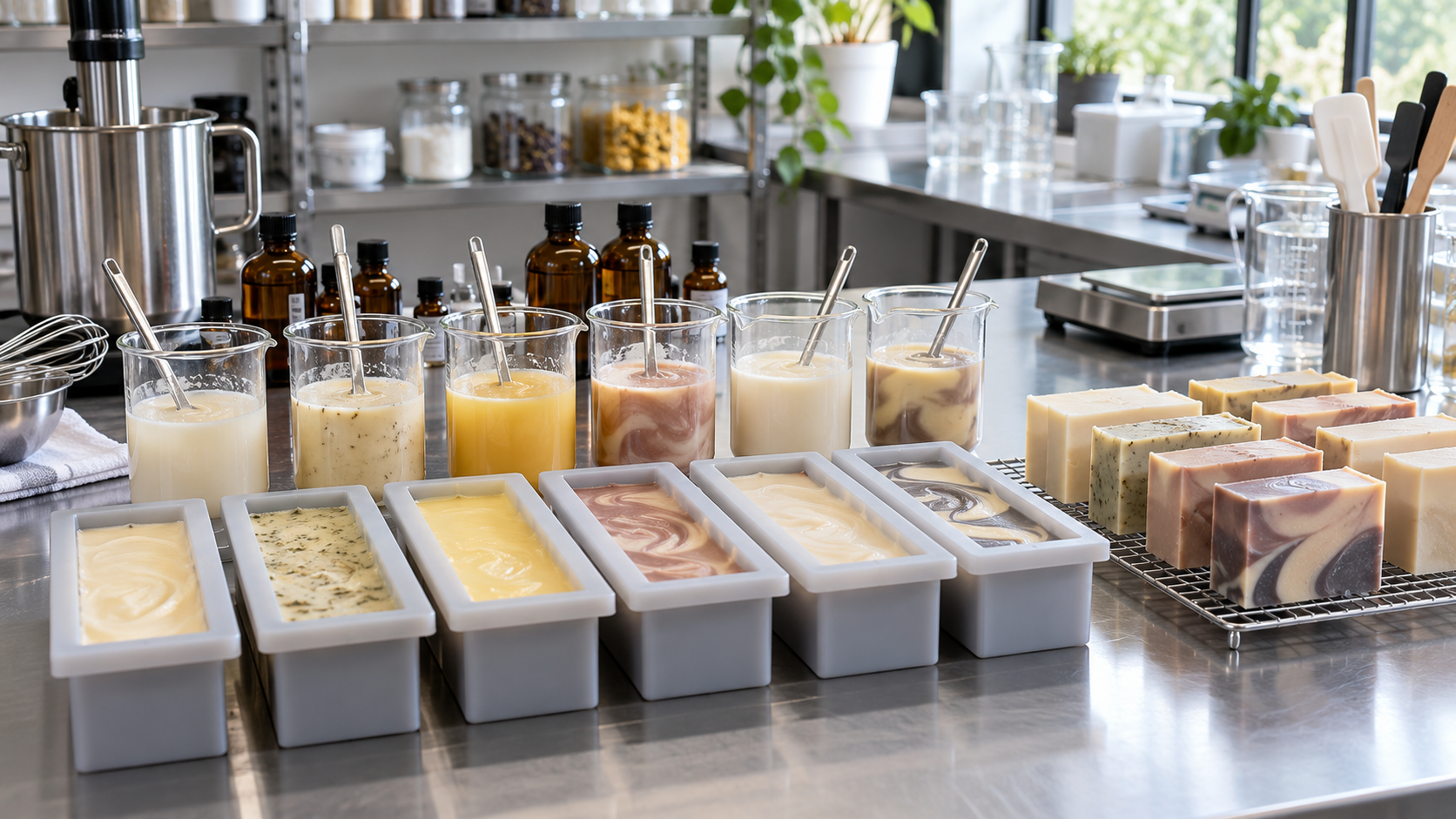
The objective is to make decisions from finished-product evidence, not fragrance-bottle impressions alone.
Standardize the Soap Base
Use one documented oil blend, lye concentration, temperature, batch size and mixing procedure for comparison. Record the unperfumed control. Changes in oils, additives, colorants or water can affect trace and make it difficult to identify the fragrance contribution.
Screen Acceleration and Ricing
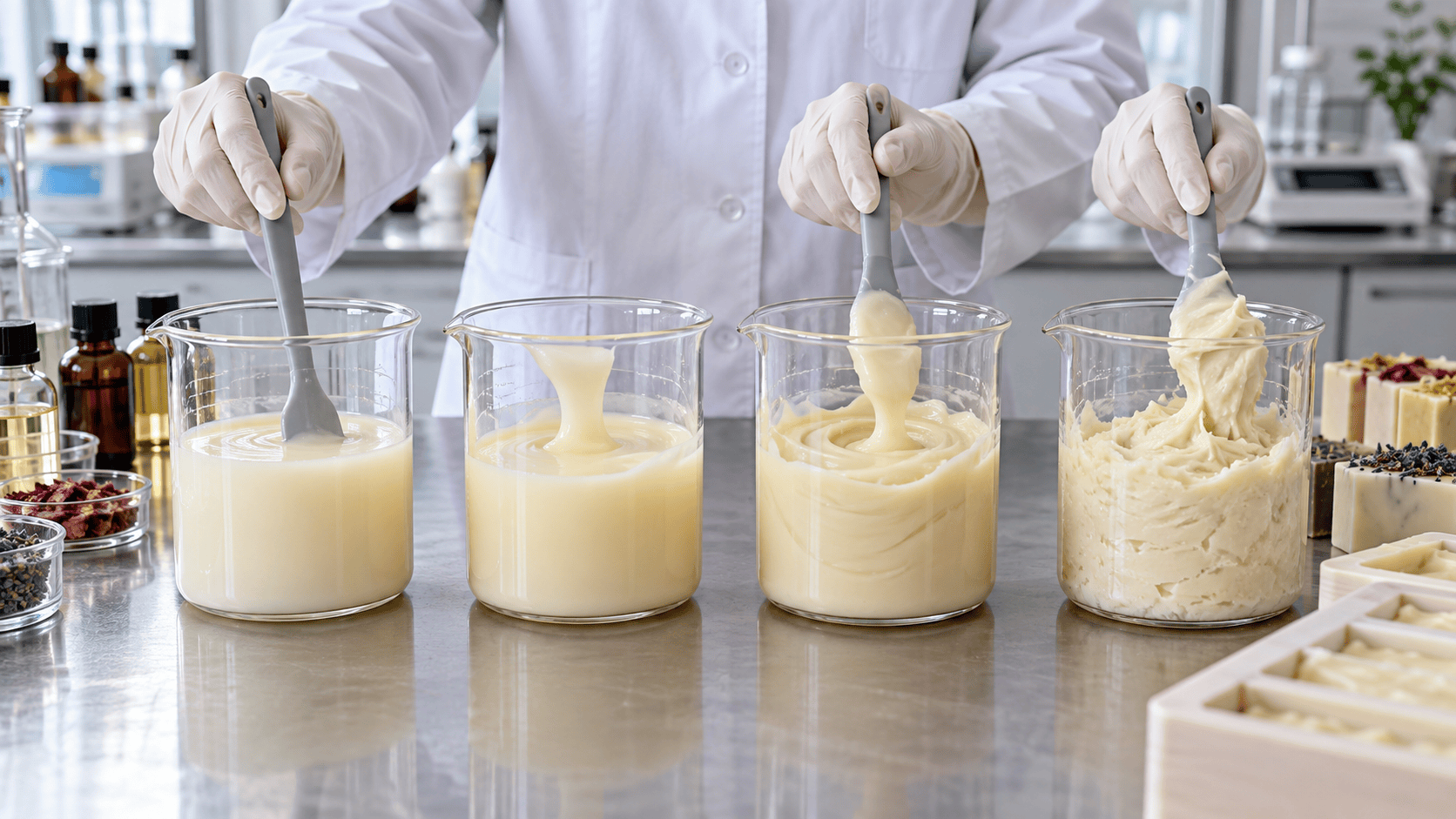
Add each coded fragrance at the same trace and mix for the same time. Record fluidity immediately and at short intervals, noting sudden thickening, grainy particles, separation or overheating. A fragrance that accelerates may still be usable with process changes, but the limitation must be understood before production.
Monitor Discoloration
Photograph fresh bars and cured controls under consistent lighting. Check the surface and cut interior over several weeks. Vanillin and other fragrance components may contribute to color change, but the result depends on composition and base. Plan the visual design around confirmed data rather than relying on the bottle color.
Evaluate Gel and Curing Behavior
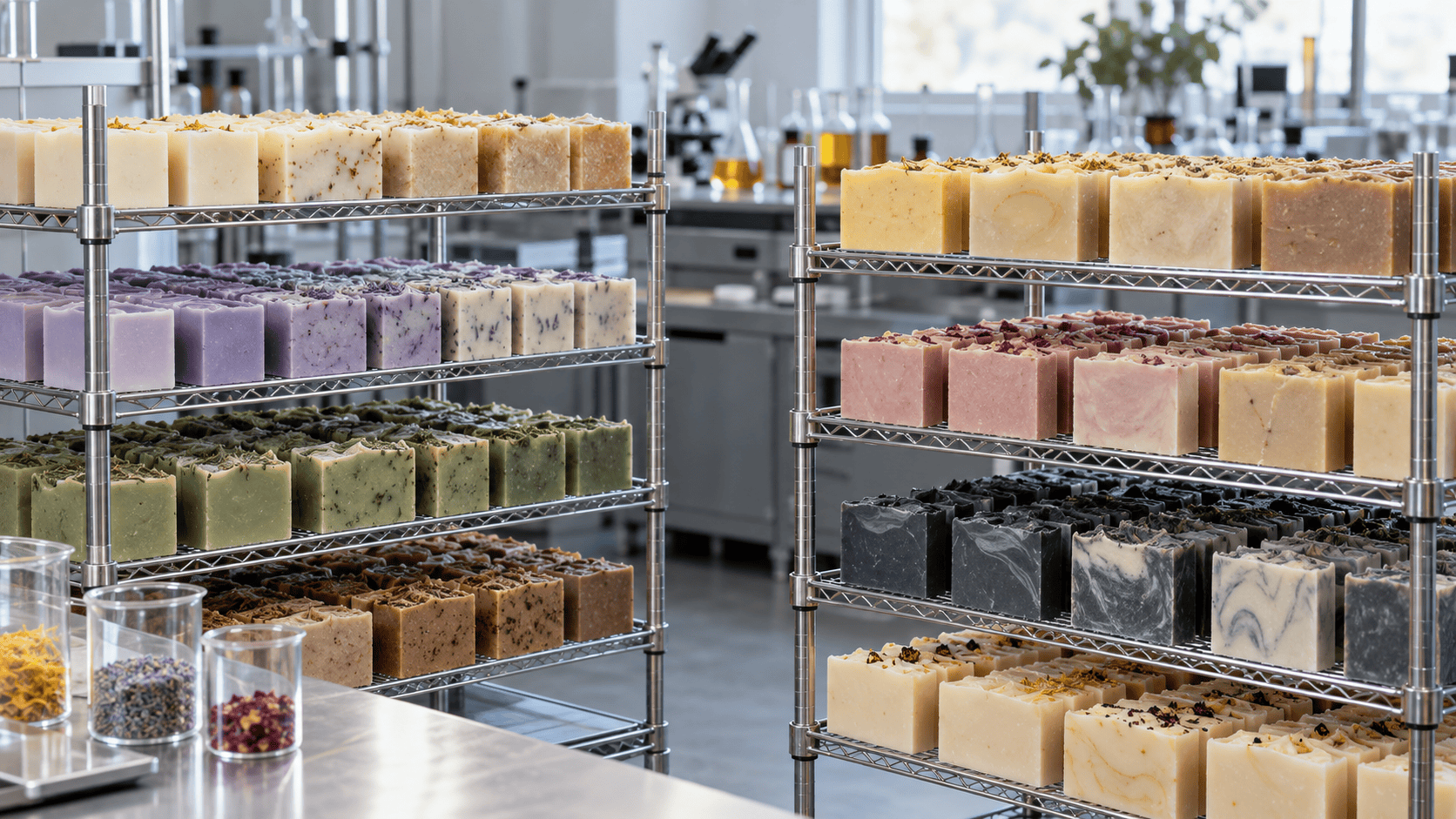
Record mold temperature, gel development, cracking, sweating and unmolding time. Cure bars on open racks under controlled conditions and weigh them periodically. Compare hardness, odor and appearance at the same age, because early evaluations can overestimate fragrance strength.
Measure Long-Term Scent Retention
Assess the whole bar, a freshly cut surface and the lather after defined cure and storage periods. Packaging can protect scent but may also trap moisture or transfer odor. Evaluate wrapped and unwrapped controls in the expected sales environment.
Scale Up Carefully
Larger batches retain heat and may move faster than bench samples. Confirm mixing equipment, fragrance addition point, pouring time and mold insulation in a pilot batch. Keep an emergency plan for rapid thickening and avoid making simultaneous formula changes during scale-up.
Create a Supplier Test Brief
Provide the oil recipe, fragrance dosage, lye concentration, process temperature, desired color and cure conditions. Ask whether the fragrance has known soap behavior, but confirm it in your formula. Retain reference bars and batch records for purchasing and quality control.
Frequently Asked Questions
Why does fragrance oil accelerate cold process soap?
Some fragrance components interact with the alkaline soap system and speed thickening; base and temperature also influence the effect.
What causes soap discoloration?
Fragrance composition, especially certain aromatic materials, can contribute, while oils, heat and additives may also change color.
When should scent retention be judged?
Evaluate after the normal cure and again during packaged storage, not only from freshly poured batter.
Can an accelerating fragrance still be used?
Often yes, with a simpler design, lower working temperature or adjusted process, but pilot testing is essential.
Is a supplier’s soap test enough?
It is useful screening data, but your oil blend, process, dosage and additives still require confirmation.
Work with an Application-Focused Fragrance Supplier
Reliable development combines a precise brief, controlled testing, documentation and retained standards. Contact SHEAIN to discuss fragrance oil for cold process soap, request samples or plan application testing for your market.


