

Making perfume with fragrance oil requires more than mixing scent and alcohol. Concentration, alcohol quality, water, solubility, maturation, filtration and packaging all influence clarity and wear. This guide gives brands a practical development workflow without presenting one formula as suitable for every fragrance.
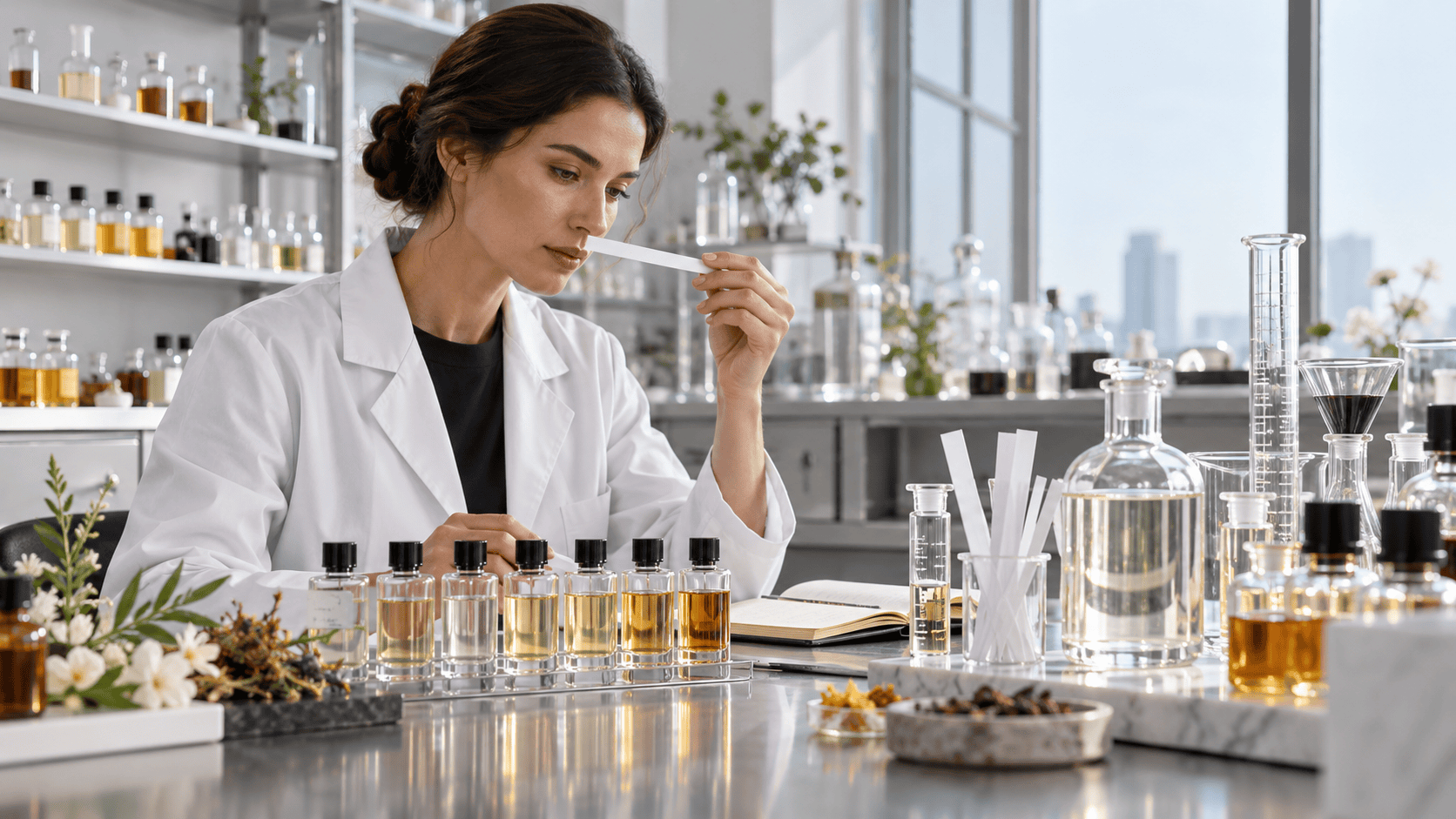
The objective is to make decisions from finished-product evidence, not fragrance-bottle impressions alone.
Confirm the Fragrance Is Intended for Perfume
Ask the supplier whether the fragrance is designed for fine fragrance and obtain the documents needed for the target market. A fragrance sold for candles or home care should not be assumed suitable for skin application. Define product type, market and desired concentration before ordering.
Select the Alcohol System
Use alcohol appropriate to cosmetic perfumery and local requirements. Alcohol proof, denaturant system and water content can affect odor, clarity and evaporation. Compare materials with the chosen fragrance rather than assuming all perfumer’s alcohol behaves identically.
Build a Concentration Ladder
Prepare accurately weighed trials across a practical concentration range. Keep alcohol, water, mixing and batch size constant. Evaluate first spray, development, skin dry-down, blotter longevity and clarity. The strongest sample is not always most balanced or commercially attractive.

Allow Controlled Maceration
Store tightly closed samples under consistent cool, dark conditions and evaluate at planned intervals. Maturation can improve integration, but it will not repair an incompatible formula. Record date, formula and observations so the chosen rest period is based on evidence rather than tradition alone.
Check Clarity and Filter Carefully
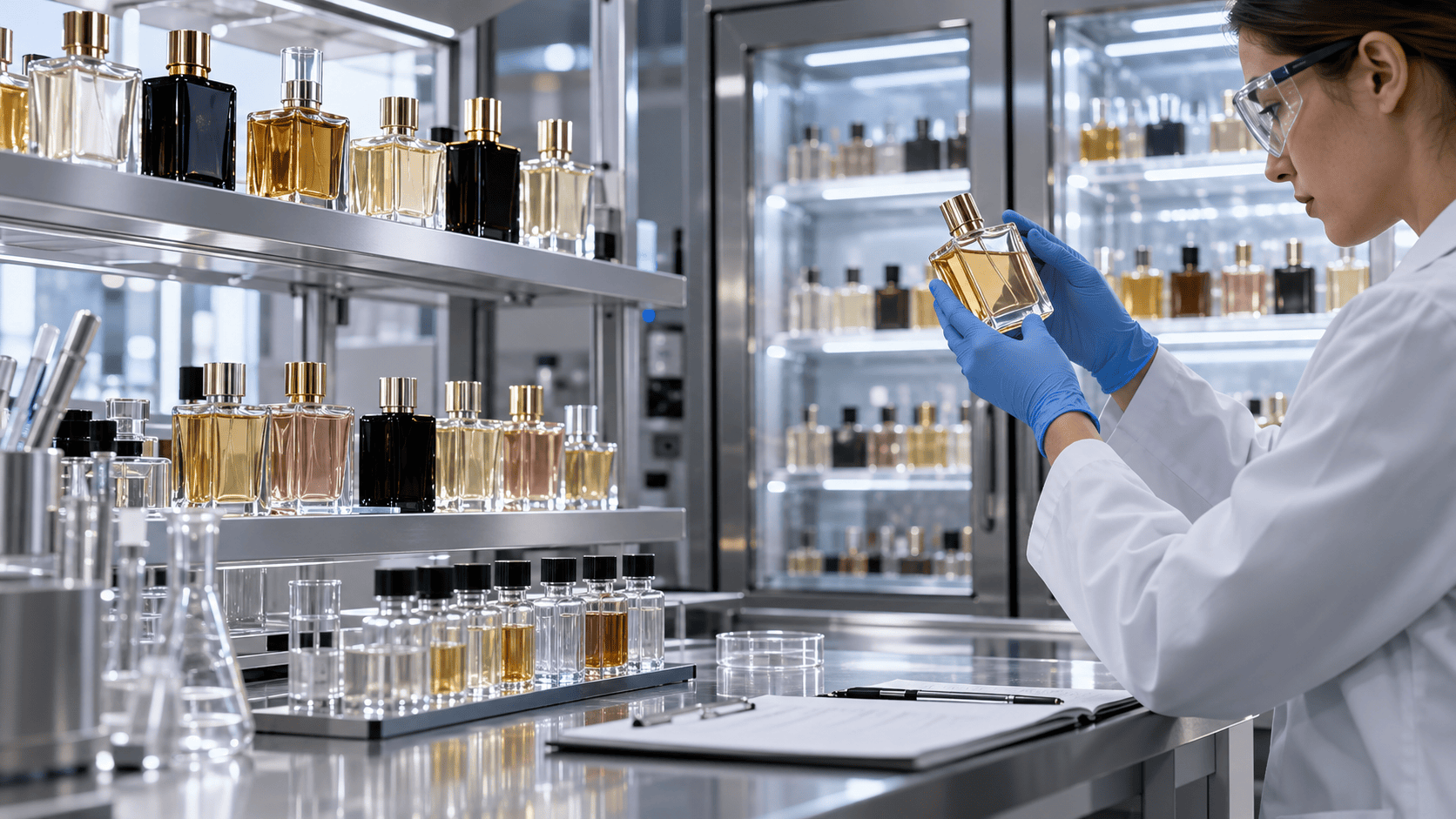
Inspect at room, cold and warm conditions for haze, sediment or color movement. If filtration is needed, confirm that the filter does not remove important fragrance character. Diagnose solubility issues before simply adding more water, alcohol or processing aids.
Test Atomizer and Bottle Compatibility
Evaluate spray output, droplet pattern, leakage, evaporation, gasket swelling, cap fit and decoration resistance. Store filled bottles upright and in transport orientations. The bottle is part of the formula system and should be approved before a large packaging order.
Move from Trial to Production
Create a written manufacturing instruction with weights, order of addition, mixing, rest, filtration and filling conditions. Retain an approved reference and record every batch. Confirm labeling, safety assessment and market requirements with qualified local professionals before sale.
Frequently Asked Questions
Can fragrance oil be mixed directly with alcohol?
Some fine-fragrance oils dissolve readily, while others require a different alcohol-water balance or formulation work. Always test the actual materials.
What concentration should perfume use?
Choose through supplier guidance, intended product type, sensory trials, cost and applicable requirements rather than one universal percentage.
Why does perfume become cloudy?
Water level, alcohol quality, low temperature and fragrance solubility can all contribute to haze or sediment.
How long should perfume macerate?
Use planned evaluations to determine when the formula becomes stable and integrated; the appropriate time varies by composition.
Can candle fragrance oil be used on skin?
Do not assume so. Use fragrance intended and documented for the cosmetic application and target market.
Work with an Application-Focused Fragrance Supplier
Reliable development combines a precise brief, controlled testing, documentation and retained standards. Contact SHEAIN to discuss how to make perfume with fragrance oil, request samples or plan application testing for your market.


