

Candle fragrance discoloration can appear as gradual yellowing, tan wax or a localized color change. The pattern and timing matter. Compare fragrance ingredients, the wax itself and storage exposure before deciding on a correction; the same visible color shift can have more than one cause.
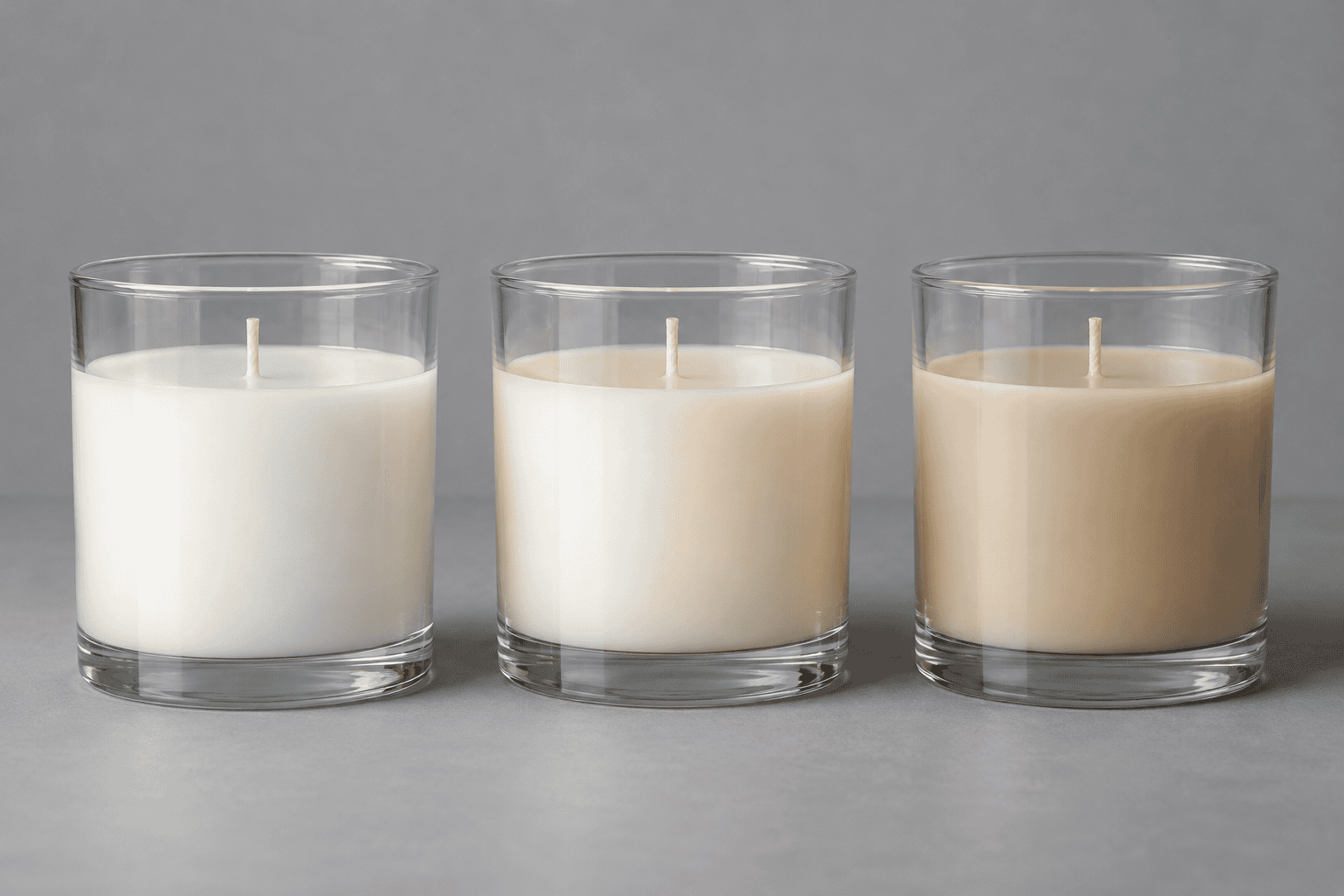
Map the pattern and timing
Photograph the candle when made and at planned intervals using the same background and lighting. Note whether change is uniform, restricted to the top, concentrated near the wick or associated with a metal contact. Compare unburned and burned samples separately. A localized stain should not be treated as the same problem as uniform yellowing during storage.
Review fragrance-related color potential
Some fragrance ingredients, including vanillin-containing materials, can contribute to color changes in wax. Ask for application-specific discoloration guidance rather than inferring chemistry from the scent name. A vanilla-like accord need not have the same composition as another vanilla fragrance, and removing one known contributor does not establish that the remaining formula will stay white indefinitely.
Use an unfragranced wax control
Make an unfragranced control using the same wax, container and process. If both samples change, investigate shared factors such as storage exposure or wax processing. If the fragranced sample changes more, repeat with a second candidate at a documented level. Keep dye out of the first diagnostic comparison where practical so it does not obscure the observation.
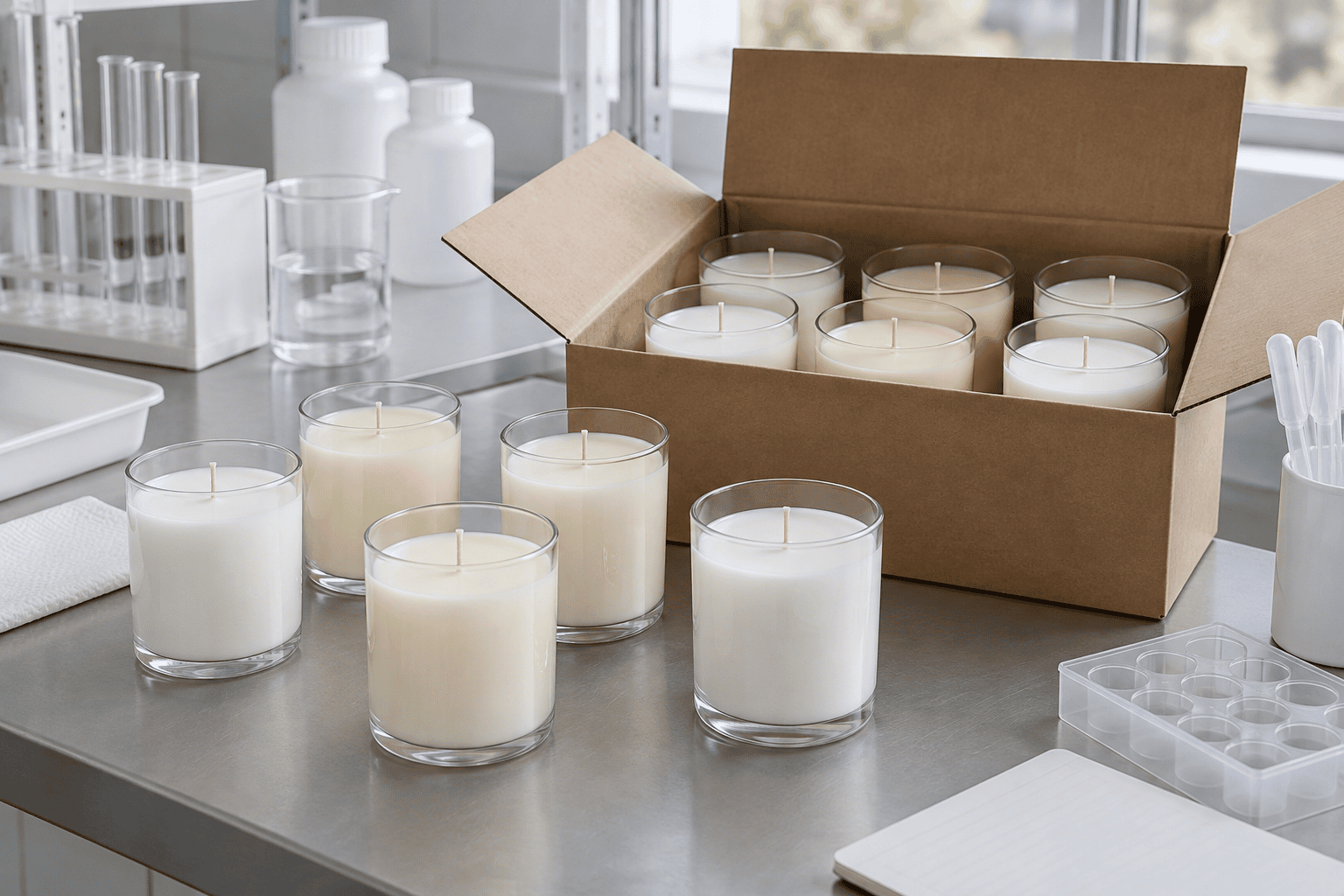
Separate light and temperature exposure
Store matched candles in light-exposed and protected conditions while documenting temperature. Use separate heat comparisons so light and heat are not changed together without explanation. Accelerated tests can rank candidates, but do not translate a few warm-storage days into a guaranteed shelf life without validated evidence.
Choose a correction that fits the cause
Possible responses include a revised fragrance, improved light protection or a deliberately tinted product design. A UV inhibitor may help a light-related issue but is not a universal solution to ingredient-driven color change. Any additive or fragrance change requires compatibility and burn reassessment. Do not present a cosmetic adjustment as proof that every underlying issue has been resolved.
Set a realistic appearance specification
Define acceptable color against retained references and the packaging concept. Record odor, separation and burn findings alongside color, because color alone cannot establish safety or performance. Ask SHEAIN to evaluate alternatives for a white or lightly colored candle and provide the wax grade, observed pattern, storage conditions and dated photographs.
Frequently Asked Questions
Does discoloration always mean a candle is defective?
No. The cause and the complete quality assessment determine the significance.
Does vanillin-free mean no color change?
No. Other ingredients and storage factors may still contribute.
Will a UV additive stop every yellowing problem?
No. Ingredient-related color change may need a different response.
Can dye hide the problem?
It can change appearance, but it does not identify or correct the cause.
What control is most useful?
An unfragranced candle made and stored under the same documented conditions.
Further Reading and Application Support
Fragrance ingredients and wax color provides background on this application. Manufacturer-specific recommendations apply to their own materials and equipment; the comparison procedures above are editorial guidance, not reported SHEAIN test results.
Related guide: Candle Fragrance Load Testing: Cold Throw, Hot Throw and Burn Performance.
Contact SHEAIN with your formulation, application and fragrance brief to discuss suitable samples.


