

Fabric refresher fragrance oil needs to produce an acceptable scent after a sprayed textile has dried, while working with the finished spray base and package. Fragrance suitability cannot be decided from a blotter alone. Evaluate the spray pattern, appearance of treated fabrics and dry-down character using realistic application conditions.
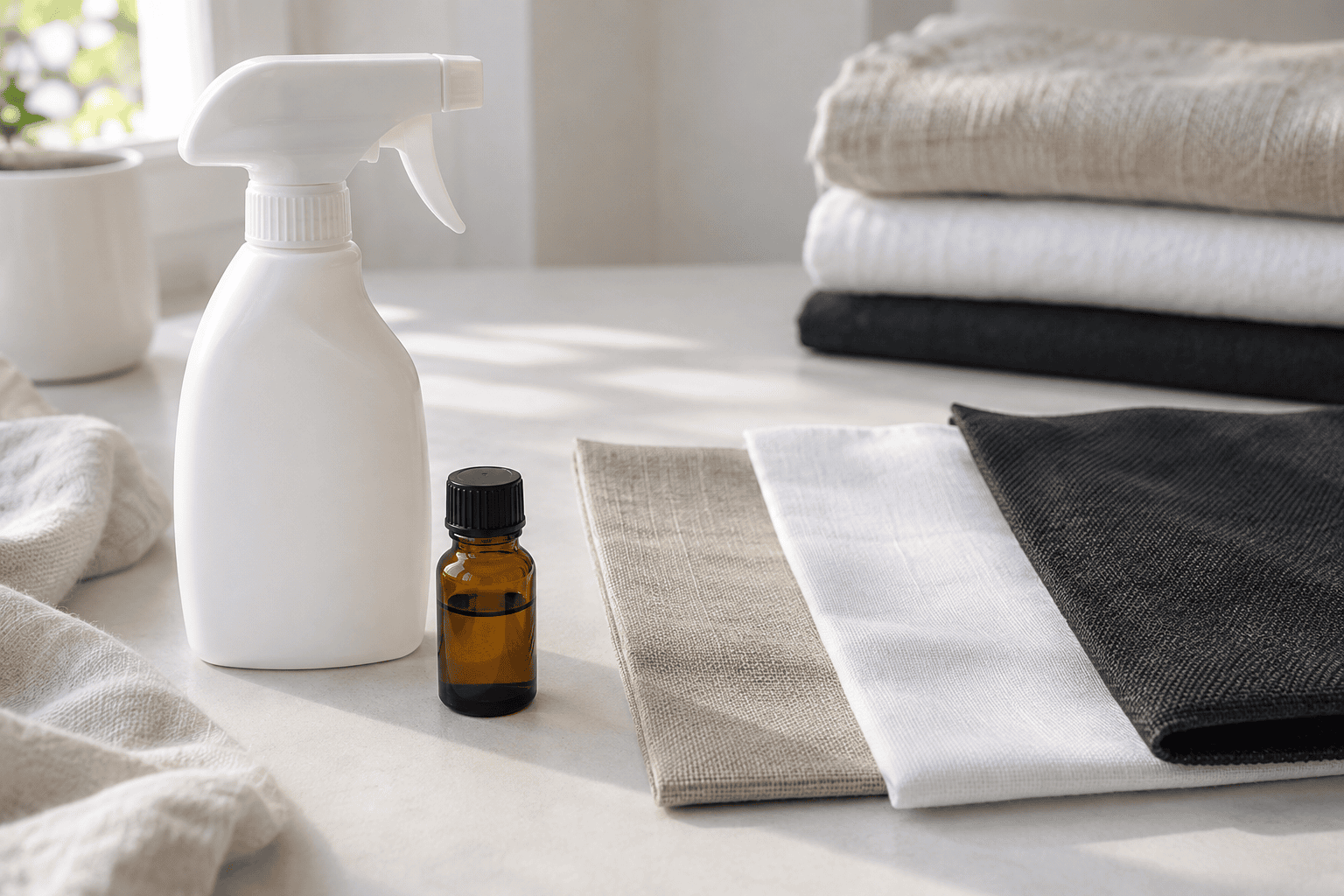
Define the fabric and use instructions
Identify intended textiles, application distance, dose and drying conditions. Upholstery, dark synthetic fabric and pale cotton can present different appearance concerns. Include any material exclusions in the development brief. A successful result on one fabric does not establish suitability for all clothing, leather, delicate finishes or household surfaces.
Test the full spray base
Record water quality, solvents, solubilizers, preservative and pH. Compare an unfragranced base with fragrance candidates after equilibration and storage. Inspect clarity, sediment and separation, then assess the final formula in its intended package. A stable beaker sample does not guarantee that the spray mechanism or seals will remain suitable.
Measure spray delivery consistently
Use the same pump and a fixed number of priming strokes. Compare output per stroke, pattern uniformity, drips and wetting at the proposed application distance. Weigh delivered product where practical. A larger wet spot may reflect pump output rather than a fragrance problem, so keep the delivery system controlled while screening oils.
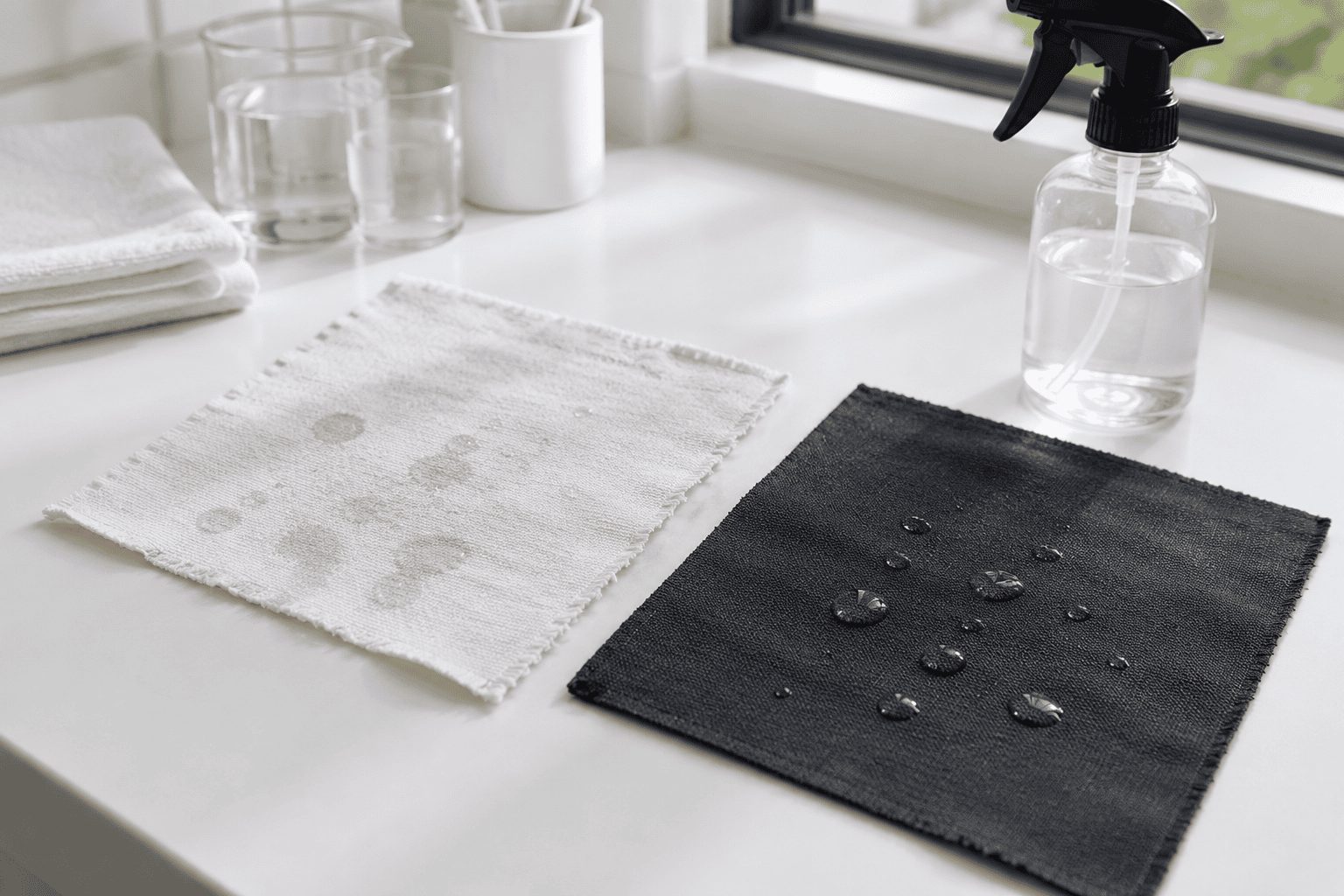
Check marks after complete drying
Apply the intended dose to representative light and dark swatches and include an unperfumed base control. Inspect for rings, oily spots, color change and changes in feel after drying. Repeat applications if that reflects actual use. Use manufacturer or textile guidance for delicate materials and do not infer universal fabric safety from a limited internal test.
Separate dry-down scent from odor-removal claims
Score the initial spray and fully dried textile independently. Check whether the fragrance character becomes harsh, weak or materially different after drying. A pleasant perfume can mask an odor without removing its cause. Any odor-neutralization or antimicrobial claim needs evidence for the complete finished product; fragrance selection alone does not substantiate it.
Confirm the package and supplier brief
Assess pump function, leakage and material changes during realistic storage. Provide SHEAIN the base, fabric targets, spray output, scent brief and appearance requirements when discussing fragrance samples. Confirm suitability for the intended textile-care application and keep a retained control so later batches can be compared under the same procedure.
Frequently Asked Questions
Can room spray fragrance automatically be used on fabric?
No. Fabric appearance, feel and repeated application need separate evaluation.
What causes oily spots?
The full formula, dose and spray distribution should be investigated using matched controls.
Is clear liquid guaranteed not to mark fabric?
No. A clear product can still leave visible marks after drying.
Does fragrance remove odors?
It may mask odor; removal or neutralization claims require appropriate evidence.
Which fabric should be tested first?
Start with the actual intended fabrics, including relevant light and dark materials.
Further Reading and Application Support
Fabric and home-care fragrance applications provides background on this application. Manufacturer-specific recommendations apply to their own materials and equipment; the comparison procedures above are editorial guidance, not reported SHEAIN test results.
Related guide: Fragrance Oil for Room Spray: Solubilization, Alcohol Level and Clarity.
Contact SHEAIN with your formulation, application and fragrance brief to discuss suitable samples.


