

Fragrance oil for coconut wax candles should be qualified against the exact wax grade, blend and candle design. Coconut wax is not one interchangeable material, and coconut wax does not mean coconut-scented fragrance. Start with the wax supplier’s technical information, then assess the fragrance in the complete candle. A successful trial in another vegetable wax cannot automatically approve the combination you intend to sell.
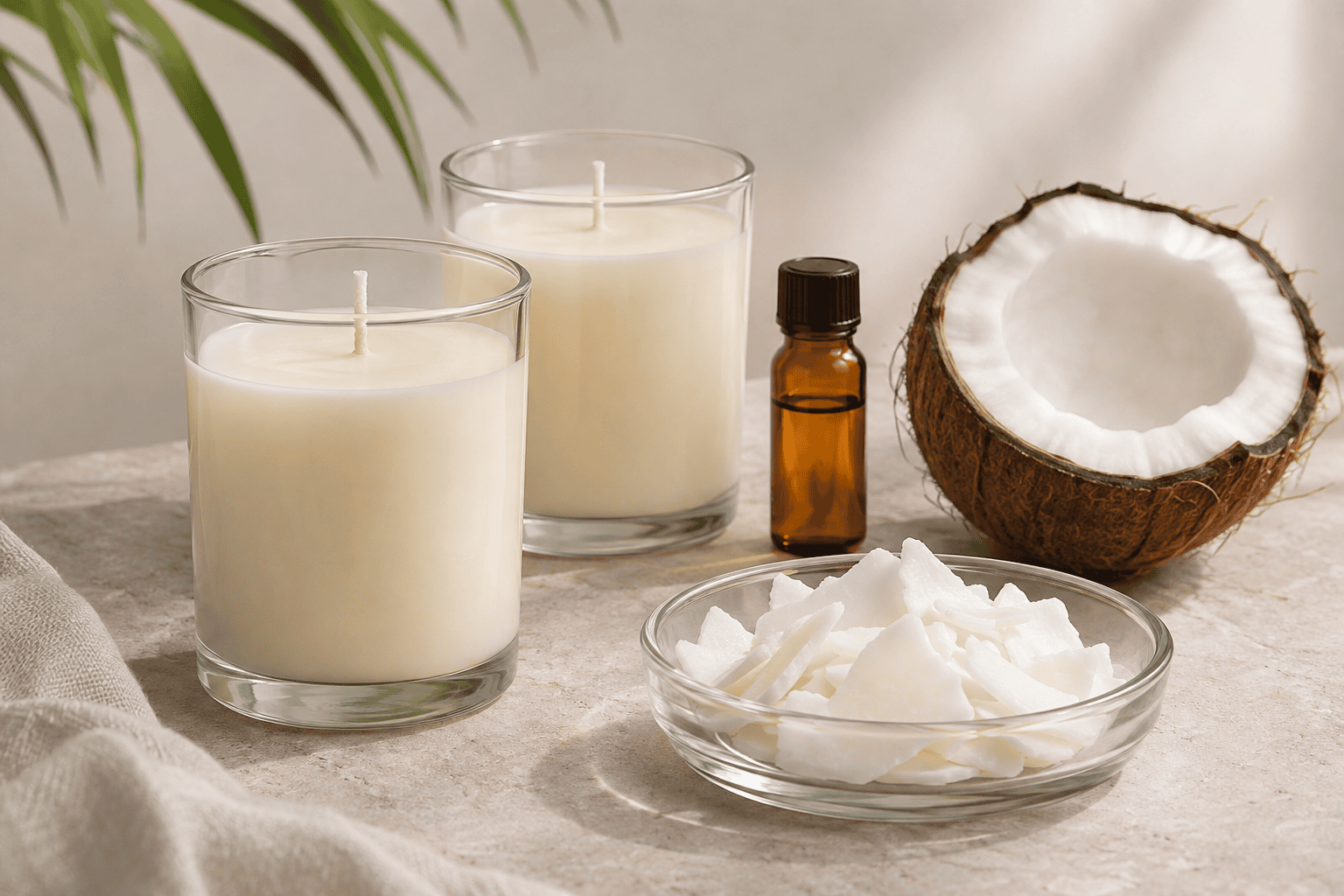
Identify the supplied wax before discussing fragrance load
Cargill’s NatureWax Coconut 1 data sheet describes a particular coconut-derived wax product and its applications.Source: Cargill: NatureWax Coconut 1 product data That information belongs to that grade; it is not a universal specification for every coconut blend. Record the commercial grade, supplier, lot and whether the material is a blend. Obtain the relevant processing guidance before applying another maker’s mixing or curing routine to your own candle.
Build the trial around one documented combination
Record the fragrance code and revision, reviewed trial loading basis, wax, vessel, wick, colorant and process. Change one planned variable at a time where practical. If several change together, the result may help choose a complete design but cannot isolate fragrance as the cause. Keep retained unfragranced and accepted-reference candles when suitable so appearance and scent comparisons have a useful baseline.
Separate incorporation from later surface observations
A uniform-looking fresh pour is only an initial observation. Inspect the cooled and stored candle under the agreed conditions for surface oil, visible separation and other unaccepted changes. Record when and where they appear instead of assuming the fragrance is inherently incompatible. The wax grade, process and complete formulation need review together. Do not hide an issue with packaging or increase loading simply to compensate for weak scent.
Assess scent at the intended candle stage
Compare cold odor at matched sample ages, then assess burning-stage scent through an appropriate controlled candle evaluation. A stronger unlit candle is not automatically a better burning candle. Do not infer that coconut wax always improves diffusion or supports a higher fragrance level. Define the target room impression and compare the actual candidates in the exact candle design rather than relying on a general wax reputation.
Keep complete candle performance in the decision
The selected fragrance is part of a system with the wick, wax and container. Arrange appropriate finished-candle performance and safety qualification before sale, including the intended use conditions. A scent preference result is not evidence that the candle is safe. The table below organizes a buying trial rather than reporting laboratory results. Follow the specific suppliers’ guidance and qualified assessment instead of borrowing a universal temperature or dosage.
| Record | Why it matters | Approval boundary |
|---|---|---|
| Wax grade | Coconut blends are not interchangeable | Actual supplied grade and lot |
| Process | Mixing and cooling belong to the trial | Documented reviewed conditions |
| Scent | Cold and burning stages differ | Matched-age comparisons |
| Full candle | Wick and vessel remain part of the system | Qualified finished design |
Approve the combination and its change controls
Send SHEAIN the exact wax grade, candle format, market, scent target and relevant observations to discuss concentrate suitability. Approve a named revision within the assessed design and retain the trial record. Reassess meaningful changes to wax, wick, vessel or fragrance rather than treating a past coconut-wax approval as unlimited. Keep the fragrance specification separate from any claims about the wax’s origin or sustainability.
Frequently Asked Questions
Does coconut wax require coconut fragrance?
No. Wax material and scent theme are separate choices.
Can I reuse a soy-wax fragrance loading unchanged?
Not automatically. Review the exact wax guidance, fragrance documentation and complete candle trial.
Does good cold throw approve the candle?
No. Burning-stage performance, physical quality and appropriate safety qualification remain separate requirements.
Related Guides and Application Support
- Fragrance Oil for Soy Wax Candles: Cure Time and Hot Throw Testing
- Candle Fragrance Load Testing: Cold Throw, Hot Throw and Burn Performance
Contact SHEAIN. Share your end-use application, target market and scent brief to discuss fragrance oil concentrate samples.


