

A petrichor fragrance oil scent profile should define the desired rain-and-earth association and the point where it becomes unpleasant to your audience. Do not treat the name as a single standardized smell. Start with an accepted reference, a clearly rejected example and the intended product context. The practical goal is a recognizable creative direction, not a claim that the concentrate contains rainwater, soil or natural outdoor materials.

Choose which rain scene the project should suggest
CandleScience offers a petrichor interpretation associated with rain and earth.Source: CandleScience: an interpretation of petrichor It is one commercial example rather than a definition of every petrichor concentrate or a SHEAIN performance claim. A buyer may want damp ground, rain-washed greenery or a mineral-like setting. Choose a leading scene and identify supporting associations before comparing samples with different interpretations of the same name.
Give earthy character a clear boundary
Earthy can be attractive in one concept and unwelcome in another. Ask evaluators to describe the precise response rather than using natural as a substitute for acceptance. Compare the preferred reference with a sample that goes too far toward a damp or enclosed-space association. This creates a useful creative limit without asserting that a particular raw material causes the effect or that stronger earthiness means better authenticity.
Do not diagnose an unexpected musty smell by marketing story
An intentional odor concept and an unexpected quality change are different matters. If an incoming sample develops an unagreed smell, discoloration or other anomaly, hold it for supplier investigation rather than explaining the issue away as petrichor. Smelling alone cannot establish contamination or rule it out. Preserve the batch code, handling history and retained reference so the question can be reviewed through appropriate quality procedures.
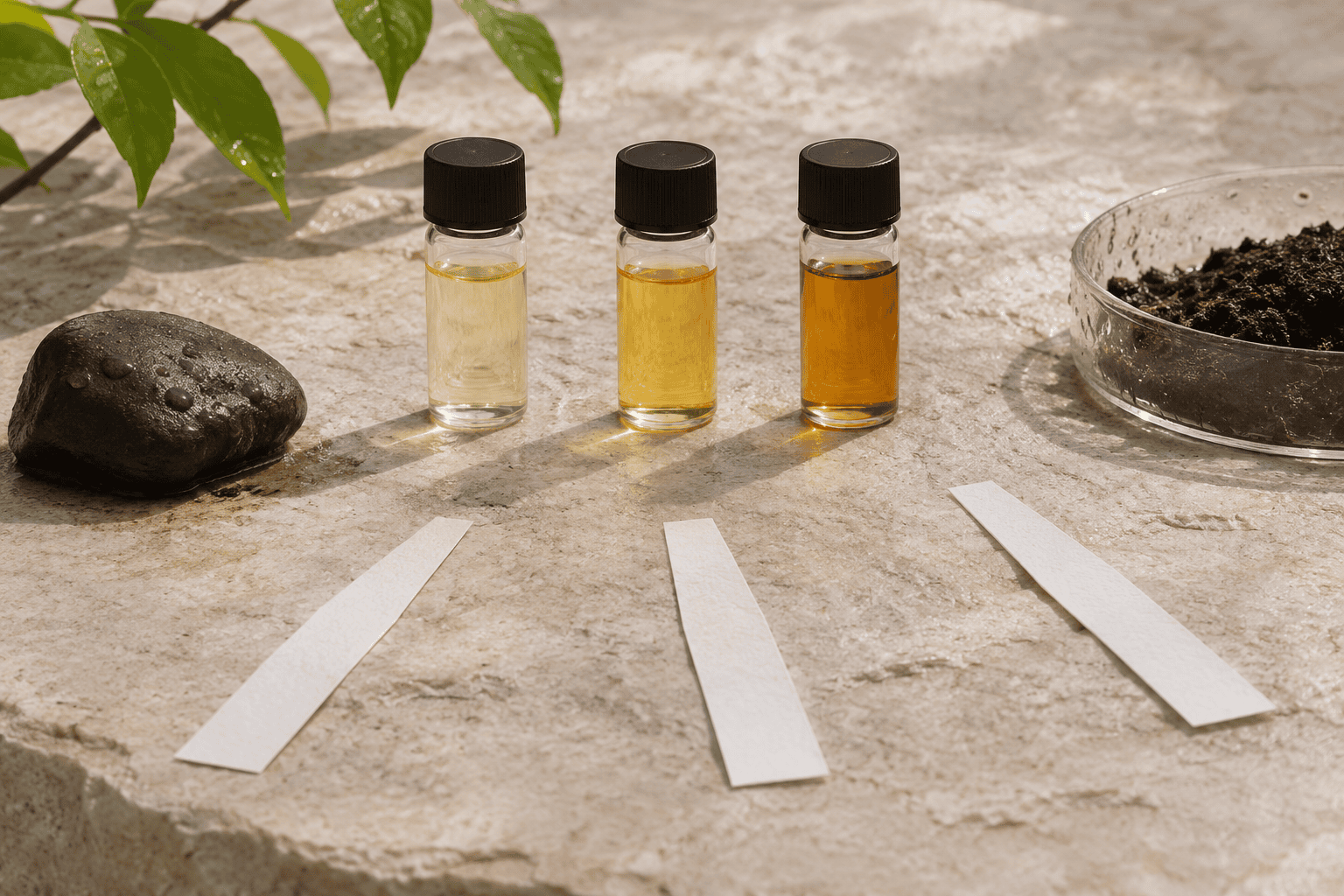
Control green and watery support separately
Greenery and watery associations may help the concept, but either can also turn it into a generic fresh fragrance. Ask assessors to name the main impression before revealing the product story. Record the role of the supporting background separately from earth intensity. If the result is too aquatic, requesting less earth may move the composition farther from the target rather than fix the actual imbalance.
Review the relevant application stage
Prepare candidates in the actual base using matched and technically reviewed conditions. Record when the rain-associated freshness appears and whether the earthy character remains appropriate at the customer’s important use stage. A blotter does not approve a candle or cleaning product. The table below is an editorial framework, not environmental analysis or test data. Physical quality, safety and documentation require their own exact-application checks.
| Dimension | Decision | Useful evidence |
|---|---|---|
| Scene | Ground, greenery or mineral association? | Accepted coded reference |
| Earth | Recognizable but appropriate? | Rejected boundary sample |
| Quality | Intentional profile or unexpected change? | Retain code and handling history |
| Application | Fits the relevant use stage? | Document the tested base |
Write a revision with an accepted and rejected endpoint
An illustrative brief could keep a rain-washed green impression with restrained earthiness and exclude a dominant enclosed, musty association. Send SHEAIN the reference codes, base, market and evaluation stage to discuss concentrate feasibility. Approve the particular revision, not merely the petrichor label. If actual natural-material content is required, define and verify that requirement independently; an outdoor scent impression cannot establish origin or composition.
Frequently Asked Questions
Is petrichor fragrance made from soil?
The name does not establish ingredients. Confirm any origin requirement separately.
Can I assume a musty sample is normal?
No. An unexpected deviation should be held and investigated against the agreed specification and retained reference.
Should petrichor be mostly aquatic?
There is no universal rule. Define the intended scene and compare actual samples rather than relying on the name.
Related Guides and Application Support
- Guava Fragrance Oil Scent Profile: Fresh Flesh or Sweet Tropical Fruit?
- Fragrance Oil Stability Testing: How to Check Compatibility Before Mass Production
Contact SHEAIN. Share your end-use application, target market and scent brief to discuss fragrance oil concentrate samples.


