

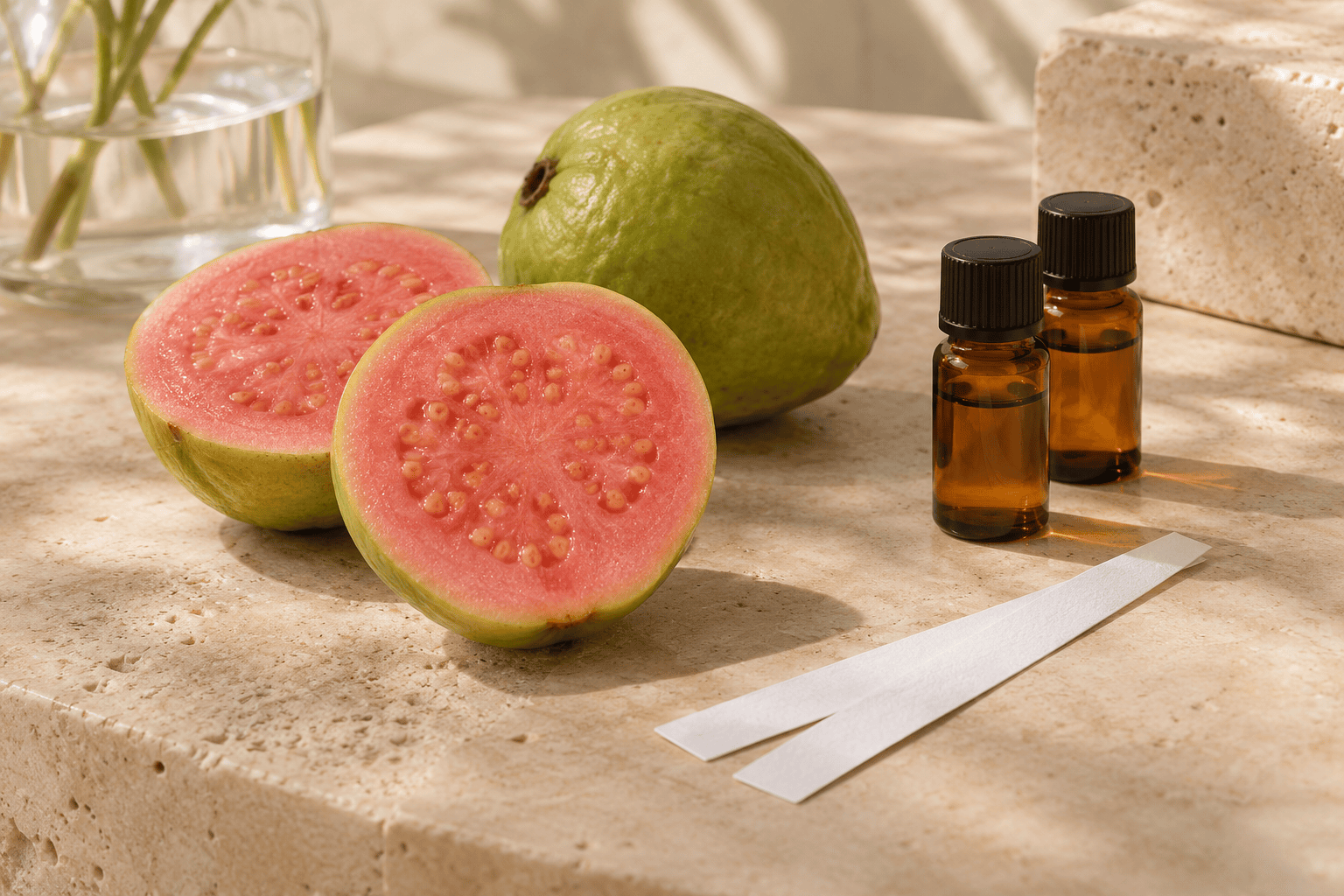
A guava fragrance oil scent profile should communicate more than a sweet tropical label. Decide whether the product should suggest freshly cut flesh, a green fruit accent or a fuller ripe-fruit impression. Then compare candidates for guava recognition separately from sweetness. A pleasant fruit blend is not automatically the right choice for a guava-led product.
Describe the guava reference you actually mean
Different buyers may remember different varieties, ripeness levels or guava-flavored products. Ask the project team to describe its reference before requesting samples. Is the target fresh fruit, a richer ripe impression or an intentionally candy-like concept? Do not turn one person’s memory into a universal definition. A short reference discussion can reveal that two apparently conflicting comments concern different targets rather than inconsistent fragrance quality.
Keep the fruit identity distinct from its supporting notes
Some guava-named blends intentionally combine several fruits. CandleScience offers a strawberry-guava interpretation, illustrating that a guava label can describe a blend rather than a single-note target. Source: CandleScience: one guava fragrance interpretation This is a descriptive example, not a benchmark formula or a SHEAIN equivalent. Ask evaluators what they perceive before showing the name. If another fruit dominates, decide whether it supports the intended concept or makes the guava label misleading for the proposed product.
Set a limit for ripe and syrupy impressions
Richness can help one concept and overwhelm another. Record whether the unwanted effect is excessive sweetness, a jam-like association or a dense tropical background. These comments lead to different revision requests. Avoid automatically increasing or decreasing the total loading when the underlying profile is wrong. Ask for a revised balance that preserves the desired fruit identity, and keep the original sample so the next round has a concrete comparison.
Use green contrast deliberately
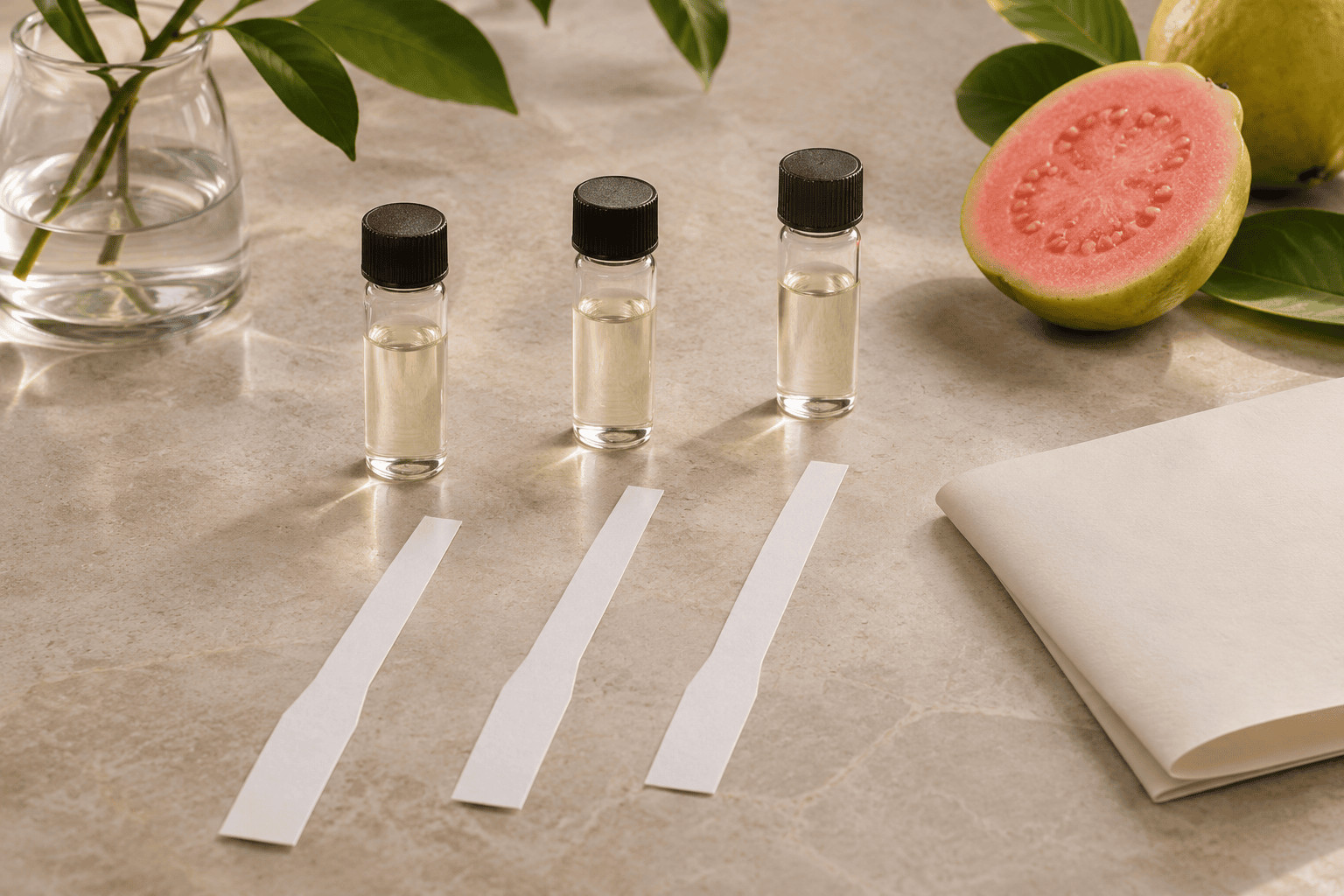
A little green character may be part of the chosen fresh-fruit direction, but greener is not automatically more realistic or better. Ask whether that facet makes the guava easier to recognize or introduces an unwanted leafy impression. Establish the acceptable contrast for the particular product concept. The table below is an editorial selection framework, not a measured property of all guava fragrances or a claim about the composition of your sample.
| Facet | Desired decision | Useful feedback |
|---|---|---|
| Identity | Guava-led or mixed fruit? | Keep guava recognizable |
| Ripeness | Fresh flesh or richer fruit? | Reduce jam-like density |
| Green contrast | Supportive or distracting? | Keep a light green edge |
| Application | Same target after formulation? | Specify the stage that changes |
Test in the product before accepting the final balance
Evaluate shortlisted concentrates in the actual base under documented preparation and observation conditions. Keep the fragrance level technically reviewed and comparable. Record the impression at the stage the customer will notice, rather than relying only on the bottle opening. Check compatibility and stability separately; a preferred aroma does not establish that a concentrate will remain suitable in a candle, cleanser or air-care format without application-specific work.
Give the supplier a narrow and usable request
An illustrative brief is: guava-led fresh fruit, moderate ripeness, low syrupy sweetness and no dominant strawberry association. Attach the chosen sample code, the product base and the target market. SHEAIN can discuss concentrate sample feasibility against this description; availability and suitability require project confirmation. Retain the approved version and evaluation record. Do not describe a guava-named fragrance as guava extract or food flavor without the relevant documentation and intended-use approval.
Frequently Asked Questions
Does guava fragrance oil contain guava extract?
Not necessarily. The scent name describes an impression; ingredient-origin claims require separate evidence.
Why do guava samples smell different?
They may target different ripeness levels or contain different supporting scent directions. Compare the brief and the sample together.
Can this fragrance be used in beverages?
Do not use a fragrance concentrate as a food flavor. Only a product specifically supplied and assessed for that food use belongs in a beverage.
Related Guides and Application Support
- Gourmand vs Fruity Fragrance: Why Not Every Sweet Scent Is the Same
- Custom Fragrance Development: From Creative Brief to Approved Formula
Contact SHEAIN. Share your end-use application, target market and scent brief to discuss fragrance oil concentrate samples.


