

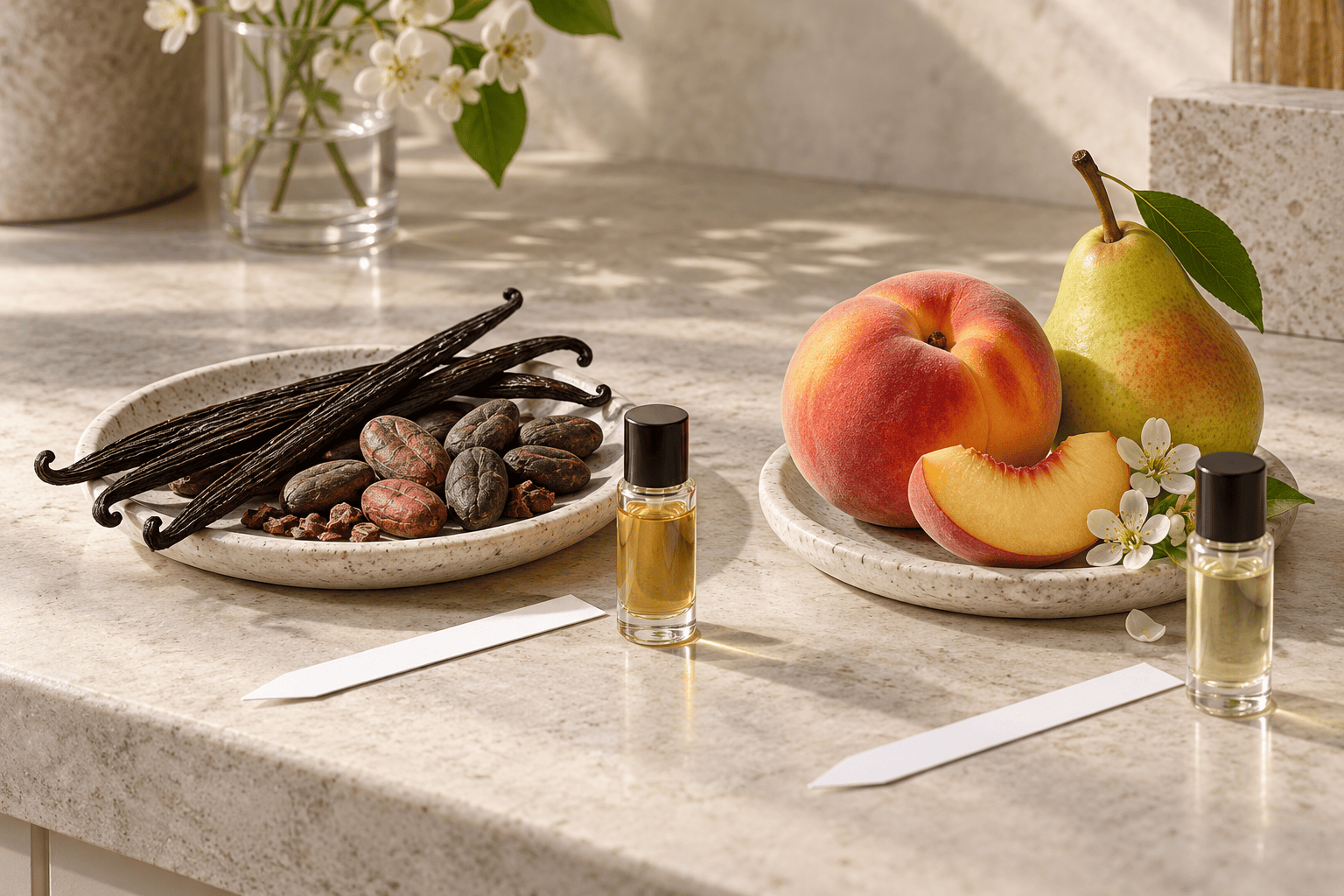
Gourmand vs fruity fragrance is not simply a comparison between sweeter and less sweet. Fruity describes a fruit-associated direction; gourmand usually evokes food or dessert-like impressions such as vanilla confectionery, caramel or coffee treats. The categories can overlap. For a product brief, decide what the scent should make people recognize first, then describe sweetness and texture as separate dimensions.
Begin with the main association, not a sweetness score
Ask assessors to describe the scent before showing the product name. If they mainly identify pear or peach, the candidate may fit a fruit-led concept even when it is sweet. If they describe a pastry, candy or creamy dessert, the gourmand association may lead. These are practical editorial categories rather than a universal taxonomy. Record the actual descriptions and avoid forcing every sample into a label. A buyer needs a shared brief that makes selection easier, not a debate over terminology that never reaches a decision.
Use texture to explain why similar sweetness feels different
Two samples can seem equally sweet while one feels juicy and bright and the other dense and creamy. Ask the team to compare freshness, richness and cooked-sugar associations independently. This helps explain why increasing or decreasing fragrance loading does not necessarily solve a category mismatch. A fruit concept that reads as candy may need a different balance, not just less intensity. Likewise, a soft gourmand can be intentionally restrained rather than heavy. Keep those observations tied to the sample code so feedback remains actionable.
Recognize overlap without losing the product’s headline
A fruit tart, cherry dessert or coconut confectionery direction can combine both categories. Decide whether the product should be understood as fruit first or dessert first. An overlap is not a flaw if it is intentional and distinct within the range. It becomes a problem when the marketing brief promises a fresh fruit experience but the application sample strongly suggests a rich dessert. Use one clear primary association and allow secondary facets to support it instead of adding every appealing descriptor to the same brief.

Compare against the products already in your range
A new fruity SKU can still duplicate an existing gourmand if both share the same dominant sweet background. Compare the candidates in the same relevant application and ask what makes each one recognizable. Do not rely on a different fruit name or package color as the only distinction. Record the leading association, texture and later character of each sample. If two options remain difficult to tell apart, request a more purposeful contrast before adding another fragrance code to the purchasing and inventory system.
Evaluate the association at the customer’s actual use stage
A bright fruit opening can develop into a softer sweet background, while a dessert-like bottle odor may appear differently in the finished product. Choose observation points relevant to the application and hold preparation conditions constant. Use technically reviewed fragrance levels and an unfragranced control where helpful. The table below is a suggested briefing tool, not a measured consumer result. Keep sensory category, preference and technical suitability separate so a descriptive label does not replace compatibility, safety or stability work.
| Dimension | Fruit-led direction | Gourmand-led direction |
|---|---|---|
| Main association | Recognizable fruit | Food or dessert-like impression |
| Texture | Often evaluated for juiciness or freshness | Often evaluated for creaminess or richness |
| Sweetness | Independent choice | Independent choice |
| Overlap example | Fruit with a soft sweet background | Dessert with a recognizable fruit accent |
Specify a clear direction when requesting concentrates
A useful fruit-led request might seek juicy pear recognition with low candy association. A gourmand-led request might seek a soft coffee-dessert character with restrained sweetness. These examples describe possible briefs, not SHEAIN stock or guaranteed performance. Send the application, target market and a reference sample when discussing concentrate options. Any food-inspired imagery refers to smell only: fragrance concentrates are not edible flavors. Approve the final code and version against the intended concept, then keep that reference available for future comparisons.
Frequently Asked Questions
Can a fragrance be both fruity and gourmand?
Yes. Decide which association should lead and which should support it so the product brief remains clear.
Are all vanilla fragrances gourmand?
Not necessarily. A vanilla-related facet can sit within a drier woody or other composition. Evaluate the overall impression rather than one named note.
Does gourmand mean the fragrance is edible?
No. It describes a food-like smell. A perfumery concentrate must not be used in food or drinks unless it is separately supplied and assessed for that purpose.
Related Guides and Application Support
- Fragrance Sensory Evaluation: How to Build a Reliable Sample-Scoring Process
- Custom Fragrance Development: From Creative Brief to Approved Formula
Contact SHEAIN with your end-use application, target market and scent brief to discuss fragrance oil concentrate samples.


