

The choice between green apple vs baked apple fragrance is really a choice between two kinds of fruit character. Green apple suggests the crisp, tart impression of breaking through a fresh peel. Baked apple suggests soft, warm fruit; it does not have to smell like cinnamon pie. A useful brief tells your fragrance oil supplier which quality must survive once the sample is in the intended product, not just which apple name should go on the sample label.
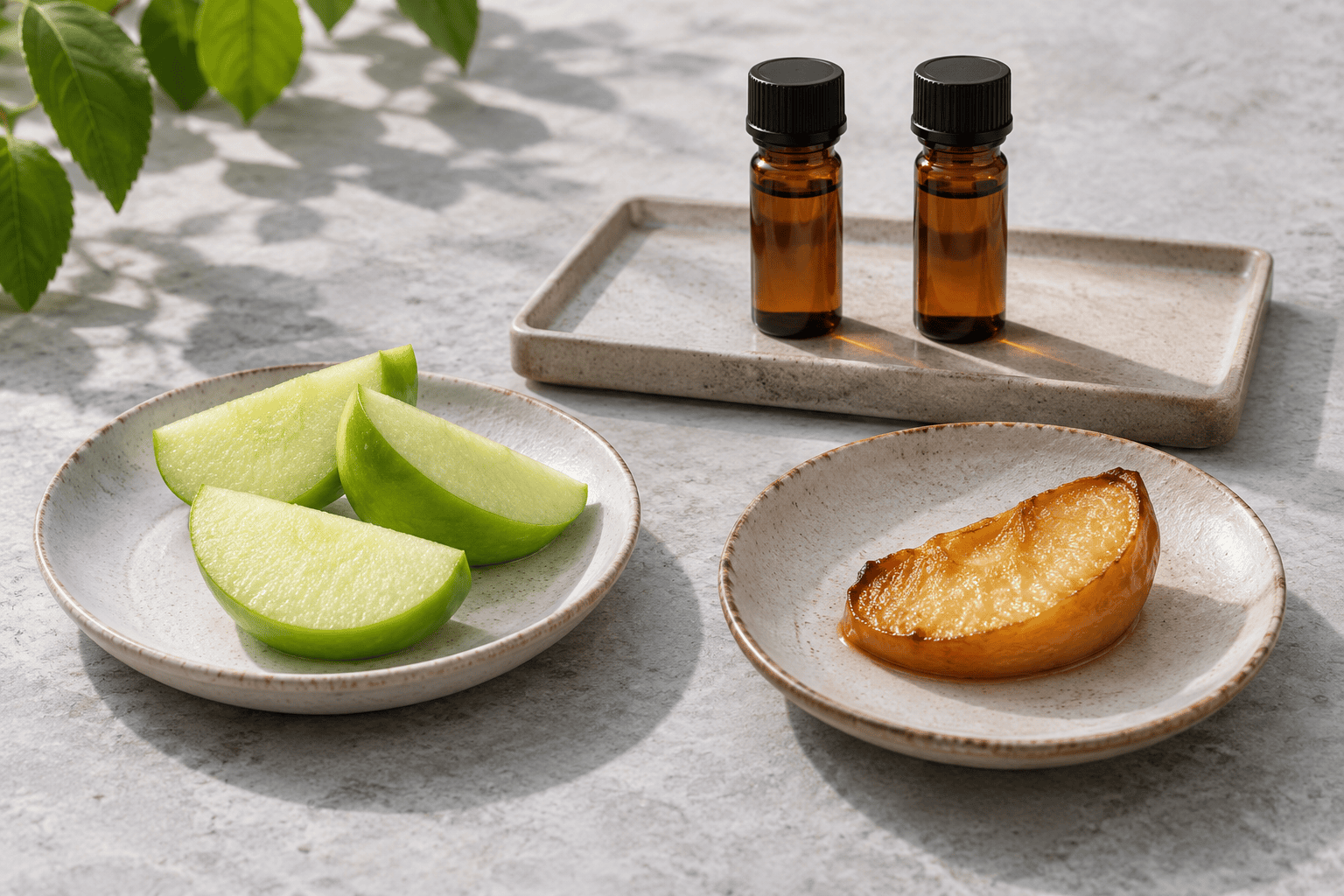
Define the green apple bite
Ask for a green-peel edge and juicy flesh if the target is fresh-cut fruit. Decide how sharp the first impression can be and what you want after it settles. Some samples read as sour candy; others lose the fruit and lean toward a cleaner-like green note. Those may suit a deliberate brief, but neither is a substitute for crisp apple. A practical instruction is: keep a tart peel edge, moderate the sweetness, and avoid a candy finish.
Separate cooked fruit from bakery notes
Baked apple can sit anywhere between lightly stewed fruit and a full pastry accord. Ask for one version where softened apple flesh leads and another with a clear baking background only if your product calls for it. State whether spice, caramel or pastry is welcome, limited, or excluded. This comparison describes scent impressions. It is not a list of ingredients or a prediction of performance.
| Decision point | Green apple direction | Baked apple direction |
|---|---|---|
| Required cue | Tart peel and crisp flesh | Soft, recognizable cooked fruit |
| Common drift | Sour candy or cleaner-like green | Spice, caramel or pastry eclipses apple |
| After settling | Still reads as fresh apple | Fruit remains clear under the warm notes |
Compare the samples blind on blotters
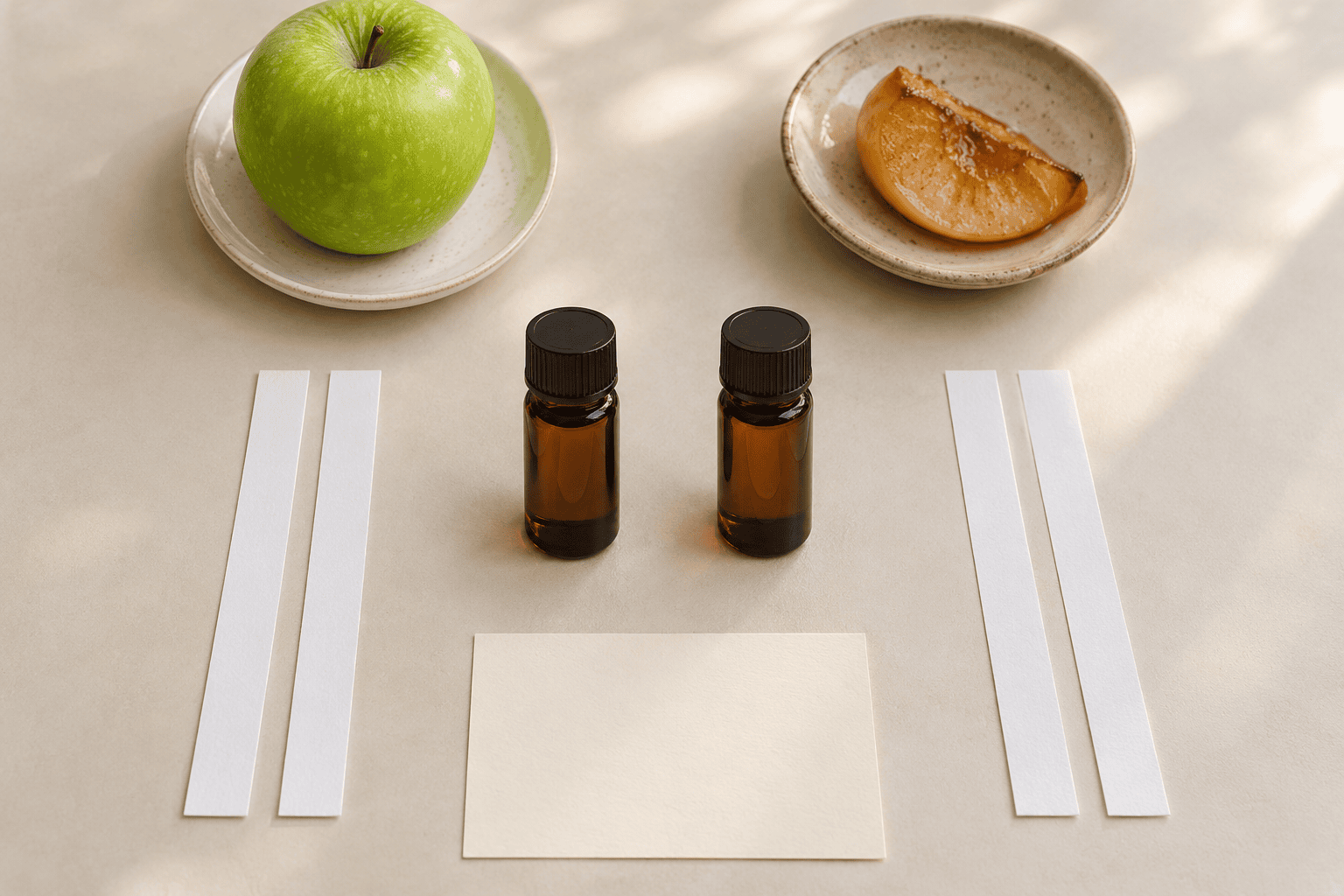
Use matched blotters and the same evaluation procedure for both samples. Label them with neutral codes rather than fruit names and agree when the team will smell them: at the opening and again after they settle. Ask each reviewer to record the perceived fruit, the supporting note and intensity before they pick a favorite. If several people identify one sample as candy rather than cut apple, that is more useful revision feedback than asking for a stronger apple.
Confirm the choice in the intended base
Carry the same sample codes into a comparison against an unscented reference. Keep the base lot, preparation and evaluation conditions matched under your approved process. A candle team can distinguish the unlit impression from the impression during its validated burn test; a rinse-off team can separate the scent of the product from the scent in use. An attractive blotter is a screening result, not proof of compatibility or a pass for a different application.
Give the supplier a specific revision request
Identify sample code and version, the base tested and the point when the unwanted note appeared. For a green apple candidate, say that the opening has the right peel bite but the settled scent is too confectionery. For baked apple, say that the cooked fruit fits but spice takes over. Keep scent character and strength separate in your notes so the next version does not change both in response to one issue.
Choose what to approve, and where
Write one required cue, one non-negotiable exclusion and one relevant evaluation stage on the approval sheet. Link the decision to the exact sample version and intended application. If both apple directions are useful, keep two briefs instead of averaging feedback into one sample. A crisp line extension and a warm seasonal product can share an idea without sharing a fragrance approval.
Frequently Asked Questions
Does a baked apple fragrance always smell of cinnamon?
No. Request a cooked-fruit direction and explicitly exclude cinnamon if a spice impression is outside the brief.
Can I use the same approved sample in a candle and a rinse-off product?
Do not assume that one approval carries over. Confirm the intended use with the supplier and qualify the sample against each finished product and its relevant requirements.
What should I send when requesting samples?
Include the intended base, target market, desired fruit character, any excluded notes, and the stage at which the apple must be recognizable.
Related Guides and Application Support
- Fragrance Bottle Headspace vs Blotter: Why the Buying Questions Differ
- Want Vanilla Fragrance Oil That Is Not Too Sweet? Compare Three Directions
Contact SHEAIN. Share your end-use application, target market and scent brief to discuss fragrance oil concentrate samples.


