

Fragrance bottle headspace vs blotter evaluation compares two different presentations of a sample. The air above the liquid in a bottle and a fragrance applied to paper should not be treated as interchangeable quality scores. Use each observation for a defined purpose, then make the purchasing decision against the intended finished product rather than whichever presentation seems strongest.
State what each observation is meant to answer
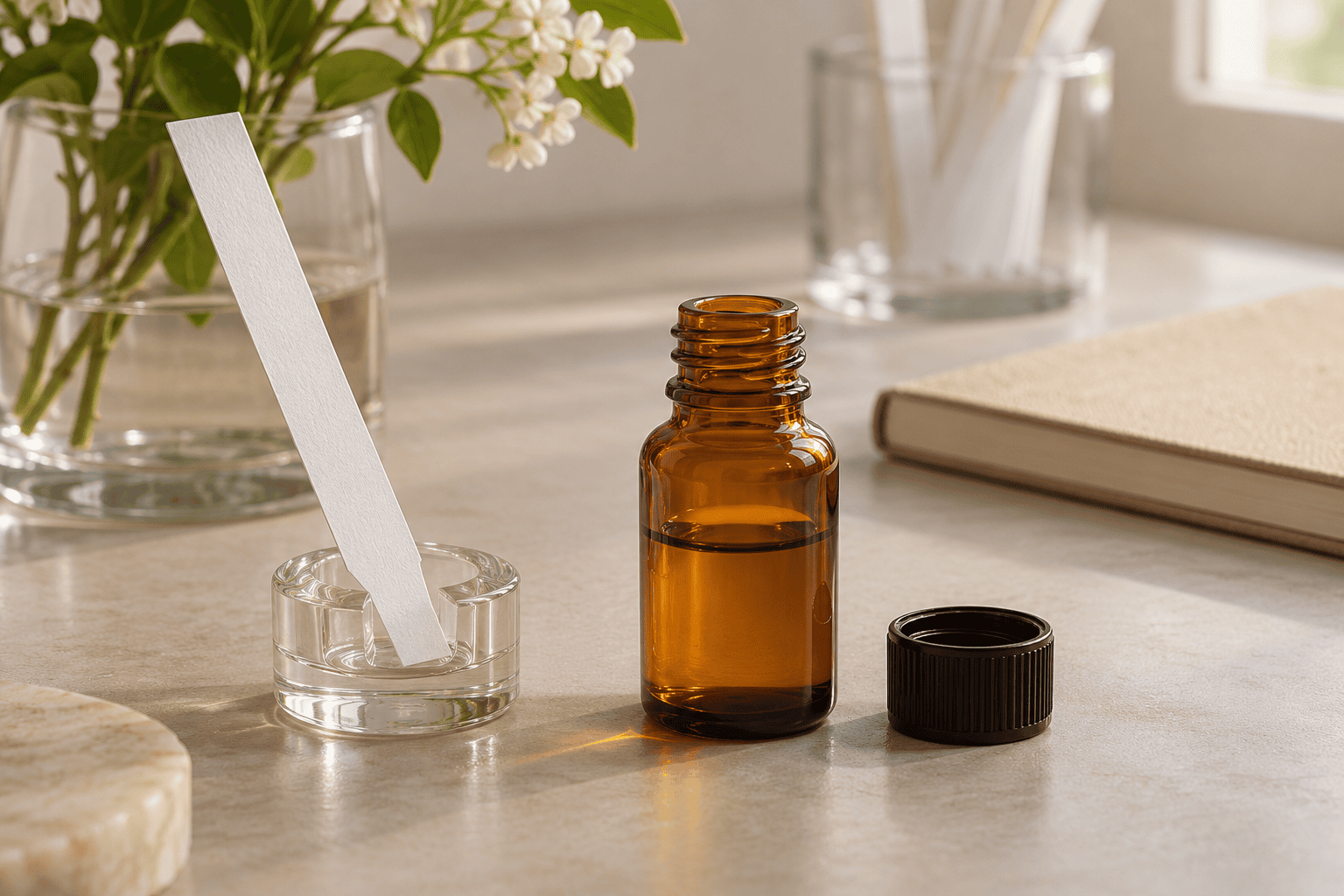
For this briefing framework, bottle observation records the sample as presented in its container; blotter observation records the scent on a specified strip at specified times. Neither is an analytical measurement of composition. Avoid declaring a sample defective because its first bottle impression differs from its paper impression. Instead, identify which observation raised the concern and whether the concern remains relevant in the actual application.
Control the bottle presentation before comparing candidates
Document container type, fill, sample age, storage and opening history. A partly emptied bottle opened repeatedly is not a matched presentation of a fresh full bottle. Follow the sample’s handling guidance and an appropriate evaluation procedure; do not put concentrated fragrance against the nose or apply it directly to skin. If handling conditions differ, label the observation as preliminary rather than treating it as evidence of a formulation change.
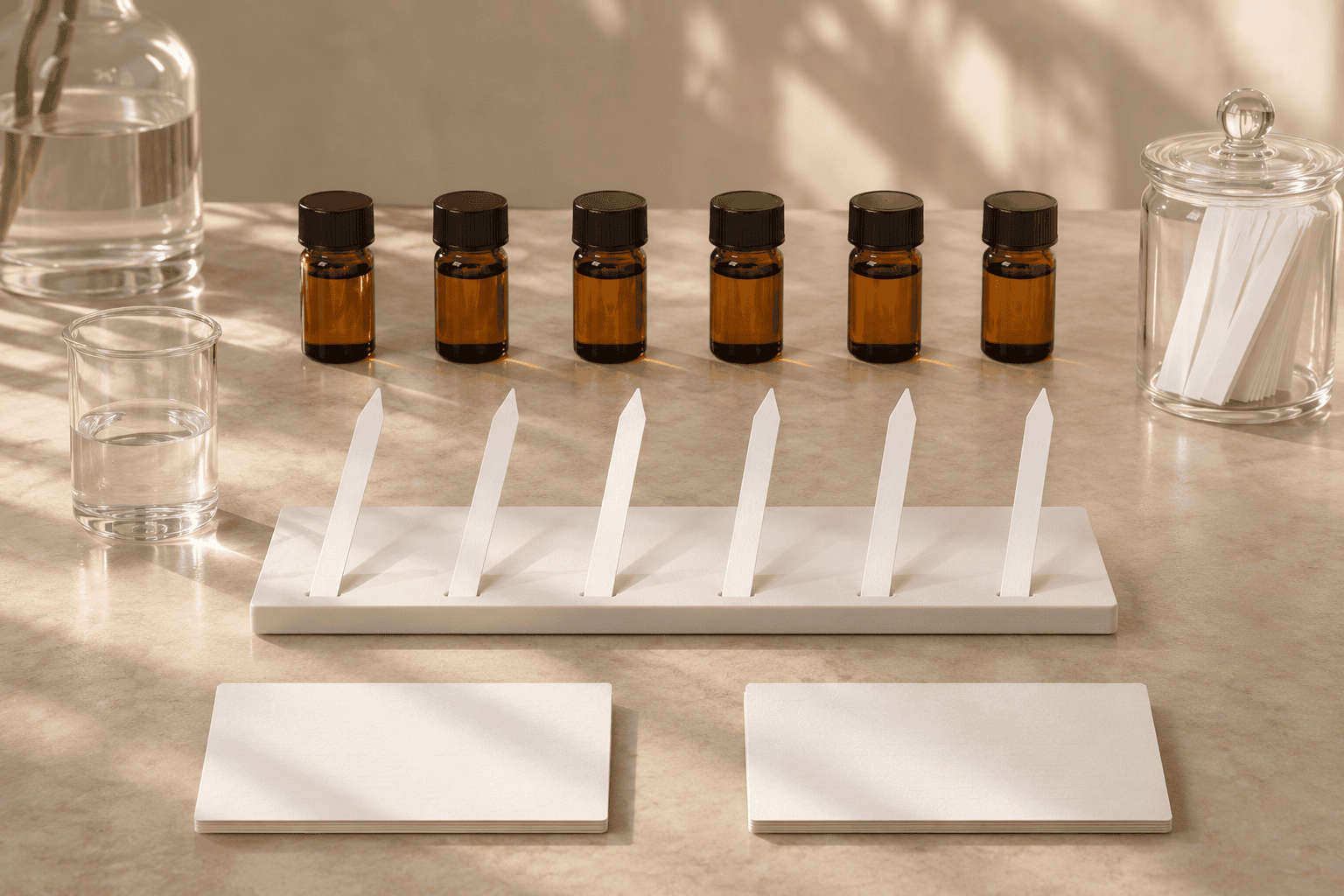
Make blotter loading and timing repeatable
Specify strip type, application method, loading and observation times through a suitable internal procedure. Keep strips separated and clearly coded to prevent sample confusion or transfer. Record both the main scent character and perceived intensity. Changing strip material or smelling one candidate immediately while another has been waiting creates a comparison problem. The practical objective is a repeatable purchasing reference, not a claim that paper reproduces every product base.
Use discrepancies as a question, not a diagnosis
If a candidate seems harsh in the bottle but acceptable on the strip, record that specific contrast. If the desired fruit or floral identity disappears later on paper, record when and how it changes. Do not infer dilution, poor raw materials or adulteration from those observations alone. Ask the supplier to review the sample code and method, then compare against an agreed reference before deciding what needs to be changed.
Keep the finished-product trial as a separate gate
A candle, detergent, air-care liquid or cosmetic is not a blotter. Test the actual base under appropriate, documented conditions and keep compatibility, safety and sensory approval separate. The matrix below is an original planning aid, not a report of laboratory results. If the concern is chemical composition or a measurable concentration change, commission the appropriate analytical investigation rather than converting a subjective odor difference into a chemical conclusion.
| Presentation | Record | Do not conclude from it alone |
|---|---|---|
| Bottle | Container, fill and opening history | Composition or finished-product quality |
| Blotter | Strip, loading and observation time | Performance in every application |
| Finished product | Actual base and reviewed test conditions | Safety from pleasant smell |
| Analytical investigation | Method suitable for the question | Chemical identity from subjective odor |
Send evidence the fragrance supplier can reproduce
A useful message includes the concentrate code, bottle condition, strip method, observation timing and the exact unwanted impression. Include whether it also occurs in the target product. SHEAIN can discuss the fragrance brief and sample comparison without guessing from a general statement that the bottle smells wrong. Retain the accepted reference and agreed procedure so future deliveries are checked against the same presentation rather than a remembered first impression.
Frequently Asked Questions
Should bottle odor and blotter odor be identical?
Do not use identity between these different presentations as an automatic acceptance rule. Define the relevant observation and compare consistently.
Does a weaker bottle impression prove dilution?
No. That observation alone cannot establish concentration or composition. Review the conditions and obtain appropriate evidence.
Which presentation should decide the order?
Use agreed reference checks and an appropriate finished-product evaluation, supported by the required technical documentation.
Related Guides and Application Support
- Fragrance on Blotter vs Skin: Why Finished Perfume Smells Different
- Fragrance Sensory Evaluation: How to Build a Reliable Sample-Scoring Process
Contact SHEAIN. Share your end-use application, target market and scent brief to discuss fragrance oil concentrate samples.


