

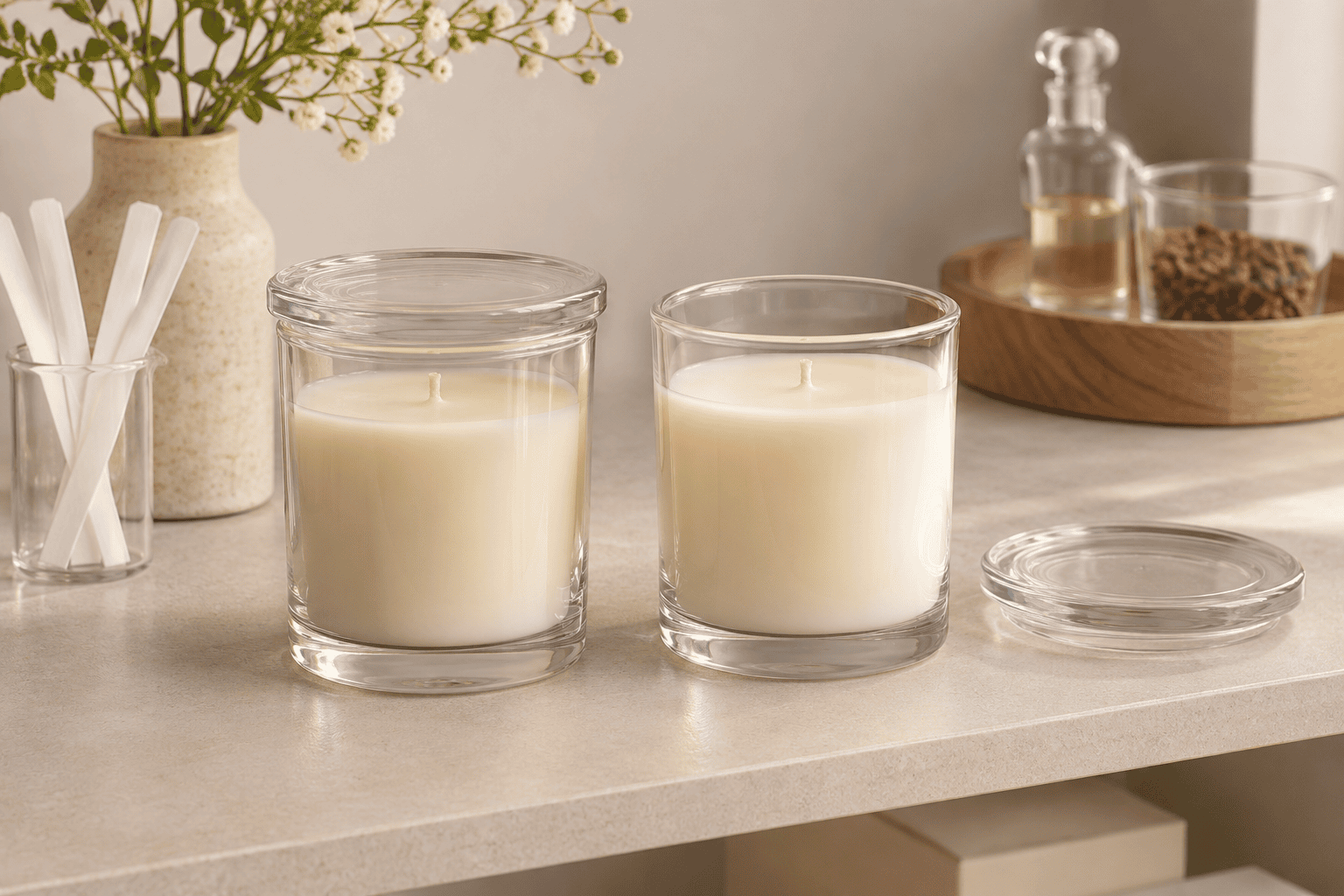
Candle lid effect on fragrance retention is a storage question, not a shortcut to predicting burn performance. Compare capped and uncapped candles made from the same batch under matched conditions, and define what retention means for the product. A stronger impression immediately after opening a jar does not by itself prove that the candle will perform better during use.
Define the storage decision before designing the test
Decide whether the question concerns warehouse storage, customer handling or the time between uses. These situations may need different comparisons. The National Candle Association recommends appropriate storage and protection with a lid. Source: National Candle Association: candle storage guidance This practical guidance is not a quantified promise about fragrance life. If a supplier claims a specific improvement, ask for the underlying method and results rather than applying that number to your candle.
Use matched candles and document the closure
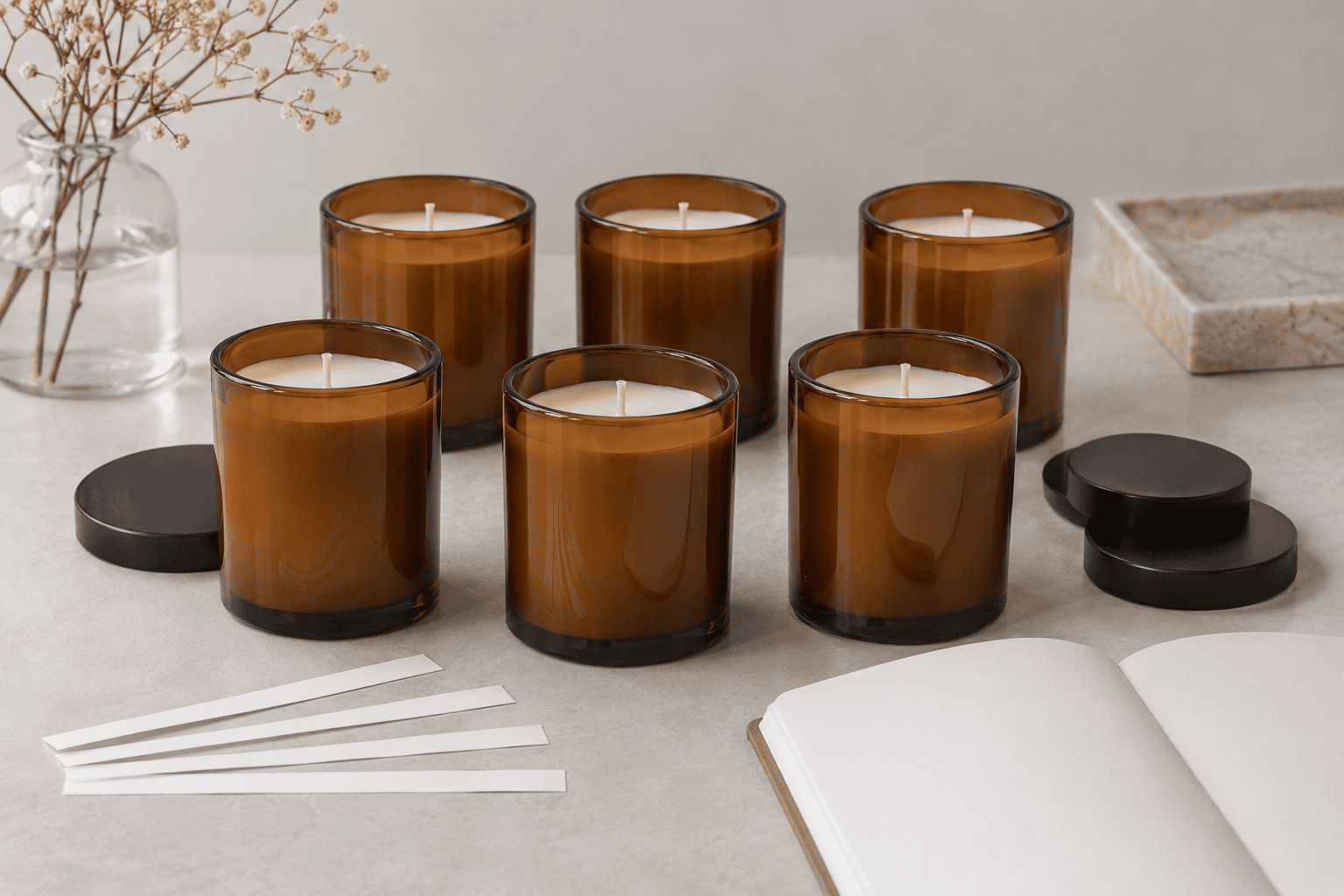
Compare candles from the same prepared batch, with matched vessels, fill, fragrance and sample age. Record lid material, liner, fit and closure condition instead of treating every cover as equivalent. If the package differs in other ways, describe the exercise as a packaging-system comparison. Keep an untouched reference where useful, and label the samples so later evaluators can trace them without being shown the expected result.
Separate the first opening from later cold evaluation
A first-opening observation and a later observation after a defined period are different measurements. Record both if relevant to the buying decision, with a consistent procedure and suitable spacing between samples. Do not convert a strong first impression into a claim about the amount of fragrance retained. Ask whether the scent character remains acceptable as well as whether its perceived intensity changes. Chemical retention needs an appropriate analytical method if that is the claim.
Keep storage and opening history comparable
Record the storage environment, sample positions and each opening event. Repeatedly opening one jar while leaving another untouched creates a different treatment. If several observation times are planned, consider whether separate samples are needed to avoid that confounding effect. The table below is a suggested planning checklist, not a report of SHEAIN tests. A meaningful result needs a method appropriate to the product and the claim being evaluated.
| Factor | Comparison record | Separate question |
|---|---|---|
| Sample | Same batch, vessel and age | Formulation differences |
| Closure | Material, liner, fit and history | Different lid systems |
| Cold scent | First opening and later observation | Measured chemical retention |
| Storage | Environment and opening events | Burn performance |
Do not substitute storage results for burn testing
If the business question includes performance during burning, evaluate that separately using a suitable candle test plan and appropriate safety precautions. A lid should not be placed over a burning candle unless the product is specifically designed and instructed for that purpose. This article does not recommend extinguishing methods. Changes in cold scent, appearance or closure behavior should trigger review, not assumptions that the fragrance loading needs to increase.
Approve the storage package and fragrance together
Record the accepted concentrate, wax system, vessel, closure and storage criteria. If a lid or liner changes, review the scope of the original approval. When contacting SHEAIN, explain whether the concern is first-opening scent, later cold character or another measured outcome. That lets the supplier discuss fragrance options against a clear problem while the candle maker remains responsible for packaging qualification, finished-product safety and substantiated performance claims.
Frequently Asked Questions
Does a lid guarantee longer fragrance life?
No universal duration follows from having a lid. Evaluate the actual closure, candle and storage conditions.
Does stronger scent at first opening prove better hot throw?
No. First-opening odor and performance during burning are separate evaluation questions.
Should I change fragrance loading after a storage comparison?
Not automatically. First identify what the comparison actually shows, then review any formulation change with appropriate testing.
Related Guides and Application Support
- Fragrance Oil Shelf Life: Storage, Packaging and Temperature Control
- Candle Fragrance Load Testing: Cold Throw, Hot Throw and Burn Performance
Contact SHEAIN. Share your end-use application, target market and scent brief to discuss fragrance oil concentrate samples.


