

Fragrance on blotter vs skin can differ because the receiving surface, application and surrounding conditions influence what reaches the nose over time. A blotter is a useful comparison tool, but it is not a substitute for evaluating a properly assessed finished perfume in its intended use. Never apply fragrance oil concentrate directly to skin for this comparison.

Understand what a blotter comparison can answer
A paper strip gives evaluators a convenient, repeatable place to compare fragrance identity and follow its development. It does not reproduce the complete behavior of perfume on a person. Research has compared evaporation from perfume strips, model surfaces and skin using controlled measurements. Evaporation research on skin and model surfaces, 2024 That supports treating the substrate as a real variable; it does not provide a universal prediction that every fragrance will become warmer, sweeter or stronger on everyone.
Use the same finished formula, not two different materials
Comparing a concentrate on paper with a diluted finished perfume on skin changes the formula as well as the surface. The result cannot cleanly isolate a substrate effect. For an appropriate professional evaluation, document the actual finished perfume code, carrier, application procedure and evaluation times. Any human-use evaluation must follow the product’s safety assessment and suitable instructions. If these conditions are not established, keep the work to non-skin screening.
Record character separately from intensity
At each planned observation, note which attributes are recognizable and how strong they seem. A sample that seems less intense may still preserve the desired floral or woody identity. Another may remain strong while losing the opening that originally won approval. Do not reduce both outcomes to a single longevity score. Record opening, developing character and later impression separately, using intervals chosen for the actual project rather than an arbitrary universal schedule.
| Observation | What to record |
|---|---|
| Material | Finished formula code and revision, not only scent name |
| Application | Documented, suitable application procedure |
| Timing | Same defined checkpoints for the comparison |
| Character | Which scent attributes remain recognizable? |
| Intensity | How strong is the perception at that checkpoint? |
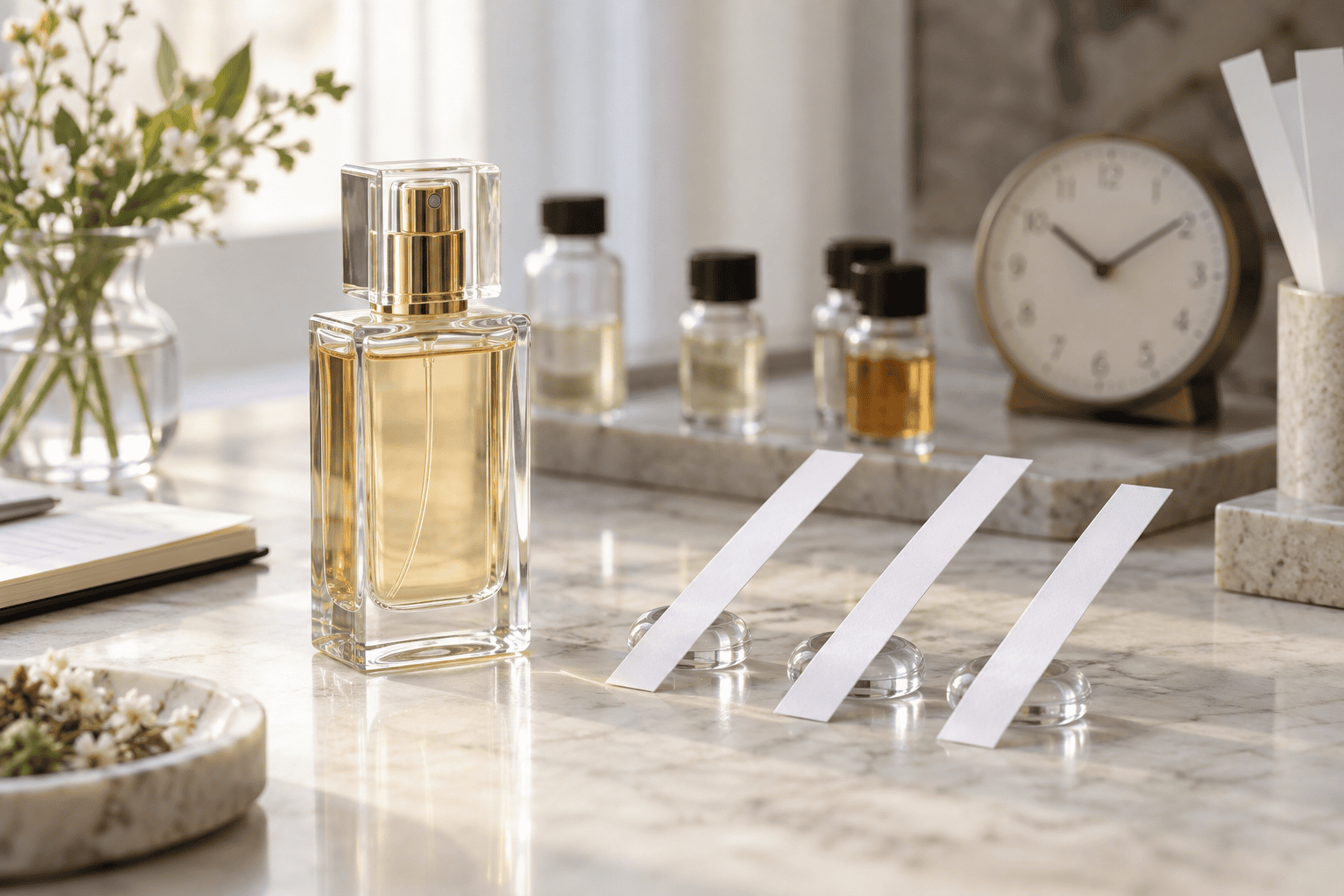
Control avoidable differences before explaining the result
Record relevant conditions such as application method, evaluation location and other scented products present. Avoid comparing a fresh strip with a much older skin application. Do not repeatedly sniff the same spot without breaks and then assume a lower rating proves the fragrance has vanished. Where a comparison matters commercially, use an appropriate evaluation plan across more than one observation or participant instead of generalizing from one informal trial.
Avoid the catch-all explanation of skin chemistry
Saying skin chemistry changed the perfume can hide differences in dose, timing, background products and perception. First establish what actually differed. Describe the observation narrowly: for example, a particular citrus impression was less apparent at a specified checkpoint, while the woody body remained recognizable. This is more useful to a perfumer than an unsupported claim that a person’s pH destroyed a note. Analytical explanations require evidence beyond a casual smell comparison.
Bring the result back to a formulation decision
If the strip winner is not the preferred finished-perfume experience, give the supplier the finished formula context and the specific attribute that needs revision. Keep the successful attributes in the brief so they are not lost. Ask SHEAIN about fragrance concentrate options for your intended fine-fragrance base, with the necessary documentation. Treat sensory preference, physical product quality and safety assessment as separate approval gates.
Frequently Asked Questions
Can I test neat fragrance oil on my wrist?
No. Do not use concentrate for a skin comparison. Use only an appropriate finished product under suitable instructions.
Does a long-lasting strip result guarantee long skin wear?
No. The substrate and use conditions differ, so the finished-product experience needs its own evaluation.
Does one person’s result establish how everyone will perceive it?
No. Use a suitable evaluation plan and avoid universal conclusions from a single informal observation.
Related Guides and Application Support
- How to Make Perfume with Fragrance Oil: Concentration and Alcohol Selection
- Fragrance Sensory Evaluation: How to Build a Reliable Sample-Scoring Process
Contact SHEAIN with your end-use application, target market and scent brief to discuss fragrance oil concentrate samples.


