

Amber vs ambergris fragrance describes two scent ideas that are easy to confuse. An amber-style brief often explores warm, resinous or vanilla-like richness. An ambergris-style brief may explore a softer woody, mineral or marine-associated effect. Neither name tells you exactly what is in a fragrance oil. Ask for the actual sample and documentation, and compare the desired dry-down rather than assuming the names are interchangeable.
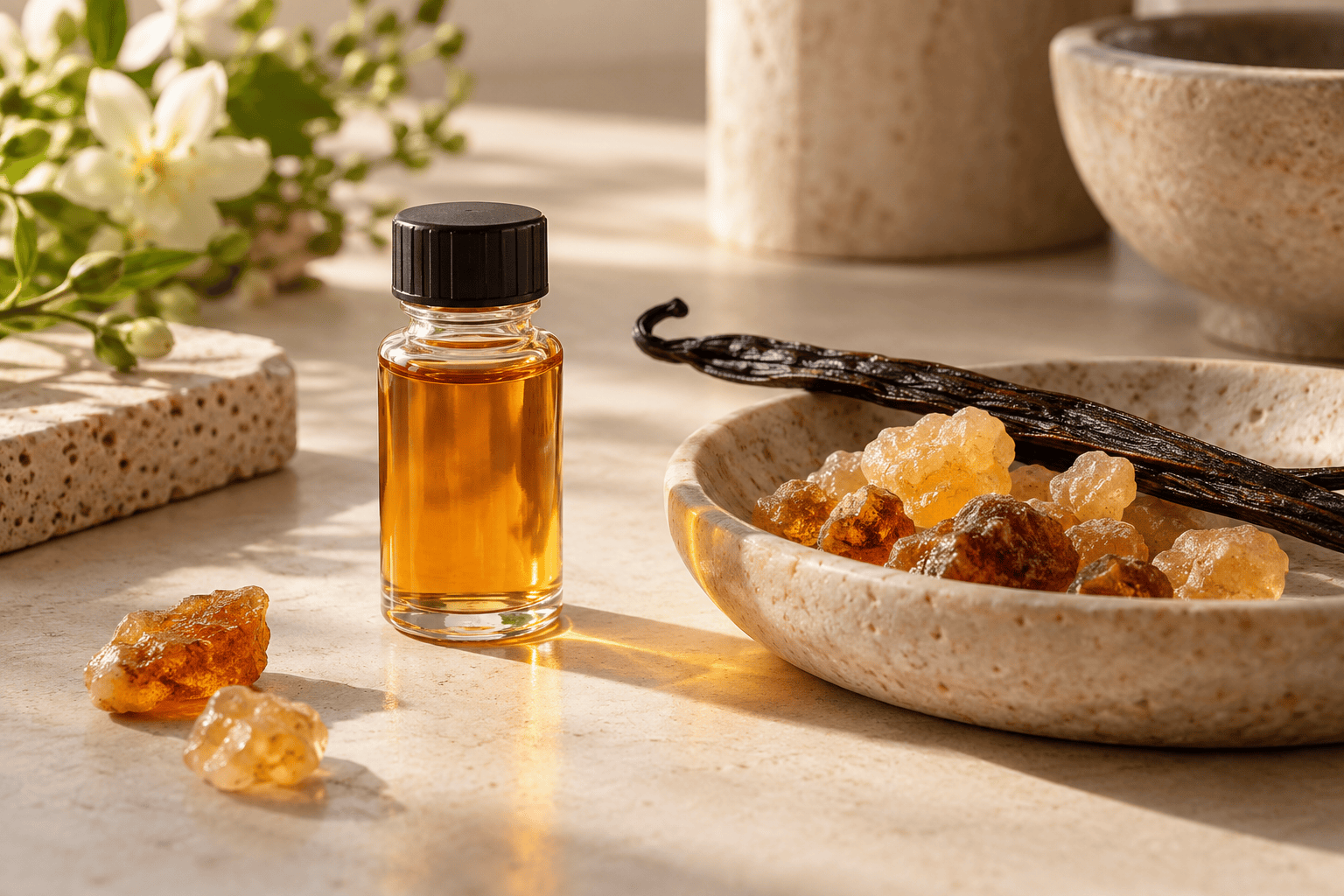
Separate the scent name from the material history
In a fragrance brief, amber commonly describes an accord rather than fossilized amber as an ingredient. Ambergris has a distinct natural-material history, but an ambergris-style composition does not establish animal-derived content. Modern perfumery offers alternative materials that evoke aspects of that odor direction. dsm-firmenich describes a biotechnology-derived ambergris-inspired material with ambery, musky and woody character. This is an example of the perfumery palette, not a formula disclosure for SHEAIN or a guarantee about any sample you receive. dsm-firmenich: biotechnology-derived fragrance ingredients
Describe warmth and sweetness independently
A warm scent does not have to be very sweet. An amber-style composition can be dry and resinous, while another may emphasize vanilla-like softness. Ask the supplier which balance you want rather than requesting generic rich amber. Record whether sweetness supports the concept or makes it feel too gourmand. A useful comparison includes an intensity score separate from warmth and preference, because a concentrated sample can seem heavier simply through stronger exposure rather than a different underlying fragrance direction.
Use mineral and salty language as odor associations
An ambergris-style brief may use words such as mineral, airy, woody or softly salty. These describe perception, not proof of salt, seawater or a particular ingredient in the oil. They also do not imply a visibly aquatic or strongly marine scent. Ask for samples that show how much of that character is intended. If your team wants a quiet, close dry-down, say so explicitly; a powerful woody-amber composition could otherwise meet the name while missing the desired experience.
Compare how the supporting notes behave in use
Neither family should be judged only from the bottle. Introduce technically suitable candidates into the actual base and follow the relevant stages: preparation, use and the appropriate dry-down. Record whether the supporting accord leaves the main citrus or floral identity recognizable, or overwhelms it. A warm candle concept and a freshly rinsed personal-care concept can require very different balances. Shared vocabulary does not mean the same concentrate, loading or test criteria should be used for every application.
Make sourcing claims a separate approval gate
If the project requires vegan positioning, a natural-origin percentage or another sourcing statement, request documentation for the specific formula and supply chain. Do not derive such claims from the fragrance name, odor or the absence of an obvious animalic note. Marketing imagery should also avoid implying an ingredient that has not been confirmed. The comparison framework below is for creative sample selection; it cannot establish regulatory status, sourcing eligibility or finished-product safety on its own.
| Question | Amber-style direction | Ambergris-style direction |
|---|---|---|
| Creative emphasis | Warm resinous or vanilla-like body | Woody, mineral or airy softness |
| Sweetness | Specify the desired level | Do not assume sweetness or dryness |
| Material claim | Accord name is not a formula | Style name is not proof of animal content |
| Acceptance | Assess the actual dry-down | Assess the actual dry-down |
Turn the comparison into a concise development request
Ask for an amber direction with a specified sweetness level, or an ambergris-inspired direction with a specified woody-mineral balance. Include the end product, reference sample and unwanted facets, such as excessive vanilla, harsh woodiness or overt marine character. Keep the accepted version as a repeat-supply reference. SHEAIN sample availability, documentation and application feasibility should be confirmed individually. The goal is a well-defined fragrance concentrate for your product, not a claim that a note name guarantees a particular material or result.
Frequently Asked Questions
Are amber and ambergris the same ingredient?
No. In fragrance purchasing, the names also describe creative accords. Clarify whether the supplier is discussing an actual material or an odor direction.
Does ambergris fragrance oil contain natural ambergris?
Not necessarily. A constructed composition can evoke that style. Ask for product-specific sourcing information rather than inferring content from the name.
Which style projects more strongly?
There is no reliable answer from the family name. Compare the complete compositions in the same appropriate application and evaluate projection separately from persistence.
Related Guides and Application Support
- Fragrance Oil vs Essential Oil: Which Is Better for Commercial Product Manufacturing?
- Custom Fragrance Development: From Creative Brief to Approved Formula
Contact SHEAIN with your end-use application, target market and scent brief to discuss fragrance oil concentrate samples.


