

A laundry fragrance rewetting test compares how treated fabric smells before and after a defined water exposure. It can reveal a useful change in perceived scent, but that observation alone does not prove a water-triggered delivery technology. Use matched fabrics, controlled treatment and an unfragranced reference so you can distinguish fragrance behavior from the odor of damp fabric, water or the laundry base.
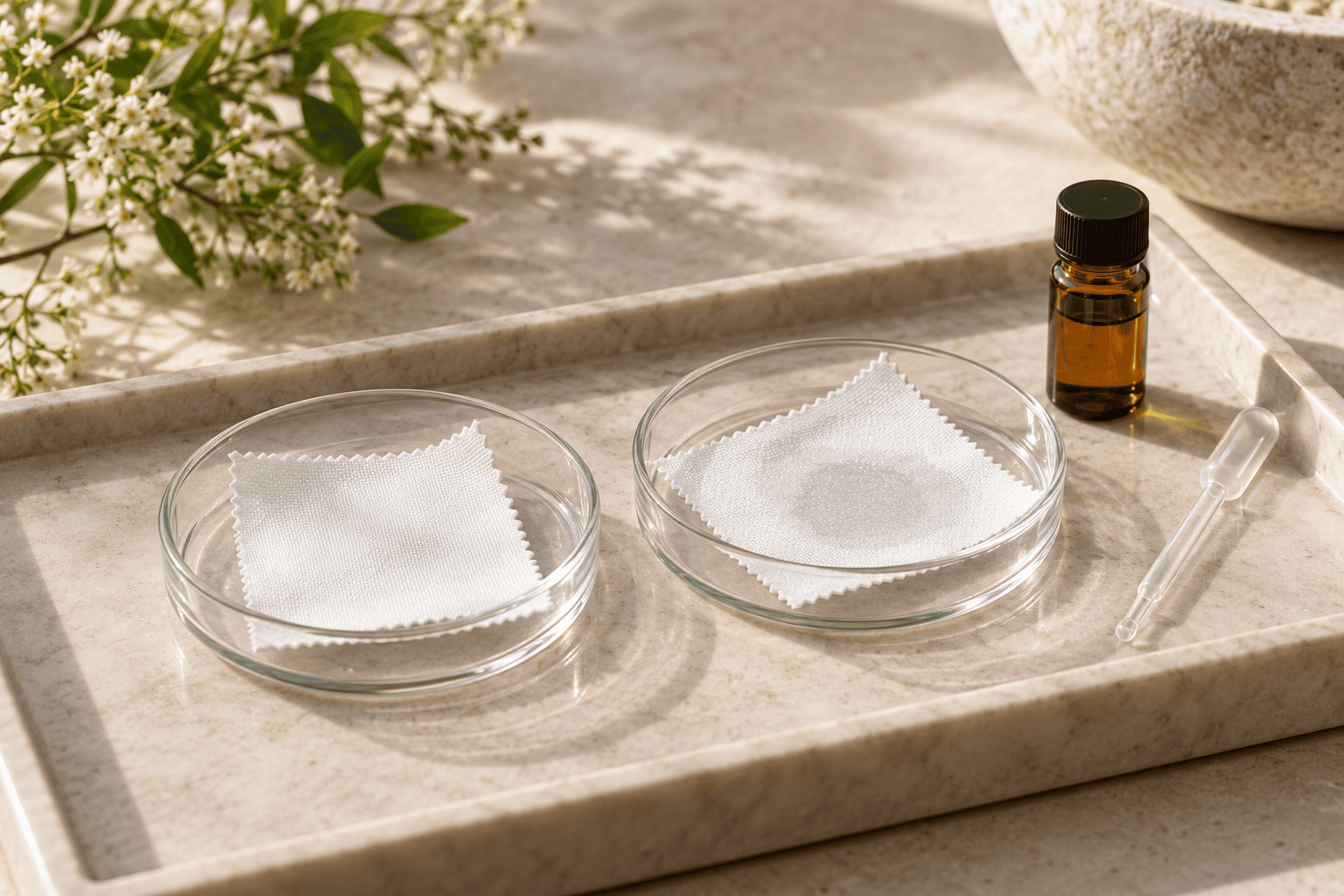
State the question without assuming the answer
Decide whether you want to investigate renewed noticeability, a change in scent character or an unwanted odor after dampening. Do not begin with a conclusion that water activates every encapsulated fragrance. Givaudan’s performance discussion describes different delivery approaches and product-use stages, including mechanically triggered effects. The existence of such technologies does not establish the mechanism in your sample. A rewetting comparison is first a sensory observation; a technology claim requires additional evidence specific to the system being tested. Givaudan: fragrance performance across the product-use journey
Prepare matched and traceable fabric samples
Use comparable fabric type, mass, dimensions, treatment history and laundry procedure. Record the detergent or softener formulation, fragrance version, dose, wash conditions and drying method. Prepare enough samples for the planned controls and repeats rather than reusing one piece through changing conditions. Include an unfragranced treatment and, where useful, a water-only or untreated fabric reference. Keep scented materials separated during storage so a control does not acquire odor from another sample before the comparison even begins.
Define the water exposure and the handling
Specify the water source, amount, application method and observation interval. Record wet pickup by a suitable method if that is part of your protocol. Apply the same procedure to the relevant controls. Avoid rubbing one sample vigorously while merely dampening another, because mechanical handling becomes a second variable. If rubbing or flexing is relevant, create a separate comparison for that condition. The aim is not a dramatic demonstration but a repeatable observation that another team can understand and reproduce.

Score intensity, identity and unwanted odor separately
Assess the dry sample first under the agreed conditions, then the damp condition at the planned interval. Record whether the intended scent is stronger, weaker or simply different, and whether a new off-note appears. Stronger odor is not automatically better fragrance performance if the preferred character is lost. Keep assessors unaware of sample identity where practical and record observations before discussion. Use a suitable session design to limit sensory fatigue, and avoid overstating precision when the observations are variable.
Include a re-dried observation if the use case needs it
Some projects care about what remains after the fabric dries again rather than the brief damp-stage signal. If that matters, define a consistent re-drying procedure and endpoint in advance. The table below separates dry, damp and re-dried questions without assigning a mechanism to any result. It is an illustrative development framework, not a standardized claim-substantiation method. Repeat the test as appropriate and review other formulation or substrate explanations before attributing the outcome to fragrance release.
| Condition | Key control | Question |
|---|---|---|
| Dry baseline | Matched treatment and drying | What scent remains before water exposure? |
| Damp | Same water amount and handling | Does intensity or identity change? |
| Unfragranced control | Same base and wetting procedure | Is the odor from fabric or base? |
| Re-dried, if relevant | Consistent re-drying endpoint | What persists after the damp stage? |
Turn the result into a bounded development brief
Report the fabric, laundry system, water exposure, handling and exact observation stage when discussing results with SHEAIN. Request a fragrance concentrate suitable for the actual laundry application and clarify whether free fragrance, encapsulated material or another system is being evaluated. Do not assume availability of a delivery technology from an article title. Sample feasibility, documentation and any performance claim need project-specific confirmation. The evidence should support the finished-product statement you intend to make, not merely an attractive test narrative.
Frequently Asked Questions
Does stronger odor after wetting prove capsule release?
No. Sensory change alone does not identify the cause. Review the actual formulation and obtain mechanism-specific evidence before making that claim.
Should I rub the fabric during the test?
Only if handling is part of the defined protocol. Keep wetting and rubbing controlled as separate variables when you need to understand their individual effects.
Can the result be generalized to every fabric?
No. Fabric type and treatment conditions can influence the observation. Limit conclusions to the conditions tested and expand the study if broader claims are needed.
Related Guides and Application Support
- Microencapsulated Fragrance for Laundry: Deposition and Release Tests
- How to Improve Fragrance Longevity in Laundry Detergent and Fabric Softener
Contact SHEAIN with your end-use application, target market and scent brief to discuss fragrance oil concentrate samples.


